
Export Guide for Thermal Insulation Materials: Helping Manufacturers Solve the Challenges of Export Authorization and Tax Rebates
or complex compliance issues.
clearance and fund security.
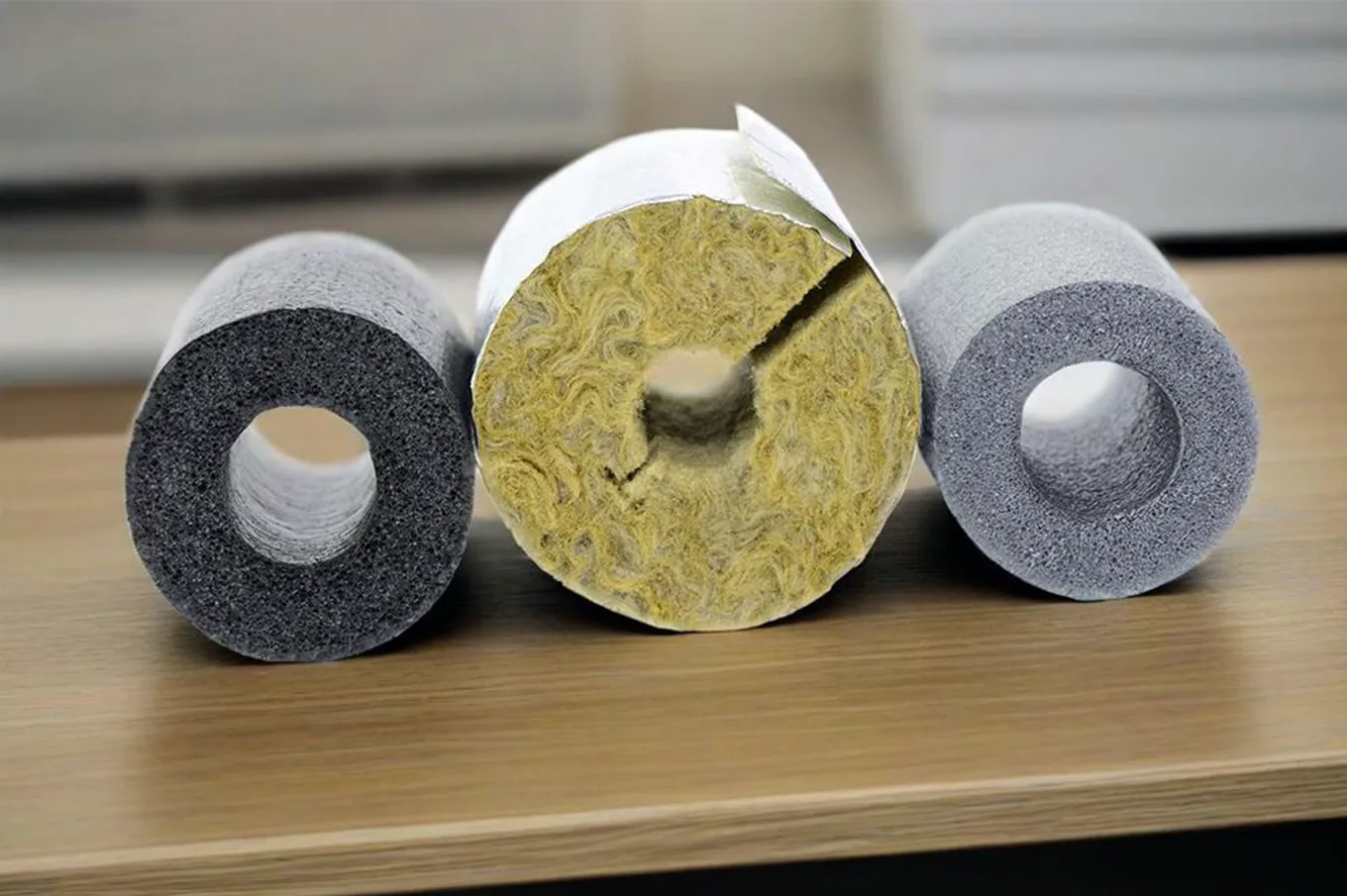
Against the backdrop of global efforts to promote green buildings and energy efficiency,high-quality insulation materials have become a necessity in the international market.As the world’s leading building materials producer,China is witnessing unprecedented export opportunities for its rock wool boards,foam plastic boards,and various refractory materials.
However,for many excellent manufacturers who focus on technology and production,the threshold for international trade is not product quality,but two core qualifications and financial challenges:
- LackofBusinessLicense:Itisnotpossibletosigncontractswithoverseasclientsinone’sownnameandreceiveforeignexchangepayments.
- Ican’tenjoyit:Theymissedoutontheimportantpolicydividendsprovidedbythestatetoencourageexports,whichcouldsignificantlyincreasetheirprofits.
This article aims to provide a professional and rigorous practical guide,systematically explaining the core processes and compliance requirements for the export of insulation materials,helping relevant enterprises understand the key steps in the process of "going global".
I.The cornerstone of the export process: accurate product classification (HS Code)
Product classification is the first and most crucial step in all export work.It directly determines the regulatory requirements and export tax rebate rates.The core principle is to classify products based on their characteristics and functions.Material components,processing techniques,and main functionsTo determine the HS code.
Reference for customs classification of common insulation materials:
| Material type | Common HS codes for reference | The main reasons for the classification |
| Mineral products (e.g.rock-wool board,glass-magnesium board) | 6806.9000 | The main components are a mixture of mineral fibers or mineral materials,and the core function is to provide insulation and soundproofing. |
| Foam plastic board (e.g.polystyrene board) | 3921.1100 | The basic characteristic is that it is "plastic" rather than "mineral",and it is in the form of "foam" boards and sheets. |
| Fire-resistant ceramic products (e.g.refractory brick) | 6902 or 6903 | Made from ceramic materials,it is specifically designed to withstand extremely high temperatures and is classified as a specialized refractory material. |
Master the core principles of classification:
- Function-orientedprinciple:Thecorefunctionoftheproductistheprimarybasisforclassification.Forexample,althoughbothare"boards,"therockwoolboardusedforinsulationisclassifiedunderChapter68,whiletheboardusedforelectricalinsulationmaybeclassifiedunderChapter85.
- Thematerialdeterminesthedestination:Thenatureofthemateriallargelydeterminesthechapterinwhichtheproductisclassified.PlasticproductsareinChapter39,andmineralproductsareinChapter68.Forcompositeproductsmadeofmultiplematerials(suchasmetal-facedinsulatedsandwichpanels),theyneedtobeclassifiedaccordingtothecorematerialthatgivestheproductitsbasiccharacteristics.
II.Core Export Process: From Order to Payment Collection
On the basis of accurate classification,the complete export process includes the following key steps:
(I) Contract & Payment Collection
For manufacturers that do not have import and export rights,this is the primary obstacle.Cooperating with professional trade agents is a common and efficient solution in the industry.The agent will act as the exporter,sign foreign sales contracts with overseas customers,and be responsible for safely and compliantly collecting US dollar payments,before settling the payments in RMB with domestic manufacturers.
(II) Verification of Regulatory Conditions
Before the goods are ready for export,it is necessary to verify the regulatory conditions corresponding to their HS code.
- ExportLicense:Checkwhetherthisinsulationmaterialissubjecttoexportlicensemanagement.
- Technicalexportrestrictions:Inparticular,itisimportanttonotethatsomeadvancedinsulationmaterialproductiontechnologiesmaybeincludedinthe"China’sListofProhibitedandRestrictedExportTechnologies".Ifthetransactioninvolvestechnologytransfer,itisessentialtoverifyandobtaintherelevantpermitsinadvance.
(III) Documentation Preparation & Export Declaration
Prepare all necessary commercial documents (contracts,invoices,packing lists) in accordance with regulatory requirements.When declaring to customs,it is essential to fill in the declaration elements in accordance with the norms,which typically include: product name,material,specification and model,processing technology,and usage,etc.Clear and accurate declaration is a prerequisite for ensuring the smooth customs clearance of goods.
(IV) Logistics & Transportation
Arrange the booking of shipping space.Carry out a series of logistics operations such as port entry to ensure that the goods arrive at the destination port safely and on time.
(V) Export Tax Rebate Processing
This is a crucial step in maximizing export profits.Only after the goods have been declared for export and successfully received foreign exchange,can enterprises with export qualifications apply to the tax authorities for a refund of the value-added tax paid during the domestic production of the products.
- Formanufacturers:Ifthegoodsareexportedthroughatradeagent,theagentwillberesponsibleforcompletingtheentiretaxrefundapplicationprocessandreturningtheapprovedtaxrefundamountinfulltothemanufacturer.Thisamountisoneofthecoreprofitsourcesoftheexportbusiness.

III.Compliance Risks and Professional Advice
- Risk:Delaysorpenaltiesresultingfromdisputesovercustomsclassification.
- Professionaladvice:Forneworcomplexcompositeinsulationmaterials,itisstronglyrecommendedthatbeforethegoodsareexported,anapplicationbesubmittedtothecustomsofficedirectlyundertheregisteredlocationthroughthecustoms’“pre-ruling”systemtoobtainanofficialclassificationopinionwithlegaleffect.Thiscanfundamentallyavoidsubsequentdisputes.
- Risk: Unintentionally violating technical export control regulations.
- Professionaladvice:Whensigningcontractsinvolvingtechnologytransfer,enterprisesshouldactivelyrefertothe"ChinaCatalogueofProhibitedandRestrictedExportTechnologies".Ifthereareanyuncertainties,consultingprofessionallegalortradeadvisorsisanecessarymeasuretoavoidseriouslegalrisks.
- Risk: The tax refund may fail due to discrepancies in the documents.
- Professionaladvice:EnsureSingledocument,invoice,packinglist,Allinformationinthedocuments,suchasproductnames,quantities,andamounts,mustbehighlyconsistent.Itiscrucialtoestablishastandardizeddocumentmanagementprocess.
Conclusion
Successfully exporting insulation materials not only tests the performance of the products,but also requires comprehensive competence in applying international trade rules,customs regulations,and financial policies.For most manufacturers,the most effective strategy is "specialized division of labor": focusing core resources on product innovation and production management,while leaving complex trade qualifications,cross-border finance,logistics declaration,and tax refund matters to experienced professional partners to handle.
This not only helps to avoid potential compliance risks,but also ensures that enterprises can fully enjoy all the economic benefits brought by the national export policy,making high-quality "Made in China" insulation materials more competitive in the global market.
Was this helpful? Give us a like!
Contact our experts for compliance audits, precise quotes, and one-stop customs support.
Recent Comments (0) 0
Leave a Reply