
Exporting aluminum profiles to France: Tips on declaration codes and anti-dumping avoidance
or complex compliance issues.
clearance and fund security.
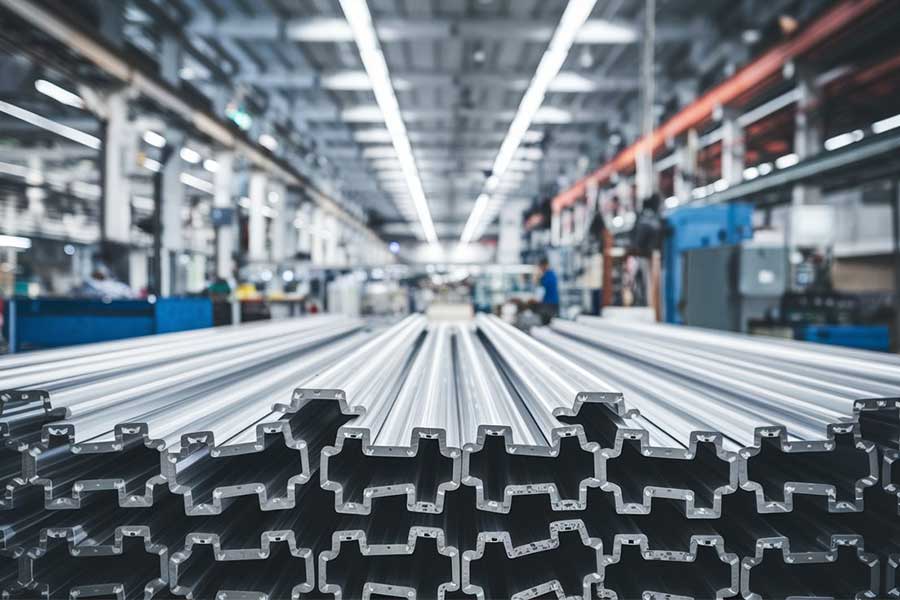
In international trade,exporting aluminum profiles to an EU country like France always comes with “l(fā)ittle headaches” over duties and declarations.Take,for example,a square tube profile used for leveling,fitted with black plastic end caps,in lengths from 2.5 m to 6 m: can it be declared as a finished product under HS 7610 90 00 00 (“other structures and parts of structures of aluminum”,13 % VAT refund rate)?This isn’t just about cost—you also have to balance risk and compliance.Today we’ll walk through the issue,help you sort out your thinking,and find a steadier way to export.
The "Pain Points" of EU Tariffs
The EU has slapped a 32.1% anti-dumping duty on aluminum profiles,putting exporters under pressure.Declaring under the standard aluminum-profile code means heavy taxes and razor-thin margins.Your product has a plastic clip attached,looks “finished,” and you want to clear it under HS 7610900000 as a structural part—skirting the anti-dumping duty and pocketing a 13% rebate.Tempting,but customs isn’t so easily “fooled”: they will check the product’s end-use and degree of processing.If it’s just a simple clip,it doesn’t count as deep processing; mis-declaration is likely and the risk is real.
Operational Recommendation: From Pre-classification to Work-around
To file smoothly,first get a pre-classification opinion from a professional customs broker.They will assess whether the product meets the criteria for a finished good and issue a report that gives your declaration solid backing.HS code 7610900000 covers structural parts,but you must be sure the item is truly “finished”—for example,pre-drilled holes so it can be declared as an accessory,or exported as a functional component like a stair handrail.That way customs acceptance is high and the tax rebate is secure.
If the encoding workaround hits a wall,don’t force it.Try these quick tricks:
- PriceIncreaseNegotiation:ChatwiththeFrenchclient,explaintheanti-dumpingdutysituation,andsharetheburden.Raisethepriceabit;theclientaccepted,soyourmarginisprotected.
- SecondaryprocessinginSoutheastAsia:ShipthegoodstoSoutheastAsiafirst,performsimpleprocessing(suchasdrillingorassembly),changetheorigintothelocalcountry,andthenexporttoFrance.ThisbypassesEUanti-dumpingmeasuresagainstChina;althoughthecostishigher,itpaysoffinthelongrun.
- Functionrelocation:Iftheproductcanbeusedasahandtool,emphasizethispurposeanddeclareitwiththerelevantcode.Frenchcustomsarestrictandabitold-school,butwithsufficientevidenceitwillclear.
These methods make exporting more flexible,but don’t risk under-reporting—if you’re caught during inspection,fines,returns,or blacklisting aren’t worth it.
Risk Alert and Prevention
Wrong declaration code,high risk: Customs may treat it as smuggling,and a blacklisting will hit the whole company.The French don’t like “work-arounds”; a middle punch or a simple extra clasp can still get stopped.Ask a customs broker early,prepare proof of use and sample photos,and you’ll dodge the pit.
Prevention First: Assess tariffs during the quotation stage,quote with tax included or share the burden; choose an experienced freight forwarder to help you review the declaration.
Conclusion
Exporting aluminum profiles to France—declaring them as finished goods under HS code 7610900000 is one way to go,but it has to be done in full compliance.By securing advance classification,raising prices,or adding secondary processing,you can open up a much broader export path.International trade is inherently fluid; stay flexible and surprises will follow.
Was this helpful? Give us a like!
Contact our experts for compliance audits, precise quotes, and one-stop customs support.
Recent Comments (0) 0
Leave a Reply