
Germany Metal Material Import Pitfall Avoidance Case: MTC Comparison, HS Classification Traps & EXW Pickup Practice
or complex compliance issues.
clearance and fund security.
The batch of "plain carbon steel" that was detained due to its 0.0008% boron content.
"The German supplier said this is standard carbon steel.Why does the Chinese customs insist on fining me for alloy steel?"
Last year,a parts factory supplying German car companies imported a batch of DIN-standard round steel from Germany.The Material Certificate (MTC) indicated that it was S355J2 (a commonly used structural steel).However,when the goods arrived at Shanghai Port for inspection,the test results showed that the boron (Boron) content was 0.0009%.
According to the Explanatory Notes to the Customs Tariff of China,The boron content reaches or exceeds 0.0008%.Therefore,it is identified as "other alloy steel".
The result was catastrophic:
- TariffCodeChange:Ithasbeenchangedfromordinarysteel(7214series)toalloysteel(7228series).
- MissingLicense:Thealloysteeltariffcodeatthattimeinvolvedan"automaticimportlicense(7certificates)",whichtheclientfailedtoobtain.
- Ending:Thegoodsweredetainedintheportfor20days.Wehadtoreapplyfortherelevantdocuments,paythetaxesagain,andalsofacedadministrativepenaltiesduetoinaccuratedeclarations.
Germans are meticulous about "physical properties",while Chinese customs are strict about "chemical composition".The biggest pitfall when importing German metals lies in ensuring the accurate matching of MTC and HS codes.

Classification Logic and Core Misconceptions
When classifying metal materials in Germany,it’s absolutely not enough to just look at the product name.You must use the EN 10204 3.1 MTC (Material Certificate) to verify each item against the chemical element table.
The following are the most easily confused product categories imported from Germany:
| Product Name | Recommend HS Code | Classification logic and core elements | From the perspective of agent risk control |
| Stainless steel rods | 7222.11 (Hot-finished) 7222.20 (Cold-finished) | Core Elements: Carbon ≤ 1.2%,chromium ≥ 10.5%. Logic: It is necessary to distinguish whether it is "hot-rolled" or "cold-drawn".German products are often cold-drawn precision rods,which have different tax rates. | Anti-dumping Minefield: The stainless steel (sheets/billets) produced by the European Union is subject to anti-dumping duties in China.We must verify the list of steel mills to confirm whether they are on the anti-dumping exclusion list or the low-tax rate list. |
| High-speed steel | 7228.10 | Core Elements: The total content of tungsten,molybdenum,and vanadium is ≥7%,with a carbon content of ≥0.6% and a chromium content of 3-6%. Logic: This is the "special steel among special steels",and its classification is extremely strict. | Many "mold steels" actually meet the definition of high-speed steel,but companies declare them as ordinary alloy steels (7228.80).Once the inspection results meet the standards,it is considered a classification error. |
| 7 series aluminum alloy plate | 7606.12 | Core Elements: Aluminum alloy,rectangular. Logic: The 7 series (super hard aluminum) is used in aerospace applications,so it’s important to check whether it requires a license for dual-use items. | Note: It is necessary to confirm the thickness (>0.2mm).German aluminum plates are often coated with film,so it is necessary to confirm whether the weight of the film has been deducted. |
| Precision seamless steel pipes | 7304.31 (Cold-drawn) 7304.51 (Alloy cold-drawn) | Core Elements: Seamless,cold-drawn/cold-rolled. Logic: German pipes are often used in hydraulic systems,and they require high smoothness of the inner wall.When classifying them,it is necessary to distinguish whether the material is "iron" or "alloy". | Risk Control: Three parameters must be provided: rice weight,outer diameter,and wall thickness.If there is a paint coating,it does not affect the classification,but it needs to be noted in the remarks column. |
The "German-style" standard operating procedures for metal imports in Germany
German suppliers are usually very powerful and tend to quote high prices.EXW Ex-works price.This requires the importer to control the entire process from the inland of Germany to the Chinese factory.
Step 1: Document review and ABD preparation Output:
- MTCPre-Review:Thisisthemostcrucialstep.Beforeshipping,werequiretheGermanfactorytoprovideaDINEN102043.1Certificate.
- AgentAssistance:OurtechnicalteamwillentertheelementcontentsofCr,Ni,Mo,B,etc.ontheMTCintothecustomstariffdeterminationtable,pre-locktheHScode,andcheckwhetherittriggersanti-dumpingorautomaticimportlicenses.
- : Under the EXW term,the buyer is responsible for export customs declaration in Germany.
- WeneedtoapplyforitintheGermancustomssystem.MRN,GenerateABDThedocument.Withoutthisdocument,truckdriverscannotclearcustomswhenleavingthecountry(suchasthePortofHamburg),andthegoodscannotbeexported.
Step 2: Pick up the goods and inspect the packaging Output:
- Woodenpackagingcompliance:ThepalletsusedinGermanwarehousesmusthaveclearmarkings.IPPCLogo.
- Antirustandreinforcement:
- Metalmaterialshavehighdensityandsmallvolume.Ifit’saconsolidatedcargo(LCL),itisnecessarytouseheavy-dutypalletsandsteelstrappingforpacking.
- InGermany,inlandtransportationfeesareveryexpensive,soweusuallyarrangeback-loadtruckstoreducecosts.
Step 3: Customs clearance and inspection upon arrival at the port Output:
- AutomaticImportLicense(7Certificates):Somesteelproducts(suchasthoseundertariffcode7228)requireregistrationwiththeMinistryofCommerce.Thisrequiresapplyingforregistration5-10workingdaysinadvance.Ifyouapplyforarefundafterthegoodshavearrived,youwillinevitablyincurstoragefeesinHongKong.
- SamplingandLabTest:Ifthecustomshasdoubtsabouttheingredients,thesampleswillbesenttotheinspectioncenterfortesting.
- FromZhongShen’sPerspective:Wewilladviseourclientstoclearlystateintheremarkscolumnofthedeclarationform,"Productname:XXX,Maincomponents:CrXX%,NiXX%",todemonstratetheirconfidenceinthedeclarationandreducetheprobabilityofinspection.
- AgentAssistance:OurtechnicalteamwillentertheelementcontentsofCr,Ni,Mo,B,etc.ontheMTCintothecustomstariffdeterminationtable,pre-locktheHScode,andcheckwhetherittriggersanti-dumpingorautomaticimportlicenses.
- WeneedtoapplyforitintheGermancustomssystem.MRN,GenerateABDThedocument.Withoutthisdocument,truckdriverscannotclearcustomswhenleavingthecountry(suchasthePortofHamburg),andthegoodscannotbeexported.
Output:
- Woodenpackagingcompliance:ThepalletsusedinGermanwarehousesmusthaveclearmarkings.IPPCLogo.
- Antirustandreinforcement:
- Metalmaterialshavehighdensityandsmallvolume.Ifit’saconsolidatedcargo(LCL),itisnecessarytouseheavy-dutypalletsandsteelstrappingforpacking.
- InGermany,inlandtransportationfeesareveryexpensive,soweusuallyarrangeback-loadtruckstoreducecosts.
Step 3: Customs clearance and inspection upon arrival at the port Output:
- AutomaticImportLicense(7Certificates):Somesteelproducts(suchasthoseundertariffcode7228)requireregistrationwiththeMinistryofCommerce.Thisrequiresapplyingforregistration5-10workingdaysinadvance.Ifyouapplyforarefundafterthegoodshavearrived,youwillinevitablyincurstoragefeesinHongKong.
- SamplingandLabTest:Ifthecustomshasdoubtsabouttheingredients,thesampleswillbesenttotheinspectioncenterfortesting.
- FromZhongShen’sPerspective:Wewilladviseourclientstoclearlystateintheremarkscolumnofthedeclarationform,"Productname:XXX,Maincomponents:CrXX%,NiXX%",todemonstratetheirconfidenceinthedeclarationandreducetheprobabilityofinspection.
- FromZhongShen’sPerspective:Wewilladviseourclientstoclearlystateintheremarkscolumnofthedeclarationform,"Productname:XXX,Maincomponents:CrXX%,NiXX%",todemonstratetheirconfidenceinthedeclarationandreducetheprobabilityofinspection.
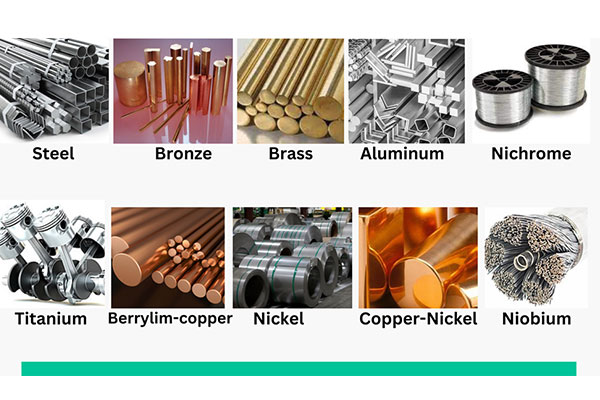
Even experienced people might overlook these hidden risks
As a supply chain operator,I want to warn you about three unique "pitfalls" of German imports:
- Theweightdifferencecausedby"tolerance"
German metals are usually settled based on their theoretical weight,while Chinese customs declare them based on their actual net weight.
Risk: Steel products have tolerances,and the theoretical weight and actual weight may differ by 3% to 5%.If the customs declaration is based on the theoretical weight,and the customs inspection finds a significant discrepancy,it may raise suspicions about the authenticity of the declaration.
Countermeasure: We require the shipper to indicate the "Actual Weighed Weight" on the packing list,or we will conduct a second weighing at the pickup warehouse in Germany.
Some imported metal parts have already undergone preliminary processing (such as threading on both ends and drilling holes).
Risk: At this point,it might no longer be "Steel (Chapter 72)",but "Machine Parts (Chapter 84)" or "General Parts (Chapter 73)".The tax rates are completely different.
Countermeasure: Provide clear physical diagrams and processing drawings.If the holes are drilled solely for transportation convenience,the material is considered steel; if they are drilled for installation purposes,the item is classified as a finished product.
Many steel traders (Stockists) in Germany actually sell goods that are not made in Germany.They might be from Japan or even re-exported from China.
Risk: If the certificate of origin indicates that the goods come from a specific anti-dumping country (for example,some stainless steel products are produced in countries subject to export restrictions),even if the goods are shipped from Germany,anti-dumping duties still need to be paid.
Countermeasure: On the MTC,the Origin column must be clearly specified.You can’t just look at the shipping address being Hamburg.
5 Things That Must Be Done Before Shipping
Don’t wait until the goods arrive at Waigaoqiao to realize that the ingredients are incorrect.Check it immediately now!
- MTCCompositionRe-check:AccordingtotheChineseTaxCode,checkwhethertraceelementssuchasboron(B≥0.0008%)andchromium(Cr≥0.3%)havechangedtheirclassification?
- LicenseQuery:DoIneedanAutomaticImportLicense(7Certificates)forthespecifiedHScode?Ifso,hasitbeenapprovedyet?
- PackagingCompliance:Pleaseconfirmwhetherthewoodenpallets/woodenboxessentfromGermanyhaveanIPPCstamp?(Germansoccasionallyusedisposableplywood,whichisacceptable,butsolidwoodmusthaveastamp.)
- ActualWeightConfirmation:Istheweightontheshippingdocumentsthetheoreticalweightortheactualweight?Hastheerrorrangebeencontrolledwithin3%?
- ABDDocument:Ifit’sanEXWclause,haveyouconfirmedwhethertheGermanagenthasobtainedtheMRNnumberyet?
In a nutshell: Importing German metals,the MTC (Material Certificate) is a core secret.Whoever understands the chemical elements in the MTC will gain the initiative in customs clearance.
Was this helpful? Give us a like!
Contact our experts for compliance audits, precise quotes, and one-stop customs support.
Recent Comments (0) 0
Leave a Reply