
Is the shipping fee more expensive than the value of the goods? The "art of packing containers" for exporting rock wool boards and a guide to avoiding pitfalls in customs classification
or complex compliance issues.
clearance and fund security.
Last month,my friend Li,who works in the building materials export industry,was frowning in his office.A 40-foot high-cube (40HQ) container of rock wool boards that he sent to Vietnam was subject to a claim from the customer.The reason wasn’t due to product quality issues,but rather due to "cargo damage" and disputes over shipping fees.
Old Li,in order to save his client’s shipping costs,desperately squeezed the rock wool boards during loading to try to pack an extra 10% of goods.However,when the goods arrived at the construction site,the client discovered that the rebound rate of the rock wool boards was extremely poor,with the boards cracking and crumbling,making them completely unsuitable for wall installation.To make matters worse,due to the confusion of the HS codes for "rock wool" and "glass wool" during customs declaration,the client was unable to enjoy the zero-tariff benefits of Form E during Vietnamese customs clearance and was instead fined instead.
Rock Wool Board (Rock Wool) as a typical "bulk cargo"(High volume low density),The core pain point of their exports has never been production,but rather logistics cost control and accurate classification.Today,we’re going to break down this seemingly simple category,which is actually riddled with numerous pitfalls.
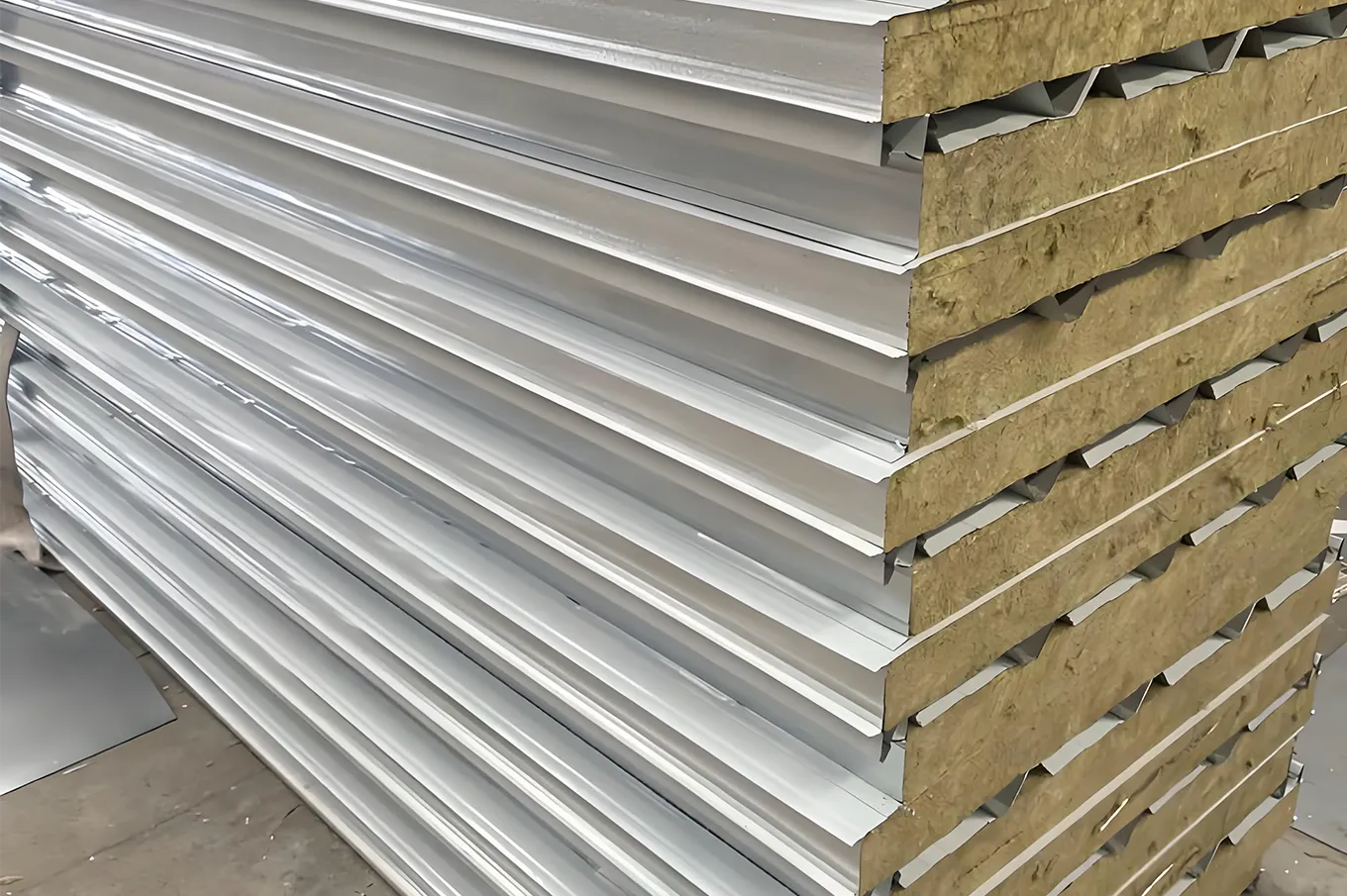
First,the "three-way junction" of rock wool board classification: Don’t mistake stone for glass
In customs classification,insulation materials are extremely easy to confuse.Rock wool,glass wool,and slag wool look very similar,but their tariff codes and regulatory requirements are completely different.
The following table shows a comparison of the most frequently misclassified categories:
| Product Name | Core Ingredients | Correct HS code | Classification Misconceptions and Risks |
| Rock wool / slag wool (Rock/Slag Wool) | The minerals such as basalt and dolomite are melted and processed to make them into products. | 6806.1000 | Most Common Mistake: Classify it under 6806.90 (Other heat and sound insulation products). Consequences: The tax refund rate may be the same,but the tariff preferences at the port of destination may expire. |
| Fiberglass wool (Glass Wool) | It is made by melting glass and quartz sand | 7019.90 Series | Risk: Glass wool belongs to the category of "glass fiber",and is often subject to anti-dumping duties (for example,the European Union and Turkey impose high anti-dumping duties on Chinese glass fiber).Misreporting may result in customers refusing to accept the goods. |
| Ceramic fiber (Ceramic Fiber) | Aluminum oxide,silicon dioxide | 6806.2000 | Risk: The fire resistance rating is higher,but the price is more expensive.If you declare rock wool as ceramic fiber,you may be suspected of overstating the price to evade taxes; conversely,you may be suspected of understating the price to avoid paying taxes. |
Classification core determination logic Output:
- Lookattherawmaterials:Isitastone(basalt)orglass?Thisisthefundamentalwaytodistinguishbetweenthe6806and7019models.
- Lookingattheform:Isitloosecotton(Bulk)orintheformofboards/pipes/blankets(Board/Pipe/Blanket)?
- IfitisBulkTherockwool/slagwool(includingmixtures)fallunderthecategoryof6806.1000.
- IfitismadeofrockwoolasthebasematerialandalargeamountofadhesiveisaddedtoitComplexinsulationproductsSometimes,weneedtoconsider6806.90However,purerockwoolboardsareusuallystillclassifiedas6806.1000Undertheheading.
- Look at Usage: Insulation,sound absorption.
II.The entire process of exporting rock wool boards
- IfitisBulkTherockwool/slagwool(includingmixtures)fallunderthecategoryof6806.1000.
- IfitismadeofrockwoolasthebasematerialandalargeamountofadhesiveisaddedtoitComplexinsulationproductsSometimes,weneedtoconsider6806.90However,purerockwoolboardsareusuallystillclassifiedas6806.1000Undertheheading.
The export of rock wool boards is a typical "volume-sensitive" trade,where the utilization rate of each CBM (cubic meter) directly affects profits.
Step 1: Packaging and compression control Output:
- Painpoints:Rockwoolboardisabrittlematerialwithshortfibers.Donotover-compressit..
- Operation:
- ShrinkWrap:Itisnecessarytousehigh-strengthheat-shrinkablefilm,andeachpackageusuallycontains6-8pieces.
- CornerProtection:Itisrecommendedtoaddpapercornerprotectorstothefourcornersofthepackagingtopreventtheedgesfrombeingdamagedduringloadingandunloading.
- CompressionRateWarning:Unlikeglasswool,whichcanbecompressedataratioof1:5,oreven1:7,thecompressionratioofrockwoolboardsisextremelylow.Donotforciblyvacuum-compressitemsjusttosaveonshippingcostsOtherwise,itwillcausefiberbreakage,andthethicknessofthefabricwillnotbeabletoberestoredafteritarrivesattheport.
Step 2: Cabinet installation planning Output:
- Calculation:Rockwoolboardsareextremelylightweight,andtheloadinglimit(26tons)ofa40HQcontainerisusuallynotreached.Whatactuallylimitsyouis.Volume.
- Practicaldata:Thestandardvolumeofa40HQcontainerisapproximately76cubicmeters,buttheactualloadingcapacityofrockwoolboardsinacontainerisusuallyaround70cubicmeters.65-68CBMLeftandright(subjecttothematchingdegreeofthepackagingsize).
- Technique:Beforeshipping,itisnecessarytoconducta"boxpackingsimulation"onthecomputer.Byoptimizingthecombinationoflength,width,andheight,wecanminimizeemptyspaces.Ifusingpalletpackaging,theloadingratewilldropby10%-15%.Itisrecommendedthatifthedestinationisacountrywithlowlaborcosts,trytoshipinbulkwheneverpossible.
Step 3: Documentation and Compliance Output:
- FormE/FormB:ForexportstoASEANorAsia-Pacificcountries,itisessentialtogothroughthenecessaryprocedures.Itcanreduceorexempttheportofdestination’stariffs.
- Densitydeclaration:Inthe"SpecificationsandModels"columnofthecustomsdeclarationform,thedensity(Density)mustbespecified,forexample,100kg/m3.Densityisanimportantbasisforcustomsvaluation(thehigherthedensity,themoreexpensivethepriceusuallyis).
III.Risk warnings from experts
- ShrinkWrap:Itisnecessarytousehigh-strengthheat-shrinkablefilm,andeachpackageusuallycontains6-8pieces.
- CornerProtection:Itisrecommendedtoaddpapercornerprotectorstothefourcornersofthepackagingtopreventtheedgesfrombeingdamagedduringloadingandunloading.
- CompressionRateWarning:Unlikeglasswool,whichcanbecompressedataratioof1:5,oreven1:7,thecompressionratioofrockwoolboardsisextremelylow.Donotforciblyvacuum-compressitemsjusttosaveonshippingcostsOtherwise,itwillcausefiberbreakage,andthethicknessofthefabricwillnotbeabletoberestoredafteritarrivesattheport.
Output:
- Calculation:Rockwoolboardsareextremelylightweight,andtheloadinglimit(26tons)ofa40HQcontainerisusuallynotreached.Whatactuallylimitsyouis.Volume.
- Practicaldata:Thestandardvolumeofa40HQcontainerisapproximately76cubicmeters,buttheactualloadingcapacityofrockwoolboardsinacontainerisusuallyaround70cubicmeters.65-68CBMLeftandright(subjecttothematchingdegreeofthepackagingsize).
- Technique:Beforeshipping,itisnecessarytoconducta"boxpackingsimulation"onthecomputer.Byoptimizingthecombinationoflength,width,andheight,wecanminimizeemptyspaces.Ifusingpalletpackaging,theloadingratewilldropby10%-15%.Itisrecommendedthatifthedestinationisacountrywithlowlaborcosts,trytoshipinbulkwheneverpossible.
Step 3: Documentation and Compliance Output:
- FormE/FormB:ForexportstoASEANorAsia-Pacificcountries,itisessentialtogothroughthenecessaryprocedures.Itcanreduceorexempttheportofdestination’stariffs.
- Densitydeclaration:Inthe"SpecificationsandModels"columnofthecustomsdeclarationform,thedensity(Density)mustbespecified,forexample,100kg/m3.Densityisanimportantbasisforcustomsvaluation(thehigherthedensity,themoreexpensivethepriceusuallyis).
III.Risk warnings from experts
1.The "formaldehyde" pitfall of eco-friendly glue
The European and American markets are extremely sensitive to the formaldehyde emission of building materials.Phenolic resin adhesive is used in the production process of rock wool boards.If(Must comply with REACH regulations) or in the United States (must comply with CARB standards),it is essential to confirm with the factory that the materials used meet these requirements.Adhesive glue free of formaldehyde or with low formaldehyde contentAnd send the samples to SGS for testing in advance to obtain the test report.Otherwise,if the formaldehyde level exceeds the standard during the random inspection at the port,the goods will be directly destroyed.
2.Rejection Risk Caused by "Prickly Hand"
This sounds ridiculous,but it really happened.Low-quality rock wool boards have a high content of slag balls,coarse fibers,and are extremely irritating and dusty during construction.In developed countries (such as Australia and Canada),trade unions are very powerful.If workers complain that the product severely irritates their skin or respiratory tracts,the entire batch of goods will be returned.It is recommended to choose high-quality products when exporting to developed markets.Low slag content and high acidity factorHigh-quality rock wool from n.
3.The devouring of profits by fluctuating shipping costs
The value of rock wool boards is low (a container of goods may only cost tens of thousands of RMB),butThe fees can be as high as several thousand US dollars.The proportion of shipping costs is extremely highWhen signing the contract (PI),try to recommend FOB terms so that the client can bear the risk of fluctuating freight charges themselves.If CIF is necessary,it’s essential to leave enough room for freight cost fluctuations in the quote or specify that "the freight charges will be reimbursed based on actual expenses".
Four,Quick Action List
Before the production of your rock wool board order begins,please immediately carry out the following three inspections:
- DensityRe-check:Usinganelectronicscaletorandomlychecktheactualdensityofsamples.Manyfactories,inordertosavecosts,labelthedensityas100kg/m3,buttheactualvalueisonly90kg/m3.Thisisnotonlyfraudulent,butalsomayleadtothegoodsbeingdetainedbycustomsfor"non-compliancewithspecifications"duringinspections.
- ContainerLoadingSimulation:Obtaintheexactpackagingdimensions(lengthxwidthxheight)fromthefactoryandcalculatetheloadingcapacityofasinglecabinet.Ifyoufindthatthere’stoomuchwastedspace,immediatelyadjustthenumberofsheetsperpack(forexample,from6sheetsto8sheets).
- Labelcompliance:Confirmthattheouterpackaginglabelsclearlydisplay"MadeinChina",specificationsanddimensions,andfire-resistanceratings(suchasClassA1).Thesearetheminimumrequirementsforcustomsclearanceatthedestinationport.
Was this helpful? Give us a like!
Contact our experts for compliance audits, precise quotes, and one-stop customs support.
Recent Comments (0) 0
Leave a Reply