
Japanese High-Pressure Cleaner Agency Guide | Voltage Compliance & Hidden Supply Disruption Risks
or complex compliance issues.
clearance and fund security.
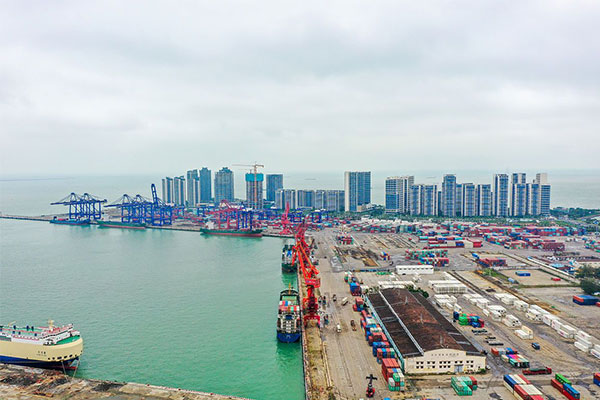
Do you think getting a license from a Japanese brand is enough to guarantee success?In the high-pressure cleaning machine agency industry,90% of novice agents fail due to the seemingly insignificant issue of "technical compatibility".Last week,a friend who specializes in factory equipment integration complained to me: He purchased a batch of so-called "Japanese original imported" cleaning machines at a low price,but when the client plugged them in on-site,the machines instantly burned out.The reason was simple - he overlooked the fundamental differences in frequency and voltage between Japan’s 100V/200V and China’s industrial power supply of 380V/220V.In B2B equipment agency,product selection is just the beginning.The real challenge lies in how to avoid technical standard differences and the hidden risks of supply chain disruptions.
Why is "genuine imported" often a pitfall in agency contracts?
Many purchasing managers,when encountering Japanese high-pressure washers (such as the Karcher Japan line,the Nilfisk high-end line,or specific industrial brands),are often dazzled by the "authentic" halo.However,there are subtle differences between the electrical standards of the Japanese domestic market and the IEC international standards.More importantly,Japanese manufacturers exercise far stricter control over intellectual property and distribution channels than European and American brands.
Before signing an agency agreement,it is essential to clarify the technical thresholds and cost structures behind "original imports".The following table compares the core differences between directly representing Japanese domestic models and representing export models (or OEM models),which is the key factor determining your after-sales costs.
| Key Indicators | Japanese domestic sales models (high risk) | International Export/Model Specifically Designed for Aircraft (Recommended) |
|---|---|---|
| Voltage/Frequency Standard | Single-phase 100V/50-60Hz or three-phase 200V | Single-phase 220-240V / Three-phase 380V-415V |
| Plug and cable | The JIS C 8303 standard (parallel two-pin plug or grounding two-pin plug) cannot be used directly in China. | Conform to GB/T 2099 or the industrial coupler standard |
| Warranty terms | It’s usually only available within Japan,and cross-border repairs are extremely expensive | Support global warranty or special maintenance services in China |
| Accessory supply cycle | Extremely long (needs to be dispatched from Japan,no spare parts available in overseas warehouses). | Regular (there is a spare parts warehouse in the domestic or Hong Kong bonded warehouse) |
| Compliance risk | Without CCC certification,it constitutes illegal sales and will face customs seizure and fines imposed by the Market Supervision Bureau | Having completed the PSE and CCC certifications,the product is now ready for compliant sales. |
The 4-Step Due Diligence SOP for Obtaining Agency Rights
Don’t wait until the goods arrive at the port to realize that they can’t be cleared through customs,nor wait until customers complain to discover that you’ve purchased the wrong voltage.As a professional B2B agent,you need to establish a standardized admission process.
Step 1: The "rigorous" review of nameplates and certifications Output:
Don’t just look at the product catalog.You must require the manufacturer to provide high-definition photos of the sample machine or the nameplate.Pay special attention to the following three parameters:
- RatedVoltage:Itisnecessarytoclearlymark220Vor380V,anditisstrictlyprohibitedtouse100V.
- Frequency:Chinauses50Hz,whileJapanhasdifferentstandards:50HzineasternJapanand60HzinwesternJapan.Therefore,themotormustbecompatiblewith50Hz.
- CertificationMark:It’samusttohaveit.CCCMandatorycertificationmark(formotorproductsabove220V).IfitisaPSEcertification,youneedtoconfirmwhetheritisadiamond-shapedPSE(highrisk)oraroundPSE(lowrisk).
Step 2: "Stress Test" of the Parts Supply Chain Output:
High-pressure washers are high-frequency loss equipment,and sealing rings,plunger pumps,and one-way valves are vulnerable parts.During the negotiation stage,it is necessary to require the Japanese side to provideVulnerable Parts BOM Table (Bill of Materials)And the quotation.Key action: Ask "If a Chinese agent places an order,what is the delivery time for the core pump heads?" If it exceeds 4 weeks,it indicates that they don’t have spare parts support in China,so don’t accept this agency right.
Step 3: Defining the "red line" of the contract’s exclusivity clause Output:
Japanese companies’ contracts are usually extremely strict,so it’s important to guard against the "minimum order quantity (MOQ)" trap.It’s recommended to add an "exit mechanism" clause to the contract: for example,if the target is not met for two consecutive quarters,the agency rights will automatically be downgraded rather than triggering a huge penalty claim.At the same time,it’s necessary to clarify the responsibilities and obligations of both parties in the contract to avoid potential disputes in the future.After-sales Liability Definition: The damage caused by voltage mismatch must be borne by the manufacturer,not the agent who should not be held responsible for it.
Step 4: Conduct "brute force" testing on the actual device Output:
Before large-scale procurement,it is necessary to purchase a prototype for a continuous 72-hour aging test.The focus is on monitoring the motor temperature rise (whether it meets the insulation grade) and the pump head pressure decay.Many so-called "Japanese technologies" are actually domestically produced under OEM contracts,with serious over-claiming of pressure.The actual test data will be the most powerful bargaining chip for you to negotiate a price premium.
The Overlooked "Parts Profit" Model
Many agents only focus on the 5%-10% gross profit margin of whole machine sales,but overlook the real gold mine of the high-pressure cleaning machine industry —After-sales partsJapanese original parts are usually expensive and the supply chain is closed,which is both a pain point and an opportunity.
The approach of seasoned players is to not only negotiate the whole machine,but also bundle it during the agency negotiation.First-Purchase Spare Parts KitThe purchasing authority.By analyzing the customer’s usage scenarios (such as cleaning oil stains in food factories or rust removal on steel structures),predict the consumption rate of high-pressure guns,nozzles,and cleaning agents.If you can successfully adapt high-quality domestic replacement parts (without affecting the warranty),your overall profit margin could increase by more than 20%.Remember,don’t put all your eggs in the basket of Japanese original parts.Once they stop supplying,your after-sales team will be instantly paralyzed.
Three inspections to be carried out immediately this week
If you are currently working on or planning to work on the Japanese cleaning machine project,please immediately implement the following actions:
- Verifytheinventorynameplates:Gotothewarehousetoinventoryallexistinginventory,checkthevoltageandfrequencyonthenameplatesonebyone,andconfirmwhetherthereareany"timedbombs"withavoltageof100V.
- RequesttheCCCcertificate:ContactthesupplierandrequesttheelectronicversionoftheCCCcertificatesforallmodelswithavoltageabove220V.Then,verifytheirauthenticityontheofficialwebsiteoftheChinaCertification&AccreditationAdministration(CNCA).
- Estimatethedeliverytimeofspareparts:Simulatetherepairprocessfora"plungerpumpfailure"andrecordtheactualresponsetimefromplacinganordertoreceivingtheparts,inordertoevaluatethecurrentresilienceofthesupplychaintorisks.
Was this helpful? Give us a like!
Contact our experts for compliance audits, precise quotes, and one-stop customs support.
Recent Comments (0) 0
Leave a Reply