
Automotive Parts Import: Strategies for Profit & Efficiency
or complex compliance issues.
clearance and fund security.
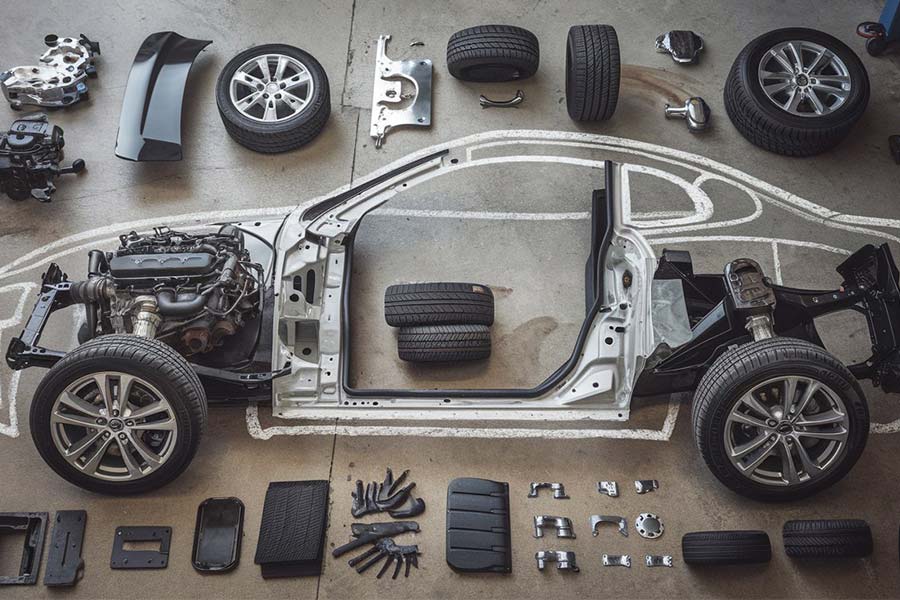
I.RetailCurrent Market Situation and Challenges of Imports
With China’s car ownership exceeding 350 million vehicles (2023 data),the demand for aftermarket parts continues to grow,making imported overseas brand parts a profit driver for retailers.However,significant industry pain points remain:
1.High category complexity: Engine components,electronic systems,exterior modification parts,etc.must comply with different regulatory standards;
2.Concentration of compliance risks: Cross-regulation such as EU e-mark certification,US DOT certification,and China’s 3C catalog;
3.Supply chain long-tail effect: Small-batch,multi-frequency procurement leads to logistics costs accounting for 25%-30% of total expenses;
4.Terminal competition intensifies.: The price war on e-commerce platforms is forcing importers to optimize procurement costs.
II.Comprehensive Breakdown of the Automotive Parts Import Process (Taking China as an Example)
Phase 1: Preliminary Risk Control Planning
1.Pre - classification of Goods
- Inaccordancewiththe"People’sRepublicofChina"TheCustomsTariffaccuratelyidentifiesHScodes(e.g.othermotorvehiclepartsandaccessoriesunder8708.99).
- Typicalcase:Thetariffdifferencebetweenturbochargers(8414.8090)andexhaustsystems(8708.92)reaches8%.
2.Prequalification for Access Qualifications
- MandatoryCertificationVerification:The2023UpdatedCCCCatalogCovers12CategoriesofAutoPartsIncludingBrakePadsandSeatBelts
- Intellectualpropertyrecordfiling:PreventingtrademarkinfringementofOEMparts(e.g.BMWfilteranti-counterfeitingcodeverification)
Phase 2: International Procurement Execution
1.Trade Term Selection
- ItisrecommendedtopurchaseunderFOBterms.Risk(CICclausescoverrisksofaccessoryrustdamageandpackagingdeformation)
- UnderDDPterms,destinationportchargesmustbecalculated(takinga40HQcontainerasanexample:portTHC+documentationfeeisapproximately¥3800).
2.Optimization of Origin Strategy
- ASEANFORMECertificate(somepartsenjoy0%tariff)
- ComparisonofDeliveryTime:PolandLine21daysvs.SeaFreight35days(2023MarketQuotation)
Phase 3: Key Customs Clearance Nodes
1.Declaration element management
- Theenginepistonmustdeclarethematerial(aluminumalloy/castiron)andapplicabledisplacement(e.g.1.5L≤displacement≤2.0L).
- Themodificationofwheelhubsrequiresthesubmissionofdesigndrawingsasevidenceofnon-infringement.
2.Accurate tax calculation
- Comprehensivetaxrateformula:VAT13%+Customsduty(basedonHScode)+Consumptiontax(applicabletospecificcategoriesonly)
- Case:ThecomprehensivetaxrateforimportedJapanesewiperblades(8708.50)isapproximately18.7%.
Phase 4: Domestic Distribution Layout
1.Bonded warehouse applications
- 1210modelstockpreparation(singleitemvalue≤¥5000eligibleforpostaltaxbenefits)
- RegionalWarehousePlanning:LogisticsCostComparisonBetweenEastChina(Shanghai/Ningbo)andSouthChina(Nansha,Guangzhou)
2.Utilize the China - ASEAN Free Trade Agreement (ACFTA) to reduce tariffs,and a Form E certificate of origin is required.
- EstablishanEPCelectroniccatalog(vehiclecompatibilitydatabase)
- DesignofReturnandRepairSolution(ApplicationforCustomsBondReduction)
III.Industry Experience: 5 Practical Strategies for Cost Reduction
1.Container Loading Optimization
- Irregularaccessoriesareloadedusingsuspendedbrackets(increasingvolumeutilizationby15%-20%).
- FragileItemPackagingStandard:ISTA3ETestCertification+HumidityIndicatorCard
2.Tariff reduction pathways
- EnterprisesapplyingforAEOcertificationenjoyareducedinspectionrateof0.8%.
- UndertheRCEPframework,theimporttariffonsparkplugsfromSouthKoreawillbegraduallyreducedfrom8%tozeroyearbyyear.
3.Supply chain financial tools
- Financing(Extendingthepaymenttermto90daysbyutilizingthedocumentpresentationperiod)
- TariffGuaranteeInsuranceasaSubstituteforCashDeposit(Relieving90%ofFinancialPressure)
4.Digital Risk Control System
- BlockchainTraceability(Recordingtheentirechainofproduction,transportation,andqualityinspectionforcomponents)
- BigDataAlert(MonitoringHSCodeAdjustmentsandAnti-DumpingInvestigationTrends)
5.Differentiated Product Selection Matrix
- Long-tailproducts:AutomotiveSpecialPart(ChargingPortProtectiveCover)
- High-value-addedproducts:Racing-grademodificationkits(grossprofitmarginexceeding60%)
IV.Typical Case: Review of a German Brake Pad Import Project
Products with paint coatings were detained by the Los Angeles Customs for CPSC lead content sampling inspection:
- TheproductinvolvesdualrequirementsofEUECER90certificationandChinaGB5763.
- ClaimsDisputeOverWetDamageDuringOceanShipping
Solution:
- SubmitthetechnicaldocumentcomparisonreporttotheChinaCertificationCentreforAutomotiveProducts(CCAP)inadvance.
- Activatethetemperature-controlledcontainer(20°C±2°C)withanadditionalIPPCfumigationcertificate.
- Locktheclassificationconclusion(HSCODE8708.39)throughthepre-rulingsystem.
Achievements:
- Customsclearancetimereducedto2workingdays.
- Thecargodamageratedecreasedfrom3.2%to0.5%.
- Annualprocurementcostsdecreasedby14%.
V.Future Trends: Digital Transformation Reshapes the Industry Ecosystem
1.Intelligent classification system: AI automatically matches HS codes (with an accuracy rate of 98.6%)
2.Cross-border supply chain visualization: IoT devices monitor temperature/humidity/vibration data in real time
3.Compliance Automation Platform: One-click generation of multi-country certified technical documentation
Conclusion:
The import of automotive parts has transitioned from the "trade margin era" to the "supply chain value competition era".Choosing an agent service provider with full-chain service capabilities,a localized customs clearance network,and in-depth knowledge of automotive industry policies will be key for retailers to establish core competitiveness.It is recommended that enterprises focus on the dual-driven model of "compliance cost control" and "end-user data empowerment" during their planning process,in order to address regulatory challenges such as the upcoming implementation of the new EU battery law and the US supply chain traceability act in 2024.
Was this helpful? Give us a like!
Contact our experts for compliance audits, precise quotes, and one-stop customs support.
Recent Comments (0) 0
Leave a Reply