
German Auto Parts Import: Process & Solutions
or complex compliance issues.
clearance and fund security.
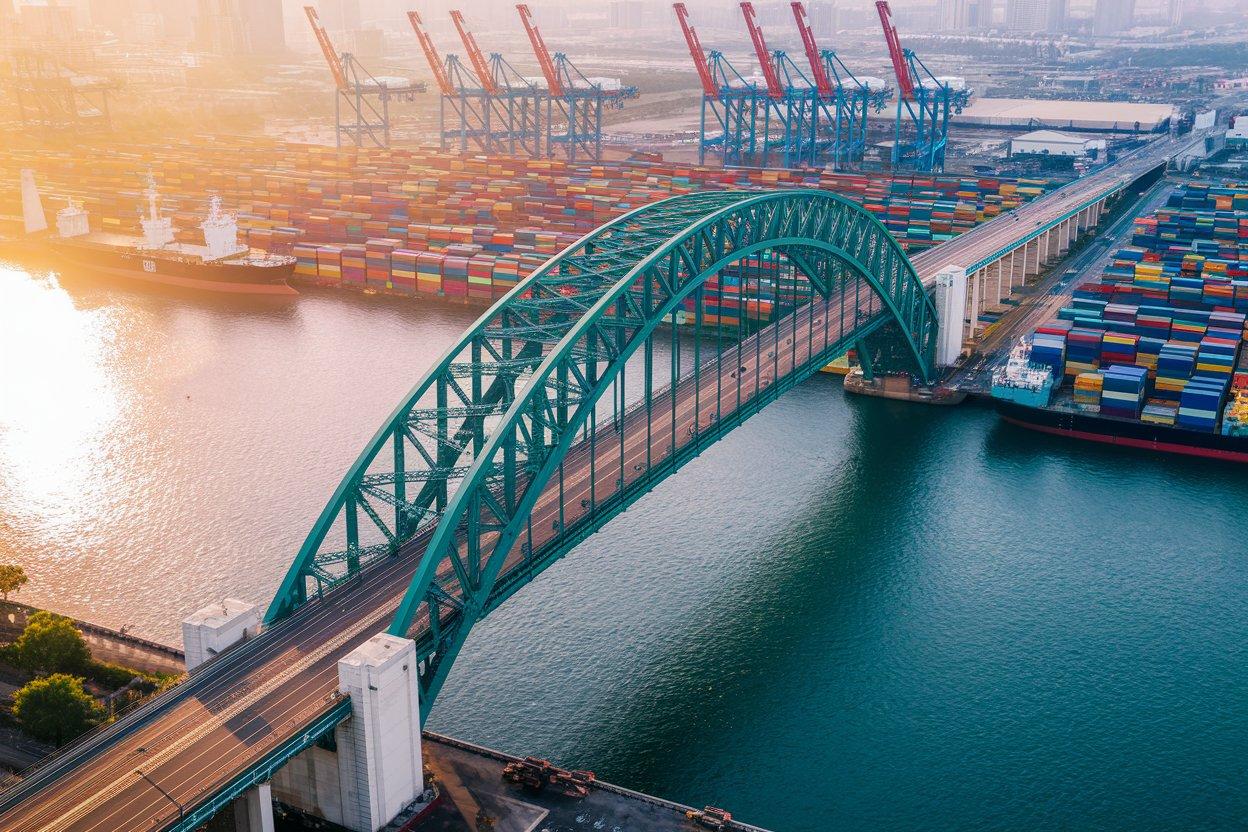
German import: Embark on an Efficient Import Journey
In today’s globalized world,importing automotive parts from Germany has become a choice for many businesses.However,the import process involves numerous steps,from document handling to logistics arrangements,and from dealing with international trade situations to.Certification and other steps are all crucial.
Professional document processing and logistics arrangement
- DocumentationProcessing
Documentation is a critical component of import trade.For importing automotive parts from Germany,the first step is to prepare a Commercial Invoice,which provides detailed information such as the description,quantity,and value of the goods,serving as a key basis for customs valuation and taxation.The Packing List must accurately itemize the contents of each package to facilitate customs inspection and logistics inventory management.The Bill of Lading is the most essential document,as it represents ownership of the goods.When handling these documents,our professional team ensures all information is accurate and strictly complies with the relevant regulations of Germany and the importing country.For instance,Germany has specific technical parameters and safety standards for automotive parts,which must be clearly reflected in the documentation to avoid delays or issues during customs clearance.
Transporting auto parts from Germany,options include:or.Sea freight costs are relatively low,making it suitable for large-volume cargo transportation.However,attention must be paid to scheduling,and booking space in advance (Booking Space) is necessary to ensure timely shipment.During sea freight,it is essential to monitor the ports of loading (Port of Loading) and discharge (Port of Discharge) to avoid delays caused by port congestion or other issues.For urgently needed parts,air freight is a faster option.However,air freight costs are higher,so a balance between cost and delivery time must be considered.Throughout the logistics process,we select reliable carriers (Carrier) and purchase sufficient cargo insurance (Cargo Insurance) to mitigate risks such as damage or loss of goods.
Russian Market: Advantages of VTB’s Foreign Exchange Settlement Convenience
If the imported German auto parts are partially resold to the Russian market,our company possesses a unique advantage—convenient foreign exchange settlement through VTB.Foreign exchange settlement refers to the process where the owner of foreign exchange income sells it to a designated foreign exchange bank,which then pays an equivalent amount in local currency at a certain exchange rate.In trade with Russia,conducting foreign exchange settlement via VTB Bank offers a more streamlined and efficient process.Typically,after the goods are delivered to Russian clients,the foreign exchange payments from customers are first deposited into our account at VTB Bank.Our professional finance team promptly executes the foreign exchange settlement based on the daily exchange rate,converting the foreign currency into local currency to mitigate risks associated with exchange rate fluctuations.Additionally,VTB Bank has an extensive business network and a strong reputation in the Russian financial market.Partnering with them effectively avoids delays in settlement caused by interbank clearing issues,ensuring rapid fund transfers and providing robust support for corporate cash flow.
Southeast Asian Market: Detailed Processes and Solutions
- ImportProcess
When German-imported auto parts are shipped to Southeast Asian markets,the relevant documents must be prepared in advance and submitted to the local customs for declaration (Customs Declaration) before the goods arrive at the destination port.Customs will conduct an inspection (Customs Inspection) based on the declared information,primarily verifying the authenticity,quantity,and quality of the goods,as well as their compliance with local regulatory standards.For instance,some Southeast Asian countries impose stringent environmental standards on auto parts,and goods that fail to meet these standards may be denied entry.Once the inspection is cleared,the company must pay the corresponding duties (Tariff) and taxes such as Value-Added Tax (VAT).The calculation of these fees is based on factors like the value of the goods and their tariff classification.Only after completing all customs procedures and paying the required fees can the goods be successfully released (Release).
To address the complex import procedures in the Southeast Asian market,we provide a one-stop solution.Before the shipment of goods,we thoroughly understand the regulatory and policy changes in the destination country,assisting enterprises in preparing the required documentation in advance.For instance,for certain automotive parts that require specific certifications,we promptly inform businesses of the necessary certification types and help them prepare the application materials.During the customs clearance process,we establish close collaboration with local customs brokers,leveraging their familiarity with local customs policies and operational procedures to complete clearance formalities quickly and efficiently.Additionally,we monitor the local logistics and distribution situation to ensure that goods are delivered safely and promptly to customers.
The current international trade situation: challenges and opportunities coexist.
- Challenges
The current international trade situation is complex and volatile.The rise of trade protectionism has led some countries to continuously raise tariff barriers,increasing the cost of importing automotive parts into Germany.For instance,certain nations impose high anti-dumping duties on imported parts to protect their domestic automotive parts industry.Meanwhile,the ongoing impact of the pandemic has introduced numerous uncertainties to international trade,with logistics supply chains disrupted,port congestion causing extended shipping times,and freight costs soaring significantly.Additionally,frequent adjustments in regulations and policies across countries—such as changes in environmental standards and safety certification requirements—pose challenges for businesses.Failure to promptly understand and adapt to these changes can easily lead to issues during the import process.
Despite the challenges,there are also opportunities.With the gradual recovery of the global economy,the demand in the automotive industry continues to grow,leading to an increased need for imported auto parts.The economic development of emerging market countries and the acceleration of urbanization have driven a sustained rise in car ownership,creating a vast market space for Germany’s high-quality auto parts.Meanwhile,digital technologies are being increasingly applied in international trade,with methods such as electronic documentation and online customs declarations improving trade efficiency and reducing transaction costs.Our company actively embraces these changes by leveraging digital tools to optimize documentation processes,enhance the real-time tracking of logistics,and better adapt to the evolving landscape of international trade.
Product Certification Services: Assisting Enterprises in Smooth Customs Clearance
For German imported automotive parts,different markets have varying certification requirements.In the EU market,automotive parts typically need to comply with CE certification to demonstrate that the products meet the relevant EU directives and harmonized standards.In the Southeast Asian market,some countries may require local quality certifications or compliance with specific technical standards.Although our company does not directly provide certification services,we leverage our extensive experience to accurately inform businesses of the required certification types,assist in gathering the necessary documentation,and facilitate communication and coordination with certification bodies.For example,we help companies prepare technical parameters,test reports,and other materials to ensure a smooth certification application process.With our assistance,businesses can better meet market certification requirements,avoiding issues such as customs clearance delays or sales obstacles due to certification problems.
In summary,importing automotive parts from Germany involves multiple complex steps.However,with our company’s professional expertise in document processing and logistics arrangements,the advantage of VTB settlement for the Russian market,detailed import-export process solutions for the Southeast Asian market,proactive responses to the challenges and opportunities in the current international trade landscape,and strong support in product certification,we are well-positioned to ensure an efficient and smooth import journey for your business.
Was this helpful? Give us a like!
Contact our experts for compliance audits, precise quotes, and one-stop customs support.
Recent Comments (0) 0
Leave a Reply