
IBC Container Guide: Definition, Standards, and Requirements
or complex compliance issues.
clearance and fund security.
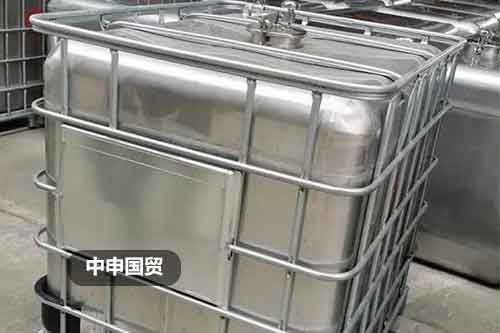
IBCs refer to Intermediate Bulk Containers,which are usually used to contain liquid or bulk solid dangerous goods.The definition and classification of IBCs are usually formulated and managed by institutions such as the International Organization for Standardization (ISO) and the United Nations (UN).
The following are some requirements and standards for IBCs:
Definition and Classification of IBCs
IBCs refer to containers with a capacity between 450 liters and 3000 liters,specially designed for transporting and storing liquid and bulk solid dangerous goods.
According to different structures and materials,IBCs can be divided into rigid IBCs and flexible IBCs.
Rigid IBCs are usually made of metal,plastic or composite materials,with a square or rectangular shape,and have components such as an upper cover,a lower cover and a discharge port.
Flexible IBCs are usually made of plastic film,with a three - dimensional bag - like shape,and have components such as a discharge port and a liquid level indicator line.
IBC Packaging Markings
The markings of IBCs should comply with the regulations of the International Organization for Standardization (ISO) and the United Nations (UN).The marking content should include the name of the dangerous goods,UN number,IBC volume,manufacturers name,production date and the duration of the marking,etc.
IBCs should keep the markings clearly visible during transportation and storage,and shall not be altered or blocked.

IBCs packaging marking instructions
| 11A/Y/02/98/ CN/XXXX/5500/1500 | Indicates a steel metal intermediate bulk container for transporting solids,unloaded by gravity,applicable to packing groups I and II,manufactured in February 1998,approved by China,produced by XXXX,with the stacking test load and the maximum allowable total mass expressed in kilograms (kg). |
| 13H3/Z/0398/ CN/XXXX/0/500 | Indicates a flexible intermediate bulk container for transporting solids,unloaded by gravity,made of plastic woven fabric with an inner lining material; not designed for stacking. |
| 31HA1/Y/0498/ CN/XXXX/1C800/1200 | Indicates a composite intermediate bulk container for transporting liquids,with a rigid plastic inner container and a steel outer shell. |
| 31H1/Y/0589/ CN/XXXX/10800/1200 | Indicates a rigid intermediate bulk container made of plastic for transporting liquids and having a structural device to support the stacking load. |
| 11C/X/0193/ CN/XXXX/3000/910 | Indicates a wooden intermediate bulk container for transporting solids,with an inner lining,approved for transporting substances in packing groups I,II or III. |
IBC Performance Testing Requirements
IBCs should undergo a series of performance tests to ensure that they can safely transport and store dangerous goods.
The test items include static load - bearing capacity,dynamic impact capacity,load - bearing capacity,liquid leakage performance,leakage performance,stability,etc.
IBC Usage Identification Requirements
In China,the use appraisal of IBCs is regulated by the Regulations on the Use and Management of Intermediate Bulk Containers for Dangerous Goods (GB/T 29052 - 2012) jointly issued by the General Administration of Quality Supervision,Inspection and Quarantine of the Peoples Republic of China (AQSIQ) and the Standardization Administration of China (SAC).
This standard has detailed regulations on the design,materials,manufacturing,inspection,marking,transportation,storage and use of IBCs,and requires production enterprises to meet the requirements of the ISO 9001 quality management system and the ISO 22000 food safety management system.
Before using IBCs,an appraisal must be carried out,including aspects such as appearance inspection,dimension measurement,water - tightness test,quality control inspection and performance inspection,to ensure that they meet the standard requirements and are safe and reliable.At the same time,users must also use and maintain them in accordance with the standard requirements and conduct regular inspections and maintenance to ensure their service life and safety.
Was this helpful? Give us a like!
Contact our experts for compliance audits, precise quotes, and one-stop customs support.
Recent Comments (0) 0
Leave a Reply