
Practical Guide to Importing Korean Cosmetics: Avoiding NMPA Registration and Hidden Risks in the Supply Chain
or complex compliance issues.
clearance and fund security.
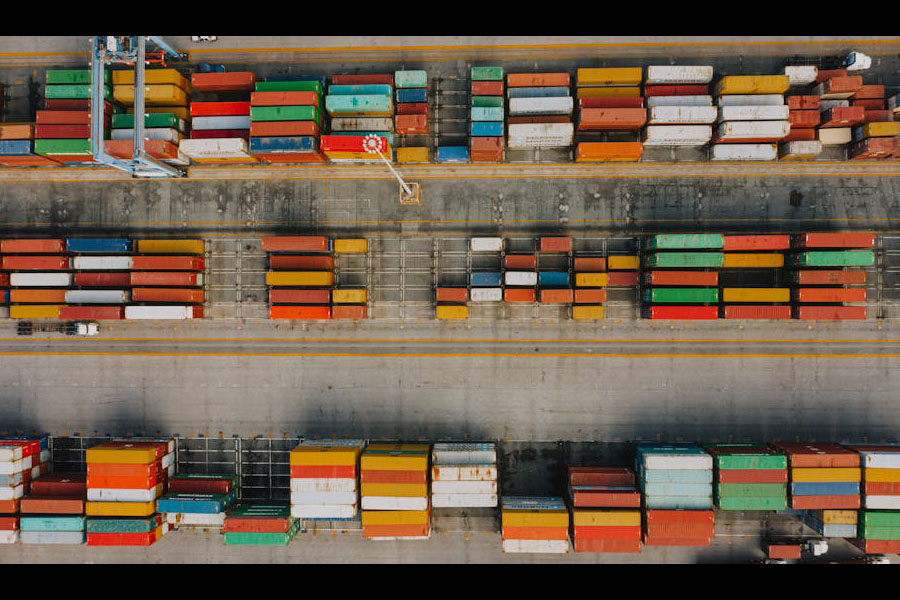
Many cross-border sellers and brand owners have a fatal misconception: as long as they obtain a formal authorization letter from a Korean brand,they can simply send the goods to China and successfully list them for sale.However,the reality is often harsh—more than 60% of the goods detained during customs inspections are not due to "smuggling," but rather because of other issues.The filing materials do not match the actual goodsorThe declared ingredients of the raw materials do not comply with regulations.Especially with the comprehensive tightening of supervision over imported cosmetics by the National Medical Products Administration (NMPA) of China,the traditional "duty-inclusive customs clearance" model is facing a devastating blow.If you don’t want your first batch of goods to be stranded in the bonded zone for half a year and incur high demurrage charges,you must reassess your approach.Strategy.
Import Mode Selection & Compliance Cost Breakdown
Before looking for a Korean cosmetics import agent,as a purchasing manager,you must first understand the differences between "general trade" and "contractual trade".The essential difference between "drug registration" and "cosmetic registration" lies in this.This directly determines your capital utilization rate and compliance costs.Many enterprises choose the wrong model,resulting in genuine products that cannot be listed domestically due to the lack of an "efficacy evaluation report".
| Comparison dimension | General trade imports (0110) | Cross-border e-commerce bonded warehousing and inventory preparation (1210) |
|---|---|---|
| Regulatory core | It is necessary to obtainImport Cosmetics Registration Certificate/Registration License(NMPA),requires Chinese label review. | It is required to be within the positive list of cross-border e-commerce and subject to the supervision of personal self-use imported goods,without the need for first-time import registration. |
| Tax costs | Tariffs + Value-Added Tax + Consumption Tax (with a relatively high comprehensive tax rate,typically over 30%-50%). | The comprehensive tax for cross-border e-commerce (tariff exemption,a 30% discount on value-added tax/consumption tax,typically around 9.1%). |
| Documentation Requirements | Free Sale Certificate,Full project detection reportEffectiveness Evaluation Report. | The documentation is relatively simple,but it is necessary to ensure the traceability of the source.Some ports require the provision of electronic authorization documents. |
| Applicable scenarios | Offline boutiques,Tmall flagship stores,and distributors (which must be legally circulating within mainland China). | Online cross-border stores such as Youpin,Tmall Global,and Douyin (TikTok) are only for personal use. |
The implementation of SOP for the compliance of Korean cosmetics imports
Regardless of the mode you choose,the following process is the minimum requirement to ensure that the goods are not returned.Please send this checklist to your freight forwarder or agency to confirm their ability to execute the tasks.
Step 1: Pre-review - It’s not just about checking the authorization letter Output:
Don’t just focus on whether the chain of the brand authorization document is complete.For Korean cosmetics,it’s essential to check it carefully.The real-time compliance status of production enterprisesThe Korea Food and Drug Administration (MFDS) regularly updates the list of non-compliant enterprises.If the factory is notified before shipment,your goods will be destroyed upon arrival at the port.
- Action:ItisrequiredthattheagentprovidetheGMPcertificationandgoodproductionrecordsoftheKoreanmanufacturingenterprises.
- Action:CheckwhethertheproductformulacontainsingredientsthatareprohibitedinChina(suchascertainhormonesandspecificpreservatives).
Step 2: Overcome the NMPA registration (the most time-consuming step) Output:
If it’s general trade,this is the biggest obstacle.The new regulations require that you must provide.Efficiency Evaluation Report.
- Ordinarycosmetics:Afilingprocessisrequired,andthematerialstobepreparedincludetheproductformula,abriefdescriptionoftheproductionprocess,andatoxicologicaltestreport.
- Specialcosmetics:(Hairdye,spotremoval,sunscreen,etc.)requireregistration,cycleupto12-18months,extremelyhighcost.
- Keypoints:ConfirmwhethertheKoreanfactorycanprovideacompletesetofdocuments.RawmaterialsubmissioncodeWithoutareportingcode,it’simpossibletoproceedwiththefilingprocessinChina,whichisthecorereasonwhymanynewbrandsarecurrentlystuckinadilemma.
Step 3: Check the Chinese labels against the ingredients Output:
It often happens that Korean factories "fine-tune the formula" without notifying their agents,resulting in discrepancies between the actual ingredients of the goods and the registered certificates.
- Action:Beforeshipping,randomsamplesareselectedandsenttoqualifieddomesticlaboratoriesforpre-inspectionoftheiringredients.
- Action:Chineselabelsmustinclude:theChinesenameoftheproduct,thecountryoforigin,thenameandaddressoftheagent,theshelflife,necessarywarningstatements,andaningredientlist(arrangedindescendingorder).
Step 4: Customs declaration and port inspection Output:
Choose ports with experience in cosmetics inspection (such as Shanghai and Guangzhou) to avoid having your goods subject to excessive inspections at non-major ports,which could lead to a surge in inspection rates.
- Action:Pleaseconfirmtherequirementsforobtaininga"HealthCertificate"inadvance.Forgeneraltradesales,aHealthCertificate(nowcalledan"InspectionandQuarantineCertificate")ismandatory,andtheagentcompanymusthavethequalificationtohandlesuchmattersonbehalfofclients.
“Hidden Landmines” Known Only to Industry Veterans
After 15 years in the supply chain industry,the most tragic case I’ve ever encountered wasn’t having goods seized by customs,but being "stabbed in the back" by brand owners.Many small and medium-sized Korean brands (especially OEM/ODM factories) are very domineering.They often directly print "Made in Korea" and Korean-language instructions on packaging boxes,but.Refuse to affix Chinese labels on the packagingIt is required to manually label the products in the warehouse located within the territory of China.
There is a huge legal risk here: according to the "Regulations on the Supervision and Administration of Cosmetics",The minimum sales unit must have Chinese labelsIf it is found during the port inspection that the product is in large packaging (without Chinese labels) and the labels are only affixed after entering the bonded zone,once it is reported by professional anti-counterfeiting organizations or subject to random inspections by customs,it will be classified as "unqualified labels" and face fines of 3-10 times the product value.High-end agency companies will advise you to directly require Korean factories to complete "Chinese label overprinting" or "label affixing" before shipment.Although this will increase the procurement cost a bit,it can avoid huge compliance risks in China.Additionally,pay attention to the Korean cosmetics’Shelf life algorithmIn South Korea,the labeling format typically uses "production date + expiration date",while in China,it is required to clearly indicate the "use-by date".Miscalculations of this timeframe can lead to a large number of customer complaints and professional liability claims.
Take action immediately: Conduct a self-check of the procurement that must be completed this week.
Don’t wait until the goods arrive at the port to check the information.Go ahead and carry out the following actions now:
- Checktherecipetable:AsktheR&Ddepartmenttoprovidethefullingredientlistoftheexistingproducts,andcheckonebyonewhetherthereisariskofexceedingtheallowablelimitsofprohibitedorrestrictedsubstancesintheNationalMedicalProductsAdministrationdatabase.
- ConfirmRawMaterialSubmissionCode:SendanemailtotheKoreansuppliersandrequestthe"rawmaterialsubmissioncode"certificatesforallrawmaterials.Iftheydon’tknowwhatthisis,itindicatesthatyoursupplierdoesnothavethecapabilitytoexporttoChinaincompliancewithregulations.Youmustimmediatelyreplacethemorseektheassistanceofaprofessionalagent.
- AuditAgentQualifications:Askyourpotentialimportagent:"HaveyouhandledNMPAregistrationforsimilarKoreancosmeticsproductsbefore?Pleaseprovidetheregistrationnumbersofthelastthreesuccessfulcases."
Was this helpful? Give us a like!
Contact our experts for compliance audits, precise quotes, and one-stop customs support.
Recent Comments (0) 0
Leave a Reply