
Imported Second-hand Blow Film Machine Practical Manual: How to Avoid the "Deep Pit" of CCIC Inspection and Customs Valuation
or complex compliance issues.
clearance and fund security.
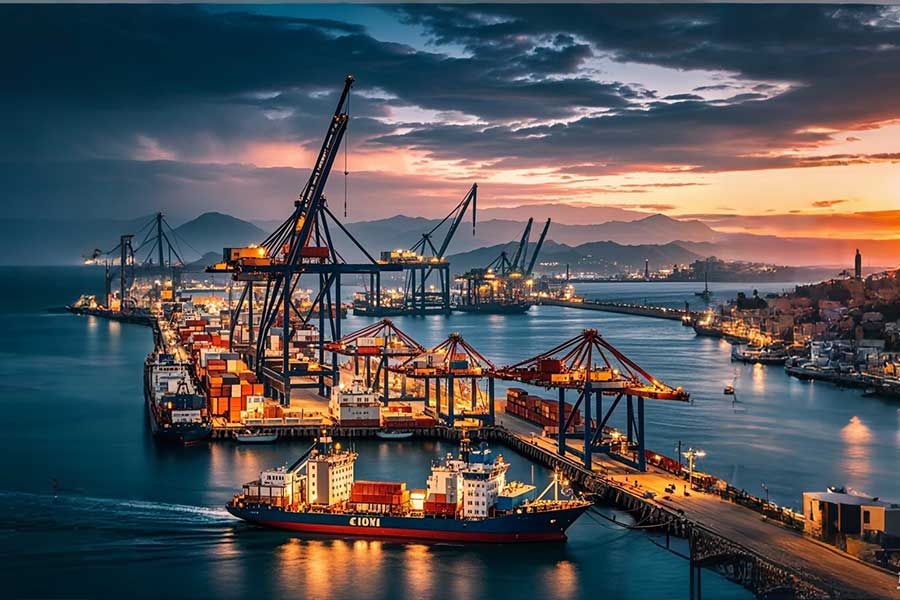
Many business owners in the plastic packaging industry have experienced this "bargain-hunting" mentality: When they see three-layer co-extrusion blow molding machines that have been phased out overseas and priced at just 20% to 30% of the cost of new machines,they think they can make a sure profit by simply shipping them back.However,the reality is often harsh—You might think you’re buying equipment,but the customs might classify it as "foreign waste" upon importation.In the business of importing second-hand blown film machines,90% of the problems do not occur during tariff calculation,but rather arise in the pre-shipment inspection (CCIC) and customs valuation stages.If you don’t plan ahead,the money you save on the equipment purchase might end up becoming demurrage fees and return shipping costs.
Regulatory Logic Analysis: Why Are Second-Hand Blow Film Machines Considered "High-Risk Goods" in the Eyes of Customs Authorities?
Unlike new equipment,second-hand blown film machines are classified as "used mechanical and electrical products" and are subject to multiple regulations by the Ministry of Commerce,the General Administration of Customs,and the General Administration of Quality Supervision,Inspection and Quarantine.The customs’ main concerns are focused on just two aspects:First,safety and environmental protection (whether it contains radioactive sources or whether there is an oil leak),and second,the customs value (whether the price you declared is true).Especially for equipment like blown film machines,which are equipped with large hoppers,heating modules,and complex electrical control cabinets,the slightest mistake can result in them being classified as solid waste and prohibited from entering the country.
| The core dimensions of customs inspection | Common Misconceptions in Business | Expert Response Strategies |
|---|---|---|
| Plaque and vehicle age | Some people think it’s okay for the nameplate to be worn out,or they casually change the manufacturing year on it. | The nameplate must be clearly and permanently fixed.If the age of the vehicle exceeds 8-10 years,a "maintain the status quo" certificate must be prepared in advance,otherwise there is a high probability that the vehicle will be required to make rectifications. |
| Electric safety (voltage/circuit) | As long as the machine can run,it’s fine not to check the aging of the wires inside the control cabinet. | CCIC (China Certification & Inspection Group) focuses on inspecting electric control cabinets.It is necessary to clean up the aging wiring in advance to ensure insulation,and the voltage markings must match those in China or be equipped with a transformer. |
| Hydraulics and oil pollution | The appearance of the equipment just needs to be rust-free,and the leakage of the bottom fuel tank can be ignored. | This is a heavily affected area identified as "foreign garbage".Before shipping,it is necessary to thoroughly clean the oil circuit,replace the sealing parts,and ensure there are no traces of leakage or seepage. |
| Customs price review | Declare it at the scrap metal price,or fill in the invoice amount at random. | The customs has an internal backward reasoning logic.You need to provide the original purchase invoice,a depreciation explanation,and a letter of proof of the market price of the same new machine at that time. |
Customs Clearance SOP: Standard Operating Procedures for Importing Second-hand Blow Molding Machines
Don’t wait until the goods arrive at the port to start looking for an agent.The import of second-hand equipment is a "preplanned process",and the following SOPs must be implemented step by step.
Step 1: Access confirmation and booking an appointment for the China Inspection (the most crucial step) Output:
Before shipping,it is necessary to confirm whether the equipment is on the "Catalog of Prohibited Imported Used Mechanical and Electrical Products".Most blow film machines are allowed to be imported,except for those involving specific radiation sources or outdated models that fail to meet environmental standards.After confirming that there are no issues,it is necessary to make an appointment with the China Inspection and Certification Group (CCIC) to conduct inspections in the country of shipment.Pre-shipment inspection.
- Action:Providetheequipmentmodel,origin,yearofmanufacture,aphotoofthenameplate,andaphotooftheequipment’sappearance.
- Note:Theissuanceofthe"Pre-shipmentInspectionCertificate"byCCICisanecessaryconditionforcustomsdeclaration.Withoutit,thecustomswillnotacceptthedeclarationatall.
Step 2: Prepare the documents and apply for the license Output:
According to the HS code (usually in the range of 8477),confirm whether an automatic import license is required.For blown film machines,it is usually necessary to prepare a full set of documents:
- Basicdocuments:Contract,invoice,packinglist,billoflading.
- Technicaldocuments:Theoperationmanual,circuitdiagram,hydraulicdiagram,andmaintenancerecordsinChineseandEnglish(toprovethatthemachinehasbeenusednormallyandnotbeenabandonedandpiledup).
- Certificates:Pre-shipmentInspectionCertificate,andAutomaticImportLicense(ifrequired).
Step 3: Declare upon arrival and negotiate with the customs on the valuation of the goods Output:
After the goods arrive at the port,the declaration process is not as simple as just filling in some numbers.The customs system will trigger a "price inquiry" for second-hand equipment.
- Riskpoints:Thecustomsmayconsideryourdeclaredpricetobetoolow,resultinginunderpaymentoftaxes.
- Response:PrepareinadvanceSituationstatementThecontentincludes:originalpurchasereceipts,depreciationcalculationformulas(suchasthestraight-linedepreciationmethod),anddescriptionsoftheequipment’scurrentstatusanddefects(suchasscrewwearanddecreasedprecisionofthediehead,whichleadstoareductioninvalue).Usingtechnicaldefectstojustifythereasonablenessofalowpriceisacommonnegotiationtacticusedbyexperiencednegotiators.
Expert Insight: Evidence of the Overlooked "Functional Wear and Tear"
Many customs brokers only understand the process but not the equipment.When importing second-hand blown film machines,there is an "unspoken rule" that only industry insiders are aware of:Don’t just emphasize “used,” emphasize “scrapped”When the customs appraises the value of the machine,if it’s just "used" but still fully functional,the customs will determine the duty-paid price by referring to 60%-70% of the new machine’s price.However,if you can provide a professional inspection report showing severe screw wear,uneven film thickness,unstable electronic control systems,and other "functional degradation",the customs will often accept a lower declared price.This requires you to cooperate with a third-party inspection agency to issue a detailed "Equipment Condition Appraisal Report" during the CCIC inspection stage or after the machine arrives at the port.This can often save you tens of thousands or even hundreds of thousands of yuan in real money.
Act immediately: The boss’s inspection checklist for today
If you have a batch of second-hand blown film machines ready for shipment or are currently negotiating with foreign sellers,please immediately carry out the following actions:
- CheckingNameplates:Askforeignsellerstoimmediatelytakeclearclose-upphotosoftheequipmentnameplatestoconfirmwhetherthemanufacturingyearexceeds15years(therisklevelincreasesexponentiallyafter15years).
- Requestforrecords:Askthesellerforthemostrecentmaintenanceandrepairrecordsoftheequipmentandtheoriginalpurchaseinvoice.Thesedocumentsarethemosteffectivesafeguardsforcustomsvaluation.
- Checkforoilstains:Theconsignorisrequiredtoconducthigh-pressurecleaningoftheequipment’sbottombeforeloadingitintothecontainertoensurethattherearenooilsludgedripsorleaks,soastoavoidbeingclassifiedassolidwaste.
- Pre-classification:Consultaprofessionalcustomsbrokeragefirmtoconfirmwhethertheblownfilmmachinehasaprintingfunction(ifitdoes,theHScodeclassificationoftheprintingunitmaybeinvolved,andthetaxratewillvaryaccordingly).
Was this helpful? Give us a like!
Contact our experts for compliance audits, precise quotes, and one-stop customs support.
Recent Comments (0) 0
Leave a Reply