
Practical Guide to Importing Dangerous Goods in Switzerland: Avoid These 3 Hidden "Sales Order" Traps
or complex compliance issues.
clearance and fund security.
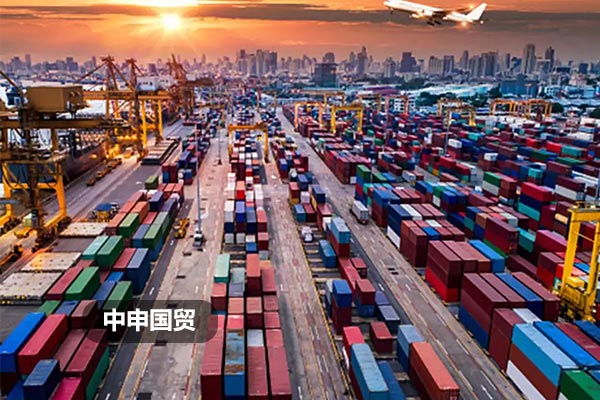
Thinking that completing an English-language MSDS will ensure hassle-free operations?In Swiss hazardous goods import business,this mindset often leads to massive demurrage fees.As a non-EU country,Switzerland has an independent chemical regulatory system (ChemO) with review standards for hazardous goods that are even stricter than certain details of the EU REACH regulation.Many industry veterans often overlook "document consistency" or "inland transit provisions" during the DG (Dangerous Goods) declaration process,resulting in goods being directly detained by customs at Basel or Zurich ports and facing the risk of being returned or destroyed.
Why is Swiss customs so meticulous when inspecting dangerous goods?
The Swiss Customs (EZV) not only handle dangerous goods in accordance with the International Convention on the Harmonization of Frontier Controls of Goods,but also comply with other relevant regulations.The International Maritime Dangerous Goods Code (IMDG Code) and the Swiss Federal Office for Civil Protection (FOCP)’s internal regulatory checklist are strictly adhered to.Once the data do not match,the system automatically triggers the "Red Channel".Below is a comparison of the three key risk points that are most easily confused in the industry today:
| Key nodes | Common Operational Mistakes (High Risk) | Swiss Compliance Red Lines (Correct Practices) |
|---|---|---|
| MSDS Version | Directly using the old versions or non-English/German versions provided by the supplier,which have not been updated to the GHS Rev.8 standard. | It is necessary to provide the latest version of the GHS standard,and it must includeThe unique emergency response measures specific to SwitzerlandChapter. |
| UN code | Only referring to the UN No.on the outer packaging box,without checking it against the invoice and bill of lading. | The UN No.on the customs declaration,MSDS,and outer packaging labels must be completely identical,including the packaging level (PG). |
| CAS number | The mixture only provides the CAS number of the main component,ignoring the secondary components. | The Swiss customs require a declarationThe CAS numbers of all ingredients with a concentration exceeding 1%It is used to accurately determine whether it involves controlled precursors. |
Swiss Dangerous Goods Import | Standardized Customs Clearance SOP
Given the particularities of Swiss ports,we have compiled a set of four-step customs clearance procedures that have been validated through practical experience.Please make sure to confirm the following points with your agent before shipping the goods.
Step 1: Document Pre-audit (Core is "Consistency") Output:
Don’t wait until goods arrive at port to review documents.In the booking stage,"Document Cross-Indexing" must be established:
- MSDS(MaterialSafetyDataSheet):VerifythatthetransportationinformationinSection14(UNNo.transportationname,HazardClass)isconsistentwiththeactualgoods.
- DangerousGoodsPackagingCertificate:EnsurethatthePackagingContainerPerformanceSheet(COF)iswithinitsvalidityperiodandthatthepackagingcategorydisplayedonitmatchestheonespecifiedintheMaterialSafetyDataSheet(MSDS).
- CommercialInvoice:Itmustbelistedindetail.BrandName,ChemicalName,CASNumber.
Step 2: The "Swiss precision" in packaging and labeling Output:
Switzerland has extremely high visual requirements for labels.The outer packaging must display a diamond-shaped hazardous goods label and meet the following conditions:
- ThelabelsizemustcomplywiththeADRstandard(usually100mmx100mm).
- IfitisLithiumbatteryorEnvironmentalhazardoussubstancesItisnecessarytoadditionallypostthecorrespondingHandlingLabels.
- Allmarkingsmustbewaterproof,resistanttofriction,andremainclearlyvisibleafterthecontainerisunloaded.
Step 3: ADR compliance for inland transportation Output:
Switzerland is a landlocked country.Goods usually enter the country through the ports of Hamburg or Rotterdam,and are then transported to their destinations by trucks or railways.This is the most easily overlooked part of the process:
- Confirmthatthetruckingcompanyhasthenecessaryqualificationsandcapabilitiestohandlethetransportationofdangerousgoods.ADRCertificate(Accordeuropéenrelatifautransportinternationaldesmarchandisesdangereusesparroute).
- IfitisaCategory1explosiveorCategory7radioactivesubstance,itisnecessarytoapplyinadvanceforthetransportpermitfortheSwissinlandsection.SpecialTransportationPermit.
Step 4: Submit the declaration and synchronize the data Output:
When making a declaration in the Swiss customs system (e-dec),it is essential to select the correct hazardous goods code.At this point,the customs broker will compare your declaration data with the information database of the Swiss Hazardous Chemicals Accident Center.Any abnormal data will result in the system automatically locking the order.
The "life-saving" advice from the veteran player: Don’t ignore the risks of inland transfer operations
Many importers believe that as long as the goods have passed through the maritime ports,everything will be fine.However,in reality,the Swiss customs authorities are very strict in their inspections.Border crossings (such as Basel and Vevey)The inspection rate is extremely high.Especially for chemicals involving "dual-use items",the Swiss Federal Secretariat for Economic Affairs (SECO) will intervene in the supervision.My suggestion is: If your goods belong to sensitive chemical products (such as certain solvents and acids),you must let your agent apply for a permit from the Swiss authorities before shipping them.Non-control CertificateAlthough this will increase the delivery time by 2-3 working days,it’s definitely worth the cost compared to the demurrage fees incurred when goods are held up at the border for 3 weeks.
There are three things you can do this afternoon
In order to ensure that the next batch of goods can clear customs smoothly,we suggest that you immediately take the following actions:
- ReviewofPart14oftheMSDS:Output:TakeoutthemostrecentimportedMSDSandcheckwhetherthetransportationinformationiscompleteandwhethertheCASnumberismissing.
- Checkthephotosofthepackaginglabels:ItisrequiredthattheSwissshippingpartyprovideactualphotosoftheouterpackagingtoconfirmthatthelabelsarenotwornandcomplywithADRdimensions.
- Confirmagencyqualifications:AskyourcustomsdeclarationagentiftheyarequalifiedtohandlecustomsdeclarationsforSwitzerland.ChemOExperienceinregulatorydeclarationandwhethertherearecooperatinginlandADRtransportfleets.
Was this helpful? Give us a like!
Contact our experts for compliance audits, precise quotes, and one-stop customs support.
Recent Comments (0) 0
Leave a Reply