
Piston Import: Tech, Compliance & Efficiency Guide
or complex compliance issues.
clearance and fund security.
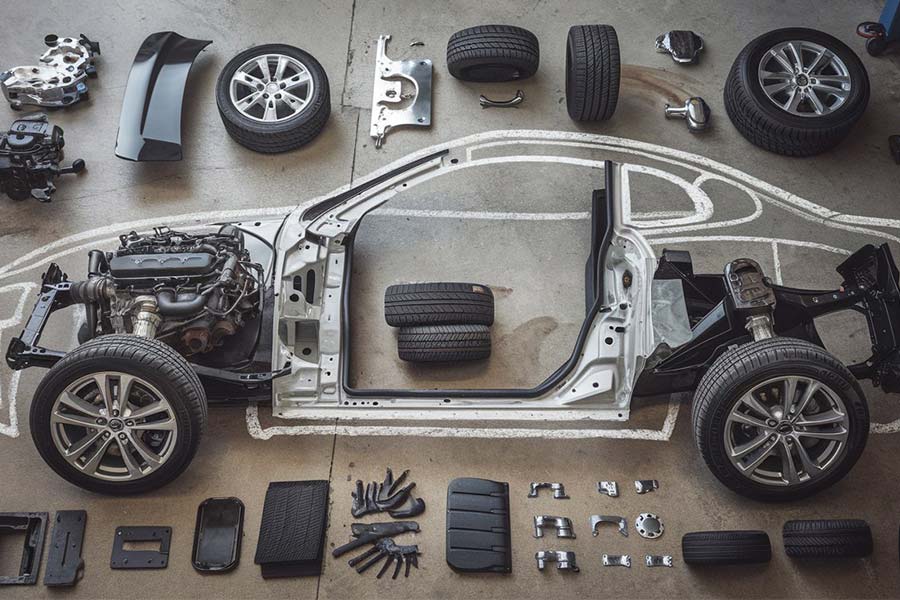
Against the backdrop of deep integration in the global industrial chain,pistons,as the "heart" of core mechanical components such as engines and hydraulic systems,face increasingly stringent technical barriers and compliance requirements in import trade.With 20 years of experience in the industry,Experts,this article will delve into the key aspects of piston imports,combining real-world case studies to reveal solutions for industry pain points.
I.Analysis of the Technical Complexity of Piston Imports Output:
Piston products are widely used in automotive manufacturing (accounting for 38%),construction machinery (25%),aerospace (18%),and other fields.According to the customs HS code classification,it is necessary to accurately match tariff codes such as 8412 (hydraulic pistons) and 8483 (internal combustion engine pistons),as declaration errors directly impact customs clearance efficiency.The latest EU certification data for 2023 shows that for ECE R67 (liquefied gas engine pistons) alone,three additional emission indicators have been added to the testing requirements,extending the certification cycle to 12 weeks.
II.Comprehensive Risk Management System for the Entire Import Process Output:
1.Supplier Technical Verification
Establish a "Three-Dimensional Evaluation Model": ① ISO/TS 16949 System Certification ② Material Testing Report (focusing on monitoring the thermal expansion coefficient of silicon-aluminum alloy) ③ Production Process Validation (requiring proof of honing process parameters)
2.Optimization of Logistics Solutions
Considering the specificity of precision pistons (surface roughness Ra ≤ 0.4μm),it is recommended to use a constant temperature and humidity container for transportation.A case study from a German automotive brand showed that after adopting vacuum anti-oxidation packaging,the transportation loss rate decreased from 3.2% to 0.7%.
3.Tariff planning strategies
By leveraging the RCEP Rules of Origin,a Japanese company reduced its tariff from 8% to 0 through ASEAN transit.Note the tariff difference between piston rings (7318.15) and complete pistons (8409.91).Properly disassembling and declaring components can save 4-7% in overall costs.
III.Industry Frontier Trends and Response Strategies Output:
1.Challenges in the Transition to Electrification
The hydraulic pistons used in Tesla’s 4680 battery production line must meet IP67 protection standards,requiring traditional suppliers to upgrade their sealing technology.It is recommended that importers establish an "electrification technology package," including:
- High-voltageInsulationCoatingTesting(≥1000V)
- High-FrequencyVibrationTestReport(0-200Hz)
- ElectromagneticCompatibilityCertification(CISPR25Standard)
2.Digital Customs Clearance Innovation
The pilot application of the AEO (Authorized Economic Operator) intelligent document review system enabled a certain agent to reduce the customs clearance time for piston imports from 72 hours to just 8 hours.The key points are:
- Pre-recordedERPdatainterfacewithcustomssystem
- BlockchainTechnologySolidificationInspectionReport
- Establishadynamicclassificationdatabase(covering300+pistonvariantmodels).
3.Require suppliers to provide EPEAT (Electronic Product Environmental Impact Assessment Tool) certification
The new EU regulation requires that piston products must provide carbon footprint labels starting from 2025.It is recommended to take the following measures:
- Prioritizetheprocurementoflow-carbonaluminum(reducingCO?emissionsby6.5tonsperton).
- OptforLNG-poweredvesseltransportation(20%carbonreduction)
- Establisharecyclinglogisticschannel(theresidualaluminumrecoveryratecanreach92%).
IV.Practical Case: Cost Reduction and Efficiency Improvement Plan for a Heavy Industry Enterprise Output:
A certain construction machinery manufacturer imports 8,000 hydraulic pistons annually,with the original comprehensive costs including:
- Demurragefee:280,000yuan/year
- Non-conforminginspectionlosses:650,000yuan
- Overpaidtariffs:410,000yuan
Through our company’s designed "Four-in-One" solution:
- EstablishadualcertificationchannelforGermanTUV+ChinaCMA,reducingthetestingcycleby40%.
- Developamulti-portdistributionmodel(collaborationbetweenQingdao/TianjinPort),reducinglogisticscostsby18%.
- Applyforthetaxexemptionquotaundertheincentiveprogram,saving23%intariffs.
- ImplementingJITinventorymanagementreducedcapitaloccupationby15millionyuan.
Ultimately achieving a 37.6% reduction in annual comprehensive costs and increasing the on-time delivery rate to 99.2%.
Conclusion: Output:
The piston import sector has entered a three-dimensional competitive era characterized by "technology + compliance + efficiency." The value of professional agency service providers lies not only in customs clearance execution but also in serving as clients’ technical compliance advisors,supply chain architects,and strategic partners.It is recommended that import enterprises adopt a "full lifecycle management" mindset,leveraging digital tools to achieve end-to-end optimization from order placement to after-sales service.Over the next three years,with the emergence of new categories such as hydrogen-energy pistons and smart self-diagnostic pistons,import agency services will deeply evolve toward integrated technical solution offerings.
Was this helpful? Give us a like!
Contact our experts for compliance audits, precise quotes, and one-stop customs support.
Recent Comments (0) 0
Leave a Reply