
Complete Guide to Importing Used Machinery: 2025 HS Classification, CCIC Inspection & Compliance Tips
or complex compliance issues.
clearance and fund security.
Since October 2025,China’s customs has strengthened the verification requirements for "actual consignors" and "manufacturers".OldCovering compliance tasks such as document consistency,pre-shipment inspection (CCIC),and physical examination,companies must plan ahead to ensure smooth customs clearance.
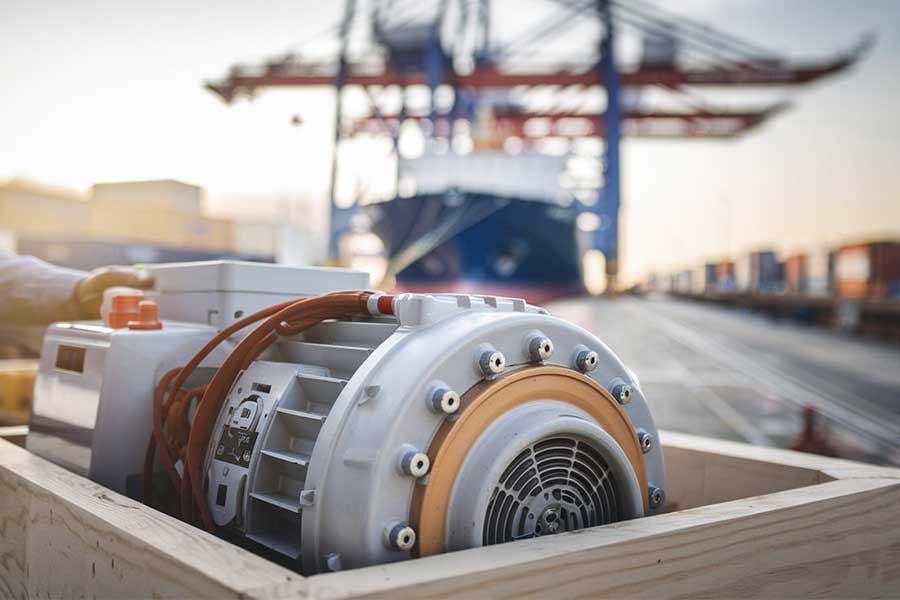
I.Definition of Used Mechanical and Electrical Products (Official Standard)
Pursuant to Order No.243 of the General Administration of Customs of the People’s Republic of China (Measures for the Inspection and Supervision of Imported Used Mechanical and Electrical Products),used mechanical and electrical products shall be deemed to meet any of the following conditions:
| Situation | description |
|---|---|
| Used (excluding pre-use testing and debugging),still retains basic functionality and practical value | Most common type |
| Unused,but past the warranty period | Please distinguish between the quality-assurance period and the warranty period. |
| Unused,but stored for too long,resulting in noticeable physical wear on components. | such as oxidation,aging,etc. |
| Mix of old and new components | Special attention must be paid to compliance. |
| Renovated | Including certified refurbished devices |
Suggestions: Confirm whether the equipment meets the definition before import to avoid subsequent issues.
II.Principles for the Customs Classification of Used Equipment (HS Code Details)
The classification principles for used equipment are similar to those for new equipment,but the declaration elements and regulatory requirements have special stipulations.
| Classification Rules | Application Instructions | Important Considerations |
|---|---|---|
| Rule 1 (Column Name First) | Look up the specific tax code based on the product name | For example,used injection-molding machines are classified under 8477.1010 (according to tonnage). |
| Rule 2(a) (complete article) | Equipment that is disassembled for transport but retains its complete characteristics shall still be classified as a complete unit. | Parts must be declared in the same batch; otherwise,they may be deemed prohibited from import. |
| Rule 3(b) (Basic Characteristics) | Combination machines are classified according to the part that gives them their essential character. | The production line may need to be classified separately,resulting in additional tax rates and documentation. |
| Functional unit | Machines connected by pipes or conveyor belts are regarded as functional units. | Non-connected devices must be categorized by item. |
Trends in 2025
Customs has stepped up inspections of equipment shipped as a mix of new and used items.If the equipment contains controlled used components—such as encryption chips or classified industrial-control computers—it may jeopardize clearance of the entire unit.
III.Regulatory Classification and Entry Requirements
The import of used equipment is subject to classified management,which determines its import feasibility.
| Category | Supervision Requirements | Typical Example | Important Considerations |
|---|---|---|---|
| Import prohibited | Absolutely prohibited | Used medical equipment,used automotive parts,used pressure vessels,PCB-containing used electrical appliances | Pursuant to the Catalogue of Used Mechanical and Electrical Products Prohibited from Import (Announcement No.106 [2018] and its updates by the Ministry of Commerce and the General Administration of Customs of the People’s Republic of China) |
| Restrict imports | An Import License (O License) is required. | Used construction machinery (e.g.excavators,cranes),used ships,used printing presses | Implement a "one machine,one certificate" policy with age limits (e.g.over-age equipment is difficult to get approved). |
| Import permitted | Subject to filing or an automatic import license,and must pass CCIC inspection. | Used metal-working machine tools,textile equipment,injection-molding machines,and pick-and-place machines | Although imports are allowed,pre-shipment inspection must be completed. |
Age Limit Examples (2025 Standards)
- Excavators:Approvaldifficultaftermorethan8years
- Crane:Over12years,theriskisrelativelyhigh.
- Forklift:Evaluationrequiredafter10yearsofuse
IV.Import Process (Standard Operating Procedure)
Phase 1: Pre-shipment Preparation
- Conductapre-classificationreview,determinetheHScode,andchecktheregulatoryrequirements(codessuchasA/EntryInspectionandQuarantine,O/ImportLicense).
- Conductpre-shipmentinspection(CCIC):inspectplaceoforigin,dateofmanufacture,functionality,safetylabels(Chinesewarninglabelsrequired),electricalsafety,andenvironmentalcompliance.
- ThecertificateHScodemustmatchthecustomsdeclaration.
- Ensurethatthecontainercontainsnounrelateditems.
Phase II: In-transit Declaration (After Arrival)
- DeclarethroughtheSingleWindowsystemandentertheinformationinthe“OtherInspectionandQuarantineDeclarations(Legacy)”module.
- Portinspection:Verifytheconsistencybetweenthephysicalitemanditscertificate,includingthenameplate,serialnumber,andyearofmanufacture,topreventenvironmentalnon-compliancecausedbypackagingissues.
Phase III: Post-market Surveillance (After Release)
- Conductdestinationinspection(usually3–5workingdays).
- Theequipmentmustnotbeinstalledoruseduntilithaspassedinspection.
V.Common Issues and Case Studies
| We Serve | Problem Description | Consequences | Lessons learned |
|---|---|---|---|
| Case 1 | The excavator’s nameplate indicates a 2020 manufacture date,but it was actually built in 2015. | Suspected of false declaration,the goods will be returned and a fine imposed. | Avoid altering the nameplate; customs can verify it through the database. |
| Case 2 | CCIC code does not match the customs declaration | Certificate invalid,must be returned for re-inspection,resulting in additional costs. | Classification must be determined before CCIC. |
| Case 3 | Smuggling old cables and discarded computers | Determined to be solid waste,transferred for disposal | Containers are limited to the equipment itself only. |
| Case 4 | Trading through an offshore company without a certificate of trade chain | Trigger valuation alert,tax amount increased | Provide complete proof of the trade chain. |
VI.Special Notes for 2025
- Actualshipperverification:Thedeclarationmustreflectthegenuinetradechain;ifanoffshorecompanyisinvolved,supportingproofmustbeprovided,otherwisevaluationissuesmayarise.
- Chineselabelingrequirement:WarninglabelsmustbepostedinChinesewhileabroad;thisisamandatoryitemforbothCCICinspectionandcustomsexamination.
- Single-windowupdate:Thesystemperformsalogicalcheckonthemanufacturingdateandservicelife;contradictoryinformationcannotbesubmitted.
- SerialNumberNetworking:Comparetheserialnumbersofconstructionmachinerywiththeglobaldatabase.
- Environmentalrestrictions:equipmentcontainingasbestos,R22refrigerant,orlead-acidbatteriesfacesgreaterimportdifficulties.
Summary & Recommendations
The import of used equipment must follow the principle of “classification first,inspection in advance,and consistent documentation.” Before signing the contract,it is advisable to consult a professional customs broker for pre-clearance review and to specify liability clauses (e.g.who bears responsibility if the equipment cannot be cleared due to its condition).This guide is based on the latest policies; regular updates are recommended.
Was this helpful? Give us a like!
Contact our experts for compliance audits, precise quotes, and one-stop customs support.
Recent Comments (0) 0
Leave a Reply