
Saudi Arabia Product Labeling: SASO Compliance Guide
or complex compliance issues.
clearance and fund security.
When exporting products to Saudi Arabia,understanding and complying with the labeling and marking requirements of the Saudi Standards,Metrology and Quality Organization (SASO) is crucial.This article provides a detailed introduction to Saudi Arabias labeling and marking requirements for imported products to facilitate smooth export processes and avoid potential compliance risks.
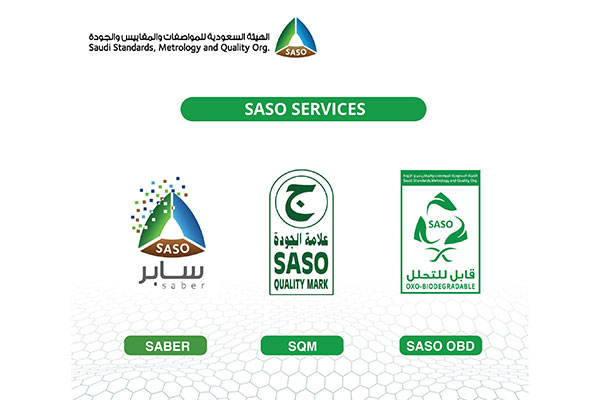
Overview of Saudi Arabias Labeling and Marking Requirements
Basic Requirements
Products exported to Saudi Arabia must adhere to SASO standards.If no specific SASO standard exists for a product,applicable regional or international standards (such as IEC,ISO,GSO,EN,ASTM,etc.) should be followed for labeling/marking requirements.
Language requirements
Product markings can be in Arabic or English.All warning and safety-related markings must be in Arabic or a combination of Arabic and English.Instruction manuals or booklets must also use these languages.
Container Marking
All containers should indicate the gross weight and the initials or full name of the consignee.If multiple containers are involved,they should be sequentially numbered and labeled with the country of manufacture.
Halal Certification
Meat and poultry products must obtain Halal certificates starting from November 2020.Each shipment requires a Halal shipment certificate issued by an approved Halal certification body for clearance at Saudi ports and borders.
Specific Labeling Requirements
Pre-packaged Food
According to GSO 9: 2013 (SFDA.FD/GSO 9: 2013) standards,pre-packaged food labels should be in Arabic or include Arabic translations.Label content must include the product name,packagers name,country of origin,ingredient list,product end-use instructions (if applicable),and shelf life.
Book
Goods exported to Saudi Arabia require a certificate of origin issued by the exporting countrys chamber of commerce.All imported goods must indicate the country of origin in Arabic or English.The origin must be marked in a non-removable manner,such as printing,engraving,embossing,or sewing.
Measurement Units
Products sold in Saudi Arabia typically require metric units.Products from non-metric countries may use their national units,provided they are sold locally in metric units.
Prohibited Goods
Goods containing indecent or Islamically immoral images are prohibited.Packaging must not include Quranic verses or Islamic quotations.The import of alcoholic beverages,live pigs,pork,and pork-containing products is prohibited.
Animals and Animal Products
All fresh meat and poultry products must clearly display production and expiration dates,weight,storage temperature or temperature range,and provide proof of compliance with halal slaughter requirements.Processed meat and poultry product labels must explicitly indicate any pork ingredients.
Control Measures
The Saudi Ministry of Agriculture requires that chemicals such as pesticides must have packaging information labeled in Arabic,including product name,active substance ratio,usage methods,etc.Health precautions and safe usage guidelines must be included.
The SFDA oversees cosmetic imports and requires cosmetic labels to include product name,brand name,manufacturers name and address,expiration date,ingredient list,etc.and may require Arabic language usage.
Food and Beverages
Comply with Gulf Cooperation Council GSO 9: 2013 standards.Plastic containers for packaged food must clearly display information such as plastic type,container weight,capacity,etc.
Specific labeling guidelines must be followed,including device name,manufacturer,special storage conditions,etc.Detailed guidelines can be obtained from the SFDA website.
Pharmaceuticals
Specific pharmaceutical labeling requirements apply to drugs.Consultation with the SFDA pharmaceutical department is recommended.
Compliance with Saudi Arabias labeling and marking requirements is crucial for successful exports to the country.Businesses must ensure their product labels and markings meet SASO regulations or applicable regional/international standards.Additionally,businesses must consider language,measurement units,halal certification,prohibited goods,and product-specific labeling requirements.
Was this helpful? Give us a like!
Contact our experts for compliance audits, precise quotes, and one-stop customs support.
Recent Comments (0) 0
Leave a Reply