
Agency Import Without Forex Payment | Compliance Paths & Risk Isolation Checklist
or complex compliance issues.
clearance and fund security.
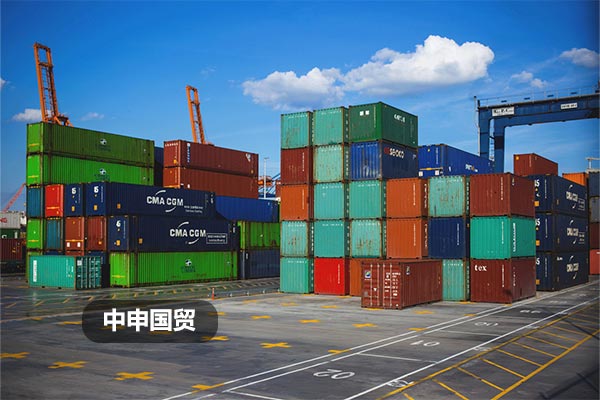
You might think that by hiring an agency to handle customs declaration and paying the foreign supplier directly,you can save on agency fees?This seemingly perfect "cost-cutting" scheme is actually a high-risk minefield under the joint supervision of the Foreign Exchange Administration and the Customs.Under the regulatory logic of "total quantity verification",once the "serious mismatch between capital flows and goods flows" is triggered,the enterprise may be listed on the "watch list" at the very least,or face account freezing due to suspected foreign exchange evasion or false trade if the situation is serious.How to complete the import agency process without making payments to foreign suppliers tests the precise grasp of regulatory red lines.
Why is "separation of single goods" a major area of regulatory concern?
In the traditional import agency business,The agency company is both the "operating unit" on the customs declaration form and the "remittance entity" for overseas payments.This "consistent with the actual goods" model carries the lowest risk.However,when the actual buyer requests "agent declaration and self-remittance",it results in discrepancies between the customs declaration form and the remittance vouchers.Subject separationThe customs authority focuses on "the import of goods by the agency company",while the foreign exchange bureau focuses on "the buyer’s payment of foreign exchange".It is very easy for there to be abnormalities when comparing the data of the two.
| Risk dimension | The traditional agent-based foreign exchange payment model (safe) | Agent Declaration/Buyer Direct Payment Model (High Risk) |
|---|---|---|
| Fund flow direction | Agent company -> Foreign investors | Actual buyer -> Foreign investor |
| Declaration Form Operating Unit | Foreign trade agency company | Foreign trade agency company |
| Payment remitter | Foreign trade agency company | The actual buyer (the client) |
| Foreign Exchange Administration’s Overall Verification | Match the flow of goods with the flow of funds | The agency has the goods but lacks the qualifications,while the buyer has the qualifications but lacks the goods |
| Core risk points | Agent credit risk | Suspected of "evading foreign exchange regulations",false trade,and data deviation warnings |
Compliance Operation SOP | Building a Closed-Loop Management System
To operate in compliance without going through an agent company for foreign exchange payments,the key lies in proving to the regulatory authorities the "authenticity of the trade background" and the "legality of the agency relationship".The following are standardized operating procedures that must be strictly implemented:
Step 1: Sign the tripartite "Consignment Import Agreement" Output:
Do not just sign a simple sales contract.It must beForeign trade agency company (importer),The actual buyer (the client)andForeign investors (exporters)Sign a tripartite agreement,or have the agent sign a back-to-back agreement with the buyer.The terms of the agreement must be clearly defined:
- Itisclearlyspecifiedthatitistobedoneby.Theactualbuyerissolelyresponsibleforpayingthepurchasepricetotheoverseasseller..
- Theagencycompanyisonlyresponsibleforcustomsdeclaration,taxpayment,andlogistics,anddoesnotassumetheobligationofreceivingandpayingfunds.
Step 2: Declaration of the "penetration" of the customs declaration form and the payment voucher Output:
When declaring customs,the remarks column should indicate the actual buyer’s information as much as possible (subject to the extent permitted by the customs system).When the buyer makes foreign exchange payments on their own,the bank will review the payment vouchers.At this time,the buyer must provide the bank with the following documents:
- AgencySingle(Althoughtheoperatingunitistheagent,itprovesgoodshavebeenimported).
- Three-partyagreementoragencystatement:Thisprovesthatthebuyerhastheobligationtomakedirectpayments.
- PaymentCommissionAgreement:Thisisthekeydocumentinwhichthebank"tolerates"theinconsistencyofthesubjectofthetransaction.
Step 3: Submit the "Trade Credit" report to the State Administration of Foreign Exchange Output:
This is the most easily overlooked technical operation.Due to the fact that the agency company declares the "import" data but not the "foreign exchange payment" data,the system will display a huge "prepaid payment" or "deferred payment" difference.The agency company must,within 30 days after the import of the goods,conduct the relevant operations through the Foreign Exchange Bureau’s Goods Trade Foreign Exchange Monitoring System (ASONE).Trade Credit ReportPlease translate the following sentence into English and explain it in detail: Specify the "Expected Payment Date" as "No Payment" or "Long-Term" in the declaration,and explain why payments have not been made for a long time,in order to eliminate the early warning of total amount verification.
Expert Insights: The Overlooked "Dual-Header" Tax Trap | Compliance Risks
Many companies mistakenly believe that solving the foreign exchange problem is enough,only to fall into the trap of VAT deduction.If the payment unit on the Customs Import VAT Special Payment Receipt (Discharge Certificate) is a "foreign trade agency company",then this tax receipt can only be deducted by the agency company.If the agency company fails to issue a VAT special invoice to the buyer,the buyer will lose the right to deduct 13% of the input tax.
Advanced tips: It is essential to stipulate in the agency agreement the transfer scheme for "double-headed" customs declaration or tax payment certificates.If it is impossible to achieve double-headed,the agency company must issue a full VAT invoice to the buyer.At this time,the agency company not only needs to consider foreign exchange compliance,but also needs to treat this import business as "domestic sales" and pay the corresponding VAT and surtax,which will often offset the "saved agency fees".Real experts will decide whether to adopt the "no foreign exchange payment" model by calculating the "tax difference cost" and the "agency fee cost".
Act immediately: Three self-checks that must be completed this week
- Verifyhistoricaldata:LogintotheASONEsystemoftheForeignExchangeAdministrationBureauandcheckwhetherthereareabnormaldataof"long-termunpaidforeignexchangeforimportedgoodsbyagents"andnocreditreportshavebeensubmitted.Ifanysuchdataarefound,reportthemimmediately.
- Updatethecontracttemplate:Thelegaldepartmentneedstoimmediatelyupdatethe"AgencyImportAgreement",addingthe"ExemptionClauseforthePrincipal’sDirectForeignExchangePayment"andthe"TaxInvoiceCirculationClause"toavoidlegaldisputescausedbydocumentdefects.
- BankPre-communication:Withthedraftedtripartiteagreementandthesamplecustomsdeclarationform,gototheenterprise’ssettlementbankforpreliminarycommunicationtoconfirmwhetherthebankacceptstheauditlogicof"thecustomsdeclarationoperatorandtheremittancesubjectnotbeingconsistent".Theimplementationstandardsofdifferentbanksonthismattervarygreatly.
Was this helpful? Give us a like!
Contact our experts for compliance audits, precise quotes, and one-stop customs support.
Recent Comments (0) 0
Leave a Reply