
Do imported beers really not need agents? An in-depth analysis of the hidden barriers and cost traps of self-operated imports
or complex compliance issues.
clearance and fund security.
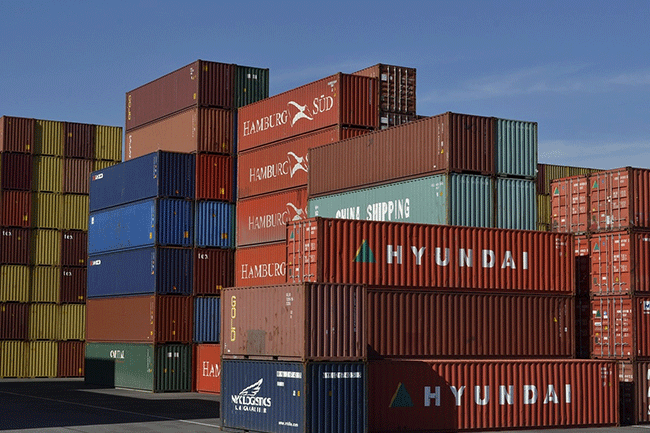
Last month,a client named Lao Zhang,who runs a chain restaurant,urgently came to me.He thought he had found a shortcut - directly purchasing goods from German breweries and skipping domestic first-tier importers,which could save him 15% of the price difference per box.However,reality dealt him a harsh blow: the goods were still at the port,and the customs detained them because the Chinese labels did not meet GB standards.Now,the daily demurrage fees and customs clearance fees have eaten up his so-called "profit".Lao Zhang’s misunderstanding is also a common problem for many restaurant owners and novice purchasers: they think getting the goods means having import rights,but they ignore the special compliance requirements for imported beer as pre-packaged food.
Why is "disintermediation" often a false premise in beer imports?
In B2B practice,when evaluating whether we need an agent,we cannot just look at the price difference between the goods and the freight charges.We must also calculate other costs,such as transportation fees,customs duties,and so on.Comprehensive landed costImported beer belongs to the food category and is subject to dual supervision by the General Administration of Customs (GACC) and the Market Supervision Administration.Many business owners only focus on the visible expense of "agency fees",while ignoring the hidden compliance costs and operational risks that must be borne when importing goods independently.
Once you choose to operate independently in import business,your company will actually assume the triple roles of "trader","customs declaration agent",and "international freight forwarder".For non-professionalsFor enterprises,such a misalignment of roles is often a black hole leading to profit losses.
| Core Dimensions | Self-operated import (DIY) | Import Agency (Third Party) |
|---|---|---|
| Qualification threshold | Extremely high: Requires a food business license,registration of consignors and consignees,and qualifications for specific ports | Low: Borrow the agent’s qualifications and only need a trade contract |
| Document Operation | You need to handle it by yourselfHealth certificate,ingredient analysis,and Chinese label review | The agent provides pre-categorization and label correction services,reducing the rate of returned orders |
| Occupancy of funds | You need to pay the full amount of the goods plus the tariffs and value-added tax,which puts a lot of pressure on your finances | Some agents can provide T/T financing orServices to alleviate cash flow issues |
| Risk bearing | You shall bear the risks of inspection,destruction,and administrative penalties caused by non-compliant labels | Sharing risks together,professional agents usually have emergency response plans and insurance channels |
Hardcore practical operation: If you insist on operating your own import business,you must complete these four steps
If your annual import volume exceeds 50 containers and your team is equipped with professional document handlers,self-operated import can indeed reduce long-term costs.The following are SOPs that must be strictly implemented:
Step 1: Complete the "Consignee and Consignor Registration" and conduct a self-check of qualifications Output:
Before shipping,you must ensure that your company has completed the registration of the import food consignee in the "Internet + Customs" system.This is a mandatory requirement.Without registration,the goods cannot be declared after arriving at the port.At the same time,check whether the business scope of your business license includes "food sales".
Step 2: Prepare the Chinese labels that comply with the GB 7718 standard Output:
This is where 90% of the projects go wrong.Don’t expect foreign wineries to directly provide compliant Chinese labels.You need to hire a professional third-party agency to design and review the labels,which must include the following:
- Foodname:Itmustaccuratelyreflecttheattributes(suchas"beer"ratherthan"maltbeverage").
- AlcoholContent:Itmustbelabeledwith%vol.
- CountryoforiginwithAgentInformation:Itisnecessarytospecifythename,address,andcontactinformationofthedomesticdistributor.
- WarningLabel:Forexample,"Excessivedrinkingisharmfultohealth".
Step 3: Check the consistency of the three documents Output:
Before the goods depart the port,foreign traders are required to provide scanned copies of the following documents for pre-review:
- OriginCertificate
- Healthcertificate/Medicalcertificate
- acomponentanalysisreport(COA)
- Fillingdatecertificate
Ensure that the information on the above-mentioned documents is completely consistent with the contract,invoice,and packing list,especiallyProduct name and HS code.
Step 4: Select a logistics provider with cold chain capabilities Output:
Beer is sensitive to temperature.When it is imported or passes through high-temperature areas in summer,it must be transported in a refrigerated container.constant - temperature containersOr choose the Express Shipping service,otherwise the high temperature will cause the beer’s taste to deteriorate ("lost flavor").Even if the customs clearance is successful,the goods will be rendered useless by the time they reach your hands.
The Overlooked "Single Batch" Risk and Tax Planning
As a senior consultant,I want to remind you of a detail that’s easily overlooked:The deduction chain of value-added tax in the import processMany catering enterprises operate their own imported beers for internal sales,often neglecting the deduction of input tax.If your operations are not standardized and you are unable to obtain the customs special payment receipts,the 13% value-added tax cost will be a pure loss.
In addition,Shipper and Consignee Record - filingThe changes involved in importing beer are extremely complicated.Many companies,in order to save trouble,borrow the qualifications of their friends to import,which is legally regarded as "smuggling" or "unlawful agency".Once a food safety incident occurs,the legal responsibility subject is unclear,and the legal representative will face extremely high criminal risks.Remember,importing beer is not just a business,but also a legal red line.
A compliance self-audit checklist that can be completed this afternoon
Don’t wait until the goods arrive at the port before you start panicking.Implement the following actions now:
- Checkthelicense:Takeoutthebusinesslicenseandconfirmthatthescopeofbusinessincludes"saleofprepackagedfood".Ifnot,gototheindustryandcommercebureautomakethenecessarychangesimmediately.
- Checktherecord:Logintothe"InternationalTradeSingleWindow"orconsultthecustomsdeclarationagencytocheckwhetherthecompanyhasthequalificationof"ImportedFoodConsigneeRegistration".
- Dotheaccounting:Calculatethetruebreak-evenpointbymultiplyingthisyear’sestimatedpurchasevolumebythe13%value-addedtax,addingyourcostofcapital,andcomparingittothe"all-inclusiveprice"quotedbytheagent.
- Requestatemplateforthedocuments:ContacttheforeignsuppliersandrequestthemtoprovideafullsetofsampledocumentsoftheirpreviousexportstoChina.Haveaprofessionalreviewthemtoseeifthereareanymajorissues.
Was this helpful? Give us a like!
Contact our experts for compliance audits, precise quotes, and one-stop customs support.
Recent Comments (0) 0
Leave a Reply