
Imported Car Sourcing Guide | Identifying Genuine "Import Agents" | Pitfall Avoidance
or complex compliance issues.
clearance and fund security.
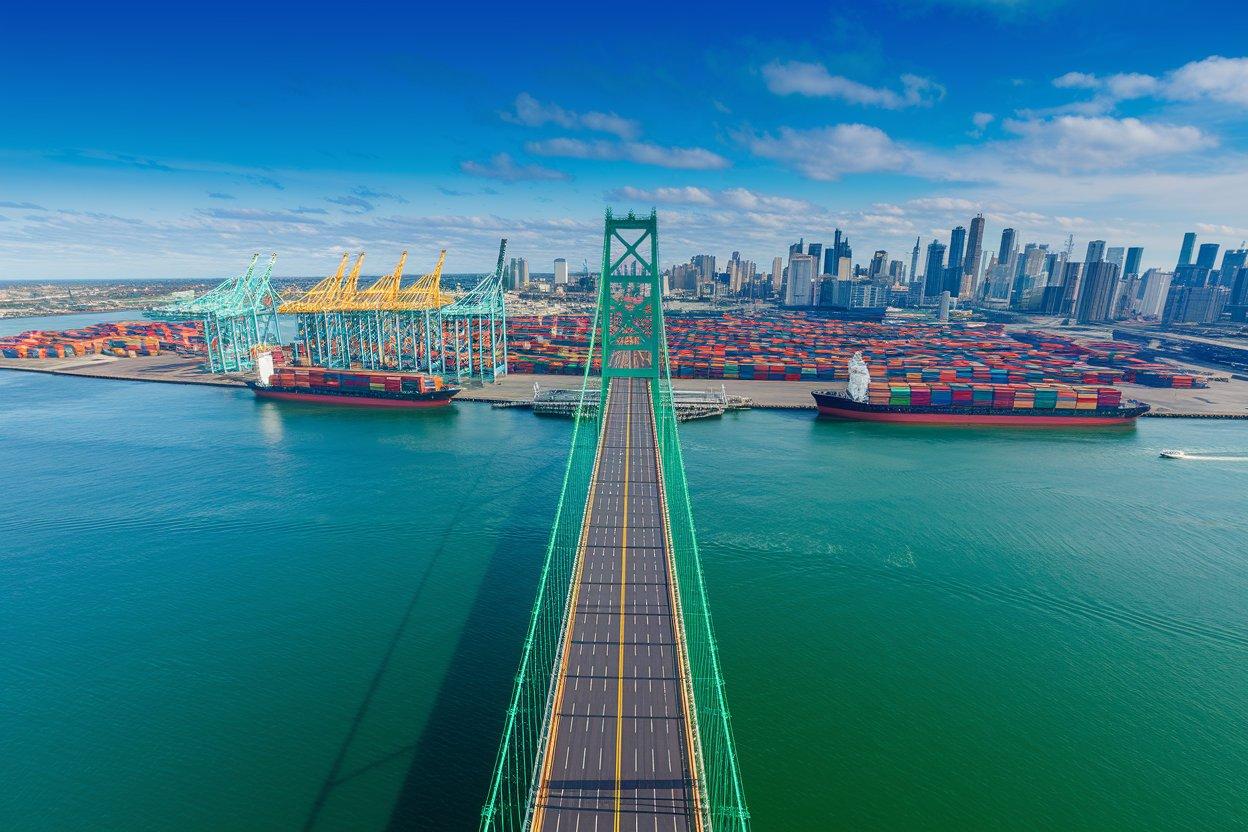
Last Friday,Director Zhang,who is in charge of cross-border logistics fleet management,came to me in a hurry.He was holding a quotation from a trading company in Tianjin Port,which was 20% lower than the official 4S dealership’s price.The company claimed to be a "first-level manufacturer’s agent" and could handle all customs clearance procedures.Director Zhang was tempted but hesitant,as he had already suffered losses before.Three years ago,he purchased a batch of business vehicles,but the agent didn’t have an "automatic import license",resulting in the vehicles being stranded at the port for two months.The daily demurrage and storage fees incurred during this period exceeded the savings from the vehicle purchase price.He asked me,"Who is the real agent for purchasing imported cars?How many layers of intermediaries are there behind this ’agent’?"
Dismantling the "Hidden" Agency Chain Behind Imported Cars
In B2B procurement,it’s important to distinguish between "who is selling cars" and "who is importing cars".Many so-called "agents" are actually just information intermediaries,while the real dealers are the ones who actually handle the transactions.It is necessary to have specific customs qualifications.Once the chain is broken,it may result in either failure to obtain a license or even pose a risk of smuggling.For corporate procurement,it is essential to clarify the differences between the following three core roles:
| Agent Type | Core qualifications/characteristics | Applicable scenarios | Risk Level |
|---|---|---|---|
| General Agent/Authorized Distributor | Officially authorized by the brand,it has a complete set of 3C Certification and Automatic Import License. | Pursuing ultimate after-sales protection and purchasing standard models that do not require modification. | Low (Highest compliance,but high cost transparency) |
| Parallel importers (small 3C products) | By purchasing the goods independently through traders,the company holds them in stock.3C certification for small products or Modification Factory Qualifications. | They need specific models or configurations that are not available in the domestic market,or they are extremely sensitive to price. | China (subject to verification of the modification factory’s qualifications and conformity certificates) |
| Small-scale import agent | Utilize Exempt from the 3C certification requirement Policy (targeting scientific research,testing,etc.). | Foreign-funded enterprises’ R&D vehicles and specific engineering equipment (non-road vehicles). | Extremely High(Strictly forbidden for ordinary commercial road use; a Customs red line) |
Compliance verification of enterprise procurement of imported cars SOP
Don’t just listen to the salesperson’s verbal promises of "inclusive license plate registration" or "all-inclusive taxes".As a professional procurement manager,you need to implement the following standard operating procedures (SOPs) to identify the true responsible parties.
Step 1: Request and verify the samples of the "Two Certificates" Output:
Before signing the contract,it is necessary to require the supplier to provide scanned copies of the "Goods Import Certificate" (commonly known as the "Customs Declaration") and the "Vehicle Consistency Certificate" (COC) for the same batch of vehicles.
- Checktheinformationonthecustomsdeclarationform.SenderandreceiverIsitconsistentwiththesupplier’sbusinesslicensename,oristhereaclearagencyrelationshipbetweenthetwoparties?
- ChecktheconsistencycertificateontheVehiclemodelIsitcompletelyconsistentwiththe3Ccertificate?Anydiscrepancyinthelettersmightresultinthevehiclenotbeingabletoobtainalicenseplate.
Step 2: Confirm the "Consumption and Use Unit" on the customs declaration form. Output:
This is a detail that many experienced people tend to overlook.If it’s a "double-headed declaration",the customs declaration form will list the "domestic consignor/consignee" (the agent) and the "consumption/use unit" (the actual buyer).
- Singleletterhead:Theagentbuysthecarfirstandthensellsittoyou.Thetaxchainisbrokenattheagent’soffice,soyouneedtopayvalue-addedtaxagain.
- Doublenod:Directimportviaagency.Youaretheactualimporter,andyoucandirectlydeducttheinputtax.However,youneedtobeartheriskthatiftheagentabsconds,thecustomswillholdyouaccountabledirectly.
Step 3: Review the "tax" and "fee" clauses in the contract Output:
Imported cars are subject to tariffs,value-added tax,and consumption tax (the Three Taxes).The contract must clearly specify the following:
- DutiableValueDeterminationmethod:Isitbasedonthepriceapprovedbythecustoms,orthepricestipulatedinthecontract?Ifthecustoms’appraisedpriceishigherthanthetransactionprice,whowillcompensateforthedifference?
- PortdemurrageAttribution:Itisexplicitlystatedthatifthecustomsclearanceisdelayedduetoincompleteagencydocuments,thedemurragefeesandstoragefeesincurredshallbefullybornebytheagent.
Small Batch Traps Insiders Don’t Want to Reveal
Many business owners,in order to save trouble or money,are often misled into taking the "small-batch import" path (which exempts them from obtaining 3C certification).However,there is a huge hidden pitfall here: vehicles imported in small batches must have clear purposes such as "scientific research,testing,and conformity assessment",and are typically required to be re-exported or destroyed within a specified timeframe,or can only be used for internal corporate purposes and cannot be freely transferred.If you purchase this vehicle for business operations or as an employee benefit,choosing the small-batch import route is essentially planting a legal time bomb.True experts will tell you: unless you have special foreign investment backgrounds or R&D needs,it’s far safer to stick to the 3C certification channel to minimize legal risks and ensure regulatory compliance.
There are three actions that can be carried out this afternoon
Don’t wait until after you’ve made the payment to check it.Start taking action now!
- Requestasampleofthedocuments:Requirepotentialsupplierstoprovidesamplesofthe"ImportMotorVehicleInspectionCertificate"forthesamemodelfromthepastthreeyears,andverifythenameofthe"importer".
- Checkthecreditrating:Logintothe"ChinaInternationalTradeSingleWindow"orentrustacustomsdeclarationagencytocheckthesupplier’scustomscreditrating(generalcertification,advancedcertification,oruntrustworthyenterprise).
- Lockintheliabilityforbreachofcontract:Addaclausetothedraftcontract:"Ifthevehiclecannotbeclearedthroughcustomsattheportorcannotcompletethelicenseplateregistrationprocedureduetotheagent’squalificationdefects,theagentshallrefundthefullamountwithin5workingdaysandcompensatefortheinterestonthebankloanduringthesameperiod."
Was this helpful? Give us a like!
Contact our experts for compliance audits, precise quotes, and one-stop customs support.
Recent Comments (0) 0
Leave a Reply