
List of Imported Coal Agents: Avoid Three Common Pitfalls and Meet Your Core Needs
or complex compliance issues.
clearance and fund security.
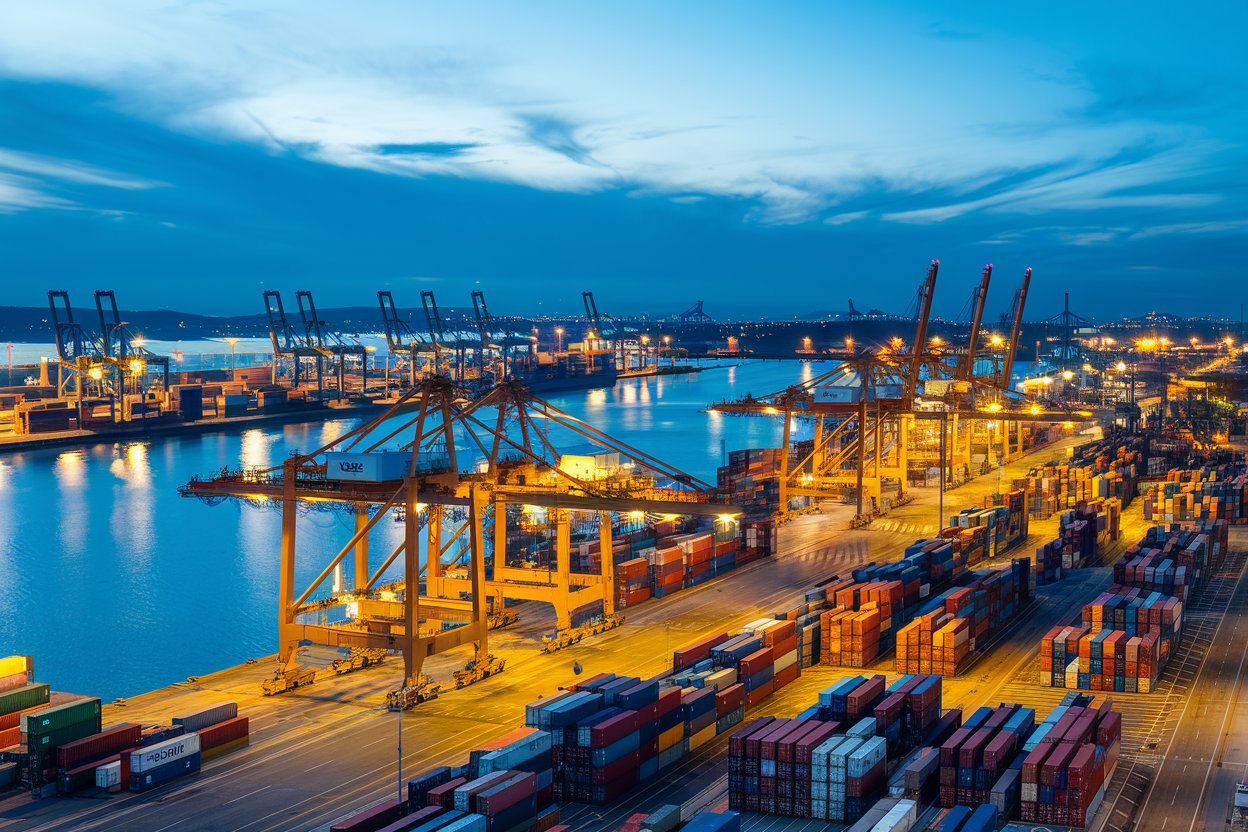
Is it enough to simply check whether an import coal agent has the necessary qualifications?Last month,the procurement manager of a power plant in Hebei complained to me that they hired an agent claiming to be "top three in China," but ended up stuck at Erenhot Port for 12 days due to unfamiliarity with the "coal type sub-declaration rules" for Mongolian coal customs clearance,incurring additional storage fees of 80,000 yuan.To make matters worse,the downstream steel mill faced a delivery delay and was fined 150,000 yuan.In reality,90% of procurement pitfalls aren’t due to "lack of qualifications," but rather to "mismatched capabilities." While large agents’ qualifications address the question of "whether they can handle the job," they fail to address the critical issue of "whether they can do it well."
The core conflict of coal import agents: qualifications ≠ matching degree
The procurement logic of imported coal differs from that of general commodities—coal types (thermal coal,coking coal,anthracite),source countries (Indonesia,Australia,Mongolia,Russia),customs clearance ports (Qinzhou,Qingdao,Erlianhaote,Suifenhe),regulatory requirements (commercial inspection calorific value testing,environmental sulfur content restrictions,cross-border settlement policies)—each variable can render the advantages of "general-purpose agents" ineffective.For example,the "border small-scale trade" model for Mongolian coal requires agents to be familiar with the "brown coal and long-flame coal classification rules" at Erlianhaote port; while for Indonesian coal,the "pre-shipment inspection at Java port" requires agents to have long-term cooperation with local SGS offices.
| Agent Type | Advantageous scenarios | Potential Risks | Key verification question |
|---|---|---|---|
| Comprehensive Agents | First import,mixed procurement of multiple types of coal | Insufficient experience in specialized fields | How many transactions of our company’s commonly used coal types and ports have your company handled in the past six months? |
| Port-based agent | Import through fixed ports (such as Indonesian coal imported through Qinzhou Port) | The cross-border service capacity is weak | When switching to the Qingdao port,how much will the operation cycle be extended? |
| Country-specific agent | Single source country (such as Australian coking coal) | I’m not familiar with the procedures in other countries | I have worked on the "railway +" project for Russian coal before.” intermodal transport? |
| Professional agent | High-value-added coal types (such as anthracite) | The general process is inefficient | How much faster is the customs clearance speed of thermal coal compared to the industry average? |
5-Step Matching Method for Selecting an Imported Coal Agent
Step 1: Identify the core requirements - turn the "vague requirements" into "quantifiable indicators". Output:
First,let’s sort out three key questions:
- CoalType:Isitthermalcoal(withacalorificvalueof5,500kcal)orcokingcoal(withabindingindexof>80)?
- **SourceCountry**:Indonesia(Bulk)orMongolia(Container)?
- BorderCrossingPorts:ShouldwestickwithQinzhouorpossiblyswitchtoQingdao?
Step 2: Verify the "Specific Experience" — don’t just listen to "I can do it",but check if they’ve actually done it before. Output:
Directly ask the agent three "detailed questions":
- Inthepastthreemonths,howmanytransactionsofourcompany’sfrequentlyusedcoaltypes+portshaveyourcompanyhandled?(Forexample,"Mongoliancoal+ErlianhotPort")
- Whatwasthelasttimeyoudealtwithanexceptionalsituation?Forexample,iftheheatvaluedetecteddidn’tmeettherequirements,howdidyouresolveit?
- Arethereanylong-termcooperatingthird-partyorganizations?Forexample,SGSinIndonesiaorcommodityinspectionagenciesinMongolia?
Step 3: Verify the "Port Resource Binding Degree" — Resources are more important than qualifications. Output:
The customs clearance efficiency of imported coal depends 80% on port resources.For example,agents at Qinzhou Port need to ask:Have you integrated with the local customs’ "pre-declaration system"?Do you have the "priority inspection" privilege?If the agent can provide a "customs clearance efficiency report for the past three months" (for example,an average of two days to complete the inspection),it’s more trustworthy than simply claiming to be "qualified".
Step 4: Confirm "Exception Handling Capability" — Look at "Backup Plans" Instead of "Successful Cases" Output:
Ask the agent: "If the goods are detained due to a mistake in coal type declaration,how many hours can you provide a solution within?" If the answer is "We have dedicated staff monitoring the customs situation," it would be more convincing to say "We recently handled a similar case last week.By providing additional proof of the mining site and conducting re-inspections,we were able to secure the goods’ release within three days."
Step 5: Compare "Hidden Costs" — Don’t Just Look at "Agency Fees" Output:
The hidden costs of imported coal include storage fees,demurrage charges,and re-inspection fees by the commodity inspection bureau.For example,the agency fee charged by the agent is 1%,but if the slow process results in an additional 2% in storage fees,the total cost will actually be higher.It is necessary to require the agent to provide a “full-cost quotation”: including estimates of the agency fee,storage fees,demurrage charges,and the proportion of responsibility for any cost overruns.
The "compliance follow-up capability" that is overlooked by 90% of purchasers
Since 2023,customs supervision of imported coal has become increasingly stringent - starting from October,it requires that "each batch of coal be provided with the coordinates of the mining site",and starting from December,it has strengthened "traceability verification" (checking the GPS records of the transportation route).Many old agents’ processes are still stuck in 2022,resulting in failed declarations.Therefore,when choosing an agent,be sure to ask:Do you have a dedicated "compliance team"?How often are regulatory rules updated?For example,some agents send clients "regulatory updates" every two weeks.Such agents can help you avoid risks in advance,which is more useful than just having "longstanding qualifications".Additionally,in terms of taxation,Mongolia Coal has subsidy policies for "RMB cross-border settlements".Can the agent help you apply for these subsidies?This can save you 1-2% in costs,which is more cost-effective than simply negotiating lower agent fees.
3 things you can do today: Verify the compatibility of your agent
- 1.Takeoutthelatestimportagencycontractandscoreitagainstthe"MatchingDegreeEvaluationForm"inthisarticle-ifthe"SpecializedExperience"itemisbelow8points,asktheagentfortheir"operatingrecordsofthepastthreemonths"tomorrow.
- 2.Sendanemailtotheagentandaskthreequestions:"Howmanytransactionsofourcompany’scommonlyusedcoaltypeshaveyouhandledinthepastthreemonths?Whatabnormalsituationshaveyoudealtwith?Howoftendoesthecomplianceteamupdatetherules?"
- 3.Findtwocompetitors’agentsandcomparetheir"full-costquotations"-forexample,forthesame"Mongoliancoal+Erlianhot"combination,seewhichagenthasalower"estimatedstoragefee"andashorter"abnormalprocessingtime".
Was this helpful? Give us a like!
Contact our experts for compliance audits, precise quotes, and one-stop customs support.
Recent Comments (0) 0
Leave a Reply