
Import Agent's "Customs Clearance Included" Service Timeline Analysis: Why Are Your Goods Always Delivered Later Than Expected?
or complex compliance issues.
clearance and fund security.
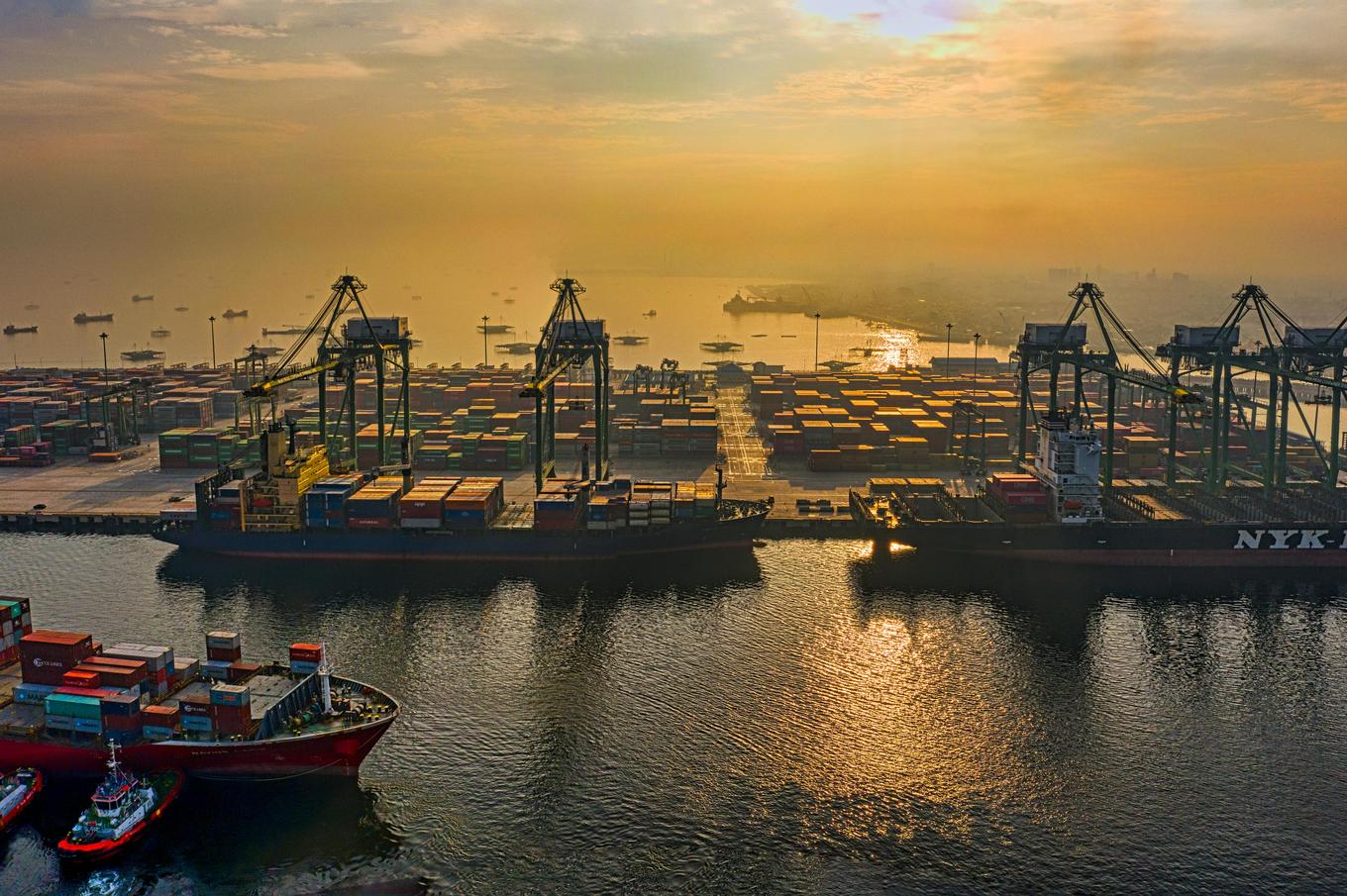
Many procurement managers believe that as long as they sign a "door-to-door clearance" agreement,the customs clearance time for the goods will be fixed at "3-5 working days".However,the reality is often harsh: after the goods arrive at the port,the agent suddenly notifies them that "additional certificates are needed" or that "there are delays in inspection queues".This kind of "time black hole" is often not due to the agent deliberately delaying things,but rather because you have serious misconceptions about the effectiveness of "door-to-door clearance".True time control never relies on urging,but on accurate prediction of process nodes and proactive risk management.
The underlying logic of determining the validity period: It’s not just about customs clearance
"Customs clearance" does not equate to "magic customs clearance".In the customs system,the circulation of each batch of goods is subject to strict regulations and physical operation processes.The so-called "time efficiency" is actually composed of three independent and mutually restrictive dimensions: document circulation time efficiency,customs document review/inspection time efficiency,and terminal pickup time efficiency.Any "weak link" in any of these links will prolong the overall delivery cycle.
Especially forIt involves certificates(e.g.3C,Automatic Import License) orInvestigated by the authoritiesThe categories of (legal and inspection goods) and the system control logic of customs are completely different.Many enterprises only focus on the few minutes of "declaration",but ignore the huge time cost of pre-audit of documents and post-inspection scheduling in the early and late stages.
| Process node | Standard processing time (working days) | Potential "black hole" risk | Risk Level |
|---|---|---|---|
| Pre-review and classification of shipping documents | 1-2 | The declaration of HS codes is incomplete,resulting in the return of the customs declaration and the need for modification; the goods subject to licensing requirements were not processed with the necessary permits in advance. | High |
| Customs declaration and document review | 0.5-1 | The customs system conducts random inspections (H2018 system risk control); price disputes lead to negotiations. | Medium |
| Inspection and sampling | 1-3 (no verification) | When subject to inspection,items need to be moved and unpacked; if they need to be sent for testing (laboratory analysis),the processing time will be extended to 7-15 days,depending on the specific circumstances. | Extremely High |
| Pickup from the dock and unboxing1-2 | Dock congestion,peak periods of crane operations; and detention orders due to unpaid overdue storage fees. | Low |
Practical SOP for accurately controlling delivery time
To shorten the import cycle,we cannot wait passively.We must establish a proactive standard operating procedure (SOP).The following is the "Express Customs Clearance" four-step method distilled from 15 years of practical experience.
Step 1: Complete the "Document Pre-Review" 72 hours before the ship arrives. Output:
Don’t wait until the ship arrives at the port to give the documents to the freight forwarder.Require the agent to proceed according to the copy of the bill of lading and the packing list when the ship departs from the port or during the transitPre - classification of HS codesAt this point,we found that some documents were missing (such as.).There are many details that need attention when importing goods from abroad,such as the lack of signatures and the omission of ingredient lists in the product labeling.Additionally,there is a crucial 72-hour golden window period for remedial measures,which is the most important step to avoid the situation of "waiting in vain upon arrival".
Step 2: Confirm the eligibility for "advance declaration" Output:
For enterprises with a credit rating of general credit and above,the customs allows them toAdvance declarationThat is,after the data of the manifest is transmitted and before the goods arrive at the port,the declaration can be submitted to the customs.This means that when your goods are still at sea,the customs’ document review process has already been completed.It is necessary to explicitly require the agent to implement "advanced declaration" in the agency agreement,which can directly reduce the waiting time of 1-2 days.
Step 3: Establish a green channel for "tax payment" Output:
After the customs issues the tax invoice,many companies need 2-3 days to approve and pay the payment,which is the most regrettable delay.It is recommended to consult with the finance department and set up a system to ensure that payments are made promptly after receiving the tax invoice.Special reserve fund for import taxesOr authorize the logistics specialist to make the payment directly.Once the tax invoice is issued,the agent is required toWithin 30 minutesPlease make the payment immediately.Otherwise,you may face a high penalty for late declaration (calculated on a daily basis at 0.05% of the tax amount) one day later.
Step 4: Formulate an emergency inspection plan Output:
If you unfortunately encounter an inspection,don’t just listen to the agent saying "wait for the notice".Immediately ask the agent to confirm the type of inspection:Machine checkIs it (X-ray,faster) or.Manual inspection(Requires opening boxes,slow).If it’s a manual inspection,immediately coordinate with the terminal fleet to book a crane and arrange for a tallyman to be present.Often,delays are caused by "waiting for a crane" or "waiting for workers" rather than the customs themselves being slow.
“Hidden Timeliness Killers” Known Only to Veterans
In addition to the regular procedures,there are two "invisible killers" that are easily overlooked,often catching even experienced procurement professionals off guard.
The first one isThe "holiday superposition effect"The customs system usually tightens inspection rates before long holidays (such as the week before National Day and Spring Festival),and many port inspection staff take rotating rest days.If your goods are expected to arrive at the port 2 days before the holiday,there’s a high probability that they will be "locked" and not released until after the holiday.A more advanced approach is to work backward from the ship’s schedule: if the arrival time is close to the holiday,it is recommended to notify the freight forwarder to apply for "second-leg advance declaration" at the previous transit port,or simply let the shipping company unload more slowly (though this is rare,it can sometimes be more cost-effective than paying demurrage fees).
The second one isThe gray trap of the "All-Inclusive Tax and Clearing Price Package"If you choose the so-called "tax-inclusive and customs-cleared" service (usually via express delivery channels or special supervision areas) to save trouble,although the nominal delivery time is 3-5 days,once you encounter strict crackdowns by customs (such as those targeting specific electronic products or other items),the actual delivery time may be much longer,and the cost may also increase significantly.special action),your goods might be detained indefinitely for investigation without a formal legal appeal channel.For regular B2B trade,never sacrifice compliance for illusory "speed."
There are some time-sensitive optimization actions that can be done this afternoon
- Reviewthecurrentpowerofattorney:Checkwhetherthe"agreetoadvancedeclaration"clauseisclearlymarkedintheimportpowerofattorneysenttothefreightforwarder.
- Establishacommunicationmechanism:Thisisagroupforfreightforwardingoperationsandinternalfinance,whereanSLA(ServiceLevelAgreement)for"taxinvoicepayment"isset,suchas"thepaymentmustbemadewithin2hoursafterthetaxinvoiceisissued".
- Reviewhistoricaldata:FindtheHScodeorportwiththehighestinspectionrateintheimportrecordsofthepastsixmonths,andtrytochangethedeclarationportoroptimizethepackingmethod(suchasmixedpackingtoreducetheprobabilityofinspection)whenmakingthenextshipment.
Was this helpful? Give us a like!
Contact our experts for compliance audits, precise quotes, and one-stop customs support.
Recent Comments (0) 0
Leave a Reply