
In-depth Analysis of Import Trade Agency Models: Don't Let Blurred Responsibility Boundaries Eat Profits
or complex compliance issues.
clearance and fund security.
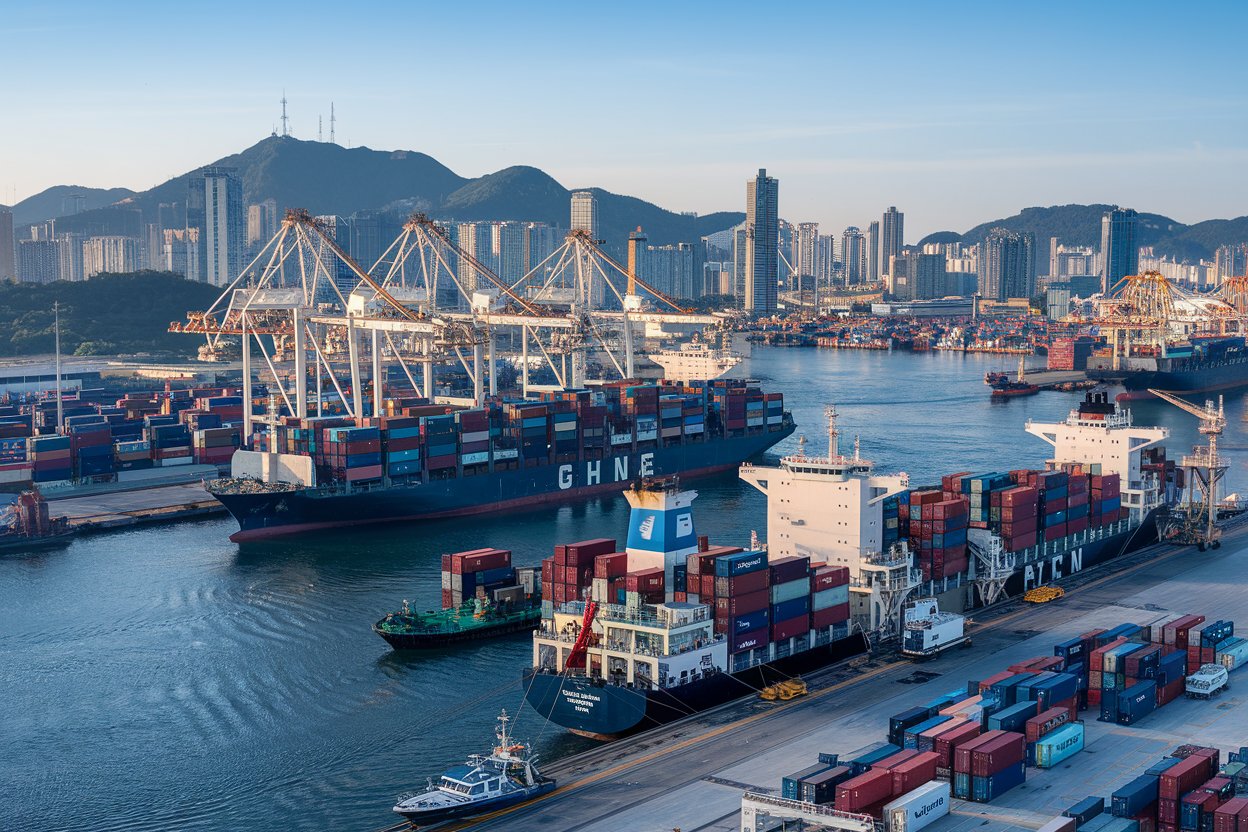
Choose correctlyCan you just sit back and relax once you’ve set up the model?Ninety percent of procurement managers have fallen into the trap of "agent responsibility boundaries".Last year,a client who specializes in precision instruments hired a company that claimed to offer "full-service agency services".However,during the customs clearance process,the agent failed to fill out some crucial information,which resulted in significant delays and additional costs for the client.The goods were detained by customs for three weeks,and the company not only had to pay the end customer a 15% penalty fee but also incurred an additional 80,000 yuan in port detention fees.When the client sought accountability from the agent,the agent pointed to the contract and said,"We’re only responsible for ’assisting’ with customs clearance,not ’full responsibility’." The root of the problem wasn’t that the agent lacked professionalism,but rather that they failed to understand the "liability demarcation points" of different agency models.
4 Import Agency Models: Underlying Logic from Responsibility Boundaries to Cost Structure
Import agency is not as simple as "finding someone to help you handle things".The core differences between different models lie inWho will bear the responsibility?Who will pay the cost?Who will shoulder the risk?I’ve broken down the four common models into a three-dimensional model of "responsibility-cost-risk",to help you quickly understand their essence:
| Model Name | Core responsibilities and boundaries | Cost Structure | Core risk points | Applicable business scenarios |
|---|---|---|---|---|
| General agent (commission-based system) | Responsible for the preparation of documents and assisting with customs clearance; the tariffs and logistics fees shall be borne by the purchaser. | 1%-3% sales commission + actual invoice-based documentary fees | The purchaser shall bear the responsibility for any customs clearance errors or late payment of customs duties | Trial orders for new products and small-scale purchases500kg) |
| Buyout agency (fixed price) | The agent buys the goods at the agreed price and is responsible for the entire process of customs clearance,logistics,and tariffs | Fix price (including the cost of the goods and all related expenses) | The agent assumes the risks of customs clearance and logistics,and the purchaser is only responsible for receiving the goods at the end point | Long-term stable cargo volume (>1000kg/month) and mature product categories |
| Risk Agency (High Commission) | The agent assumes the risks of failed customs clearance,additional tariff payments,and the seizure of goods | 5%-8% Sales Commission (Including Risk Premium) | The agent is fully responsible,and the purchaser will not suffer any additional losses. | High-risk categories (food,3.Refurbished 3C products |
| Special Agent (Process-Based) | They are only responsible for a specific process (such as customs clearance,Document Review) | Charged per step (e.g.customs clearance fee of 1,500 yuan per invoice,logistics fee of 2 yuan per kg) | The purchaser shall bear all the risks involved in the non-agency process. | Having our own team but being weak in a certain aspect (such as lacking experience in customs clearance) |
A 3-Step Practical Guide to Choosing the Right Agency Model
Step 1: First,clarify your "core needs" - is it to save costs or avoid risks? Output:
Many people’s first reaction when choosing an agent is to "find the cheapest one",but in reality,this is not the best approach.The priority of requirements is the key point: If it’s a trial order for a new product,you need to "control costs" and choose a general agent; if it’s an established product category with stable sales volume after two years,you need "peace of mind" and choose a buyout agent; if it’s your first time importing food products,you need to "avoid risks" and choose a risk-sharing agent.
Step 2: Check the agent’s "written list of responsibilities" - don’t trust verbal promises Output:
---The Service Responsibility Confirmation Letter with the official seal stamped on itThe focus is on verifying three key points: 1.Responsibility for customs duty payment (whether it includes "actual customs duty payment + provision of payment receipts").2.Accountability for document errors (e.g.if the agent incorrectly fills out the certificate of origin,who will bear the loss of detained goods?).3.Liability for port storage fees (who will cover the additional costs if the goods remain uncleared within 7 days after arrival).
Step 3: Use the "reverse test" to verify the matching degree — ask three tough questions. Output:
Directly ask the agent: "If the customs deems the documents false during customs clearance,how will the responsibility be divided?" "If the goods are inspected,who will pay the additional storage fees?" "If your team’s mistakes result in a delay in the delivery of the goods,what is the compensation standard?" Only an agent who dares to clearly say "we’re fully responsible" is worthy of your trust.
The invisible risk that 90% of people overlook: the "joint and several liability" of the tax chain
The most unfair case I’ve ever encountered: A client who imported clothing chose the buyout agency model.To reduce costs,the agent changed the "cotton content" from 60% to 30% (with the tariff rate dropping from 10% to 5%),but was later caught by customs.The client not only had to pay an additional 200,000 yuan in tariffs,but was also added to the "customs untrustworthy enterprise" list—because customs determined that "the actual owner of the goods was the purchaser," and the agent’s illegal actions would implicate the client.
The solution is very simple: add it to the contract.Tax Compliance Guarantee ClausePlease write clearly that "the agent must declare according to the actual information of the goods and provide a copy of the "Customs Tariff Special Payment Receipt" for each batch of goods; if any fines or late payment penalties are incurred due to the agent’s tax violations,the agent shall bear all the costs in full".
3 things you can do this afternoon: Avoid the pitfalls of the agency model
- Takeoutyourcurrentagencycontract,highlightthe"liabilityclauses"section,andreplacevagueexpressionslike"assistwithcustomsclearance"and"doourbest"withmorespecifictermslike"beresponsibleforcustomsclearance"and"assumefullliability".
- Sendanemailtotheagent,requestingthemtoprovidethe"ServiceResponsibilityConfirmationLetter"withinthreedays,withafocusontwokeypoints:"Customsdutypaymentreceipts"and"accountabilityfordocumenterrors".
- Conducta"modeladaptabilityassessment"—ifyourmonthlyordervolumehasstabilizedat1,500kg,contactthebuyoutagenttomorrowtorequestaquoteandcompareitwiththecostofusingaregularagent(whichtypicallysavesyou8%to10%).
Was this helpful? Give us a like!
Contact our experts for compliance audits, precise quotes, and one-stop customs support.
Recent Comments (0) 0
Leave a Reply