
Original Imported Cleaning Agent Agent: A Practical Guide to Avoid Compliance Pitfalls and Supply Chain Disruptions
or complex compliance issues.
clearance and fund security.
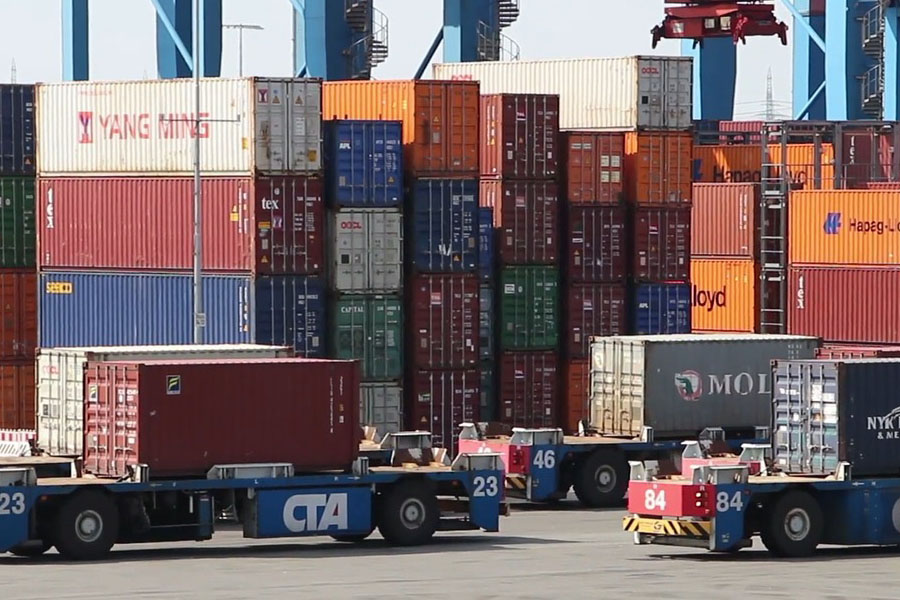
Do you think you can rest easy once you’ve obtained the brand authorization letter?In the specialized field of original imported cleaning agent agency,90% of procurement accidents don’t occur at the negotiation table,but during the hazardous goods classification process at customs inspection.If the MSDS (Material Safety Data Sheet) doesn’t match the actual product composition,or if there are errors in the UN number classification,the consequences include not only product returns but also huge port detention fees and compliance rectification costs.For B2B procurement,cleaning agents are not just "a bottle of stain removal solution"; they are chemical products strictly regulated by the "Regulations on the Safety Management of Hazardous Chemicals".
Hidden Compliance Costs: Why “Low Price” Often Means “High Risk”?
Many purchasing managers,when comparing prices,only focus on the unit price of FOB or CIF,but ignore the hidden costs caused by compliance differences in the import process.Cleaning agents typically contain surfactants,solvents,or strong acids and alkalis,and are highly likely to be classified as dangerous chemicals (Class 3 flammable liquids,Class 8 corrosive liquids,or Class 9 miscellaneous items).Different properties determine completely different logics for storage,transportation,and customs declaration.
| Comparison dimension | Operating mode of ordinary chemical products (non-hazardous) | Operation mode of dangerous chemicals (DG) | Risk Warning |
|---|---|---|---|
| Storage qualifications | Ordinary warehouses can be used for storage | It is necessary to haveDangerous Chemicals Business LicenseAnd dedicated hazardous chemical storage facilities | If the dangerous goods stored in Pu’s warehouse are seized,the warehouse may face the risk of being shut down |
| Transportation method | General cargo LCL orThere are no special restrictions. | It is necessary to book a DG cargo space,and you need to provide an MSDS and a UN packaging certificate | The DG container space is limited and the prices fluctuate greatly.It’s easy to get containers rejected during the peak season |
| Declaration elements | Product name,CAS number,and ingredient content | The above-mentioned elements + Dangerous warning labels + ’Packaging Category | Labels that do not comply with the GHS standard will be ordered to make corrections |
| Inspection rate | Regular inspection (about 5%-10%) | High-risk checkpoint (inspection rate is usually >30%) | Once the package is opened for inspection,it is necessary to contact a professional institution to take samples for testing |
Standardized SOP for agent access and supply chain setup
To establish a stable agency business for original imported cleaning products,it is necessary to set up a review mechanism of "prioritizing documents".Don’t wait until the goods arrive at the port to supplement the necessary documents,because by that time,you’ll have lost all control over the situation.
Step 1: “Triple Verification” of Source Documents Output:
Before signing the agency contract,it is mandatory to require overseas suppliers to provide the following three core documents,which will be pre-reviewed by a professional customs declaration agency:
- MSDS(MaterialSafetyDataSheet):Itmustbethelatestversion(usuallyrequiredtobewithinthepastthreeyears),anditmustincludePart14:TransportationInformation(ClarifyUNnumber,packinggroup).Ifit’stheChineseversion,confirmtranslationaccuracy;ifit’stheforeignversion,prepareChinesetranslationinadvance.
- COA(CertificateofAnalysis):ItisusedtoverifywhethertheingredientcontentintheMSDSisaccurate.TheclassificationofcustomsHScodesoftendependsonspecificchemicalcomponents.
- GHSLabel:CheckwhetherthehazardwarninglabelsontheouterpackagingcomplywithChina’sGHSstandards(redandblackdiamond-shapedwarningsymbols).ManyproductsfromEuropeandtheUnitedStatesmeetlocalstandardsbutfailtomeetChinesenationalstandards,whichisacommonreasonforproductreturns.
Step 2: Precise pre-classification of customs codes and hazardous properties Output:
Don’t blindly trust the HS codes provided by suppliers.Cleaning agents fall under multiple chapters,such as 3402 (organic surfactants),3808 (insecticides,etc.),or Class 28/29 (pure chemicals).
- AccordingtotheCASnumber,inCustomsTariffTocheckthecorrespondingtaxratesandregulatoryrequirements,pleaserefertotheofficialwebsiteoftheMinistryofFinance.
- ConfirmwhetherImportlicensesfordual-useitemsandtechnologies(Precursor/ExplosiveChemicals).
- Ifitisadangerouschemical,itisnecessarytofillinthecodeinthe"AttachedDocuments"columnofthecustomsdeclarationformA(InboundGoodsClearanceForm).
Step 3: Compliance review for those who hold qualifications for the operation of hazardous chemicals Output:
As an agent or consignee,domestic enterprises must hold a "Dangerous Chemicals Business License".If your warehouse is a third-party logistics company,it must be inspected on-site to verify whether it meets the requirements.Qualification for the storage of dangerous chemicalsMany trading companies rent ordinary warehouses to save on rent,which is the biggest pitfall they’ve dug for themselves.
Only experienced people understand the trade-off between "ingredient secrecy" and "transparent regulatory approval".
In the case of original imported cleaning agent agents,foreign brand owners often refuse to provide a complete chemical composition formula,citing "trade secrets",and only provide a vague MSDS.This might be acceptable in B2C retail,but it’s not suitable for B2B scenarios.This approach won’t work.The Customs Declaration Review Center needs to determine the classification and regulatory requirements based on the specific CAS number.
Here’s a high-level practical tip: If the foreign party refuses to provide a detailed recipe,you can request them to do so.“Non-Hazardous Identification Report”or“Classification Identification Report”This report,issued by a qualified third-party laboratory (such as the Chemical Engineering Institute),can prove to the customs the dangerous properties (or non-dangerous properties) of the goods and the corresponding HS code without revealing the complete formula.This is the only feasible way to resolve the conflict between the brand owner’s confidentiality needs and the customs compliance requirements.
A compliance self-inspection checklist that can be implemented in the afternoon
Don’t let the risks linger overnight.As a procurement or operations manager,please immediately implement the following actions:
- Verifytheexistinginventory:Gotothewarehouseandcheckwhethertheimportedcleaningagentswearecurrentlyrepresentingarestoredinadedicatedstorageareawithhazardouschemicalqualifications,andwhethertheriskofmixingthemhasbeeneliminated.
- UpdatetheMSDSfile:RetrievetheMSDSfilesofthetopfivesuppliersandcheckwhethertheissuancedateexceedsthreeyearsandwhetherthetransportationinformationinSection14ismissing.
- Reviewtheoriginalcopyofthecustomsdeclarationform:Comparethe"declarationelements"onthelatestimportcustomsdeclarationformwiththeCOAreporttoseeiftheingredientcontentiswithinthereasonableerrorrange,soastoavoidbeinginspectedbythecustomsfor"discrepancybetweenthedocumentsandthegoods".
Was this helpful? Give us a like!
Contact our experts for compliance audits, precise quotes, and one-stop customs support.
Recent Comments (0) 0
Leave a Reply