
Import Equipment Agency Models: Analysis & Best Practices
or complex compliance issues.
clearance and fund security.
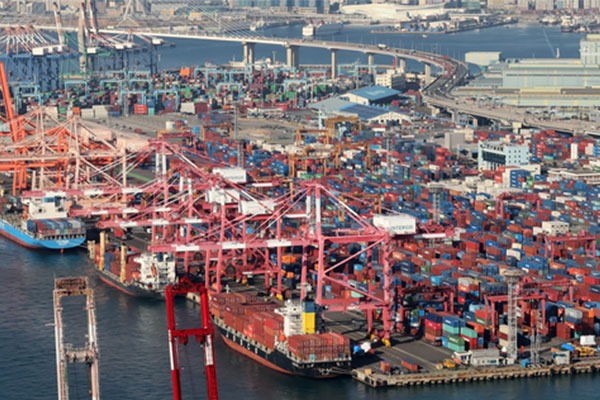
Analysis of the Current Status of Agency Cooperation for Imported Equipment
According to the data from the General Administration of Customs of China for the first quarter of 2025,the industrial sectorThe year-on-year growth reached 18.7%,with transactions completed through agency channels accounting for 73% of the total.Currently,there are three mainstream cooperation models in the market:Single-agent system(23%),dual-track agency system(58%),Multi-line agency system(19%).Enterprises of different scales can choose suitable solutions based on their business characteristics.
Comparison of Three Agency Cooperation Models
- AdvantagesoftheSingle-AgencySystem
- Aunifiedinterfacereducescommunicationcosts.
- Accumulatedordervolumeforbetterrates
- Adedicatedserviceteamprovidesend-to-endfollow-up.
- Characteristics of the Dual-Track Agency System
- Coreequipmentandconsumablesaremanagedseparately.
- Regionalmarketsadoptdifferentserviceproviders.
- Establishavirtuouscompetitiontoenhanceservicequality
- Application Scenarios of Multi-line Proxy System
- Procurementofequipmentinvolvingmultiplecountries
- DifferencesinCertificationRequirementsforSpecialIndustries
- Annualprocurementexceeds$5million.
Key Points of Multi-Agent Collaborative Management
Enterprises adopting a dual-agent or above model must establishThree Major Control Mechanisms:
- Establishaunifiedinformationsharingplatformtoavoidcustomsdeclarationdataconflicts.
- Establishastandardizedserviceassessmentsystem(on-timerate≥98%,documenterrorrate≤0.5%).
- Clearlydefinetheresponsibilitymatrix,especiallyfortaxcomplianceprocesses.
Interpretation of the New Industry Regulations in 2025
Announcement No.2025-17 of the General Administration of Customs clearly stipulates:
- ForthesameHS-codedequipment,anoperationalrecordmustbefiledifannualimportsexceedthreebatches.
- Electromechanicalequipmentmustprovidethequalificationcertificateoftheauthorizedserviceagent.
- Paymentsinvolvingroyaltiesmustbedeclaredseparately.
Typical Industry Collaboration Model Case Studies
Case 1: Import
A top-tier hospital adopted a dual-agent system,where Agent A is responsible for imaging equipment (HS Code 6.9018) and Agent B handles testing reagents (HS Code 3822).This specialized division of labor reduced customs clearance time by 40%.
Case Two: Precision Instrument Procurement
Semiconductor companies adopt a model of selecting one primary agent and three regional agents,ensuring the core supply chain for Japanese lithography machines while utilizing regional agents to handle auxiliary equipment,thereby reducing logistics costs by 28%.
Decision Recommendations and Risk Warnings
- Annualimportvolume$1millionsuggestssingleagency.
- Formultipleproductlines,prioritizeadual-tracksystem.
- Bevigilantagainsttheriskofduplicatedocumentsubmissionscausedbymultipleagents.
- Payattentiontotheconsistencyofquotationbenchmarksamongmultipleserviceproviders.
Enterprises should select an agency cooperation model that ensures operational safety while being cost-effective,based on factors such as actual import scale,product complexity,and supplier geographical distribution.It is recommended to conduct annual KPI evaluations of agency service providers to dynamically optimize the cooperation structure.
Was this helpful? Give us a like!
Contact our experts for compliance audits, precise quotes, and one-stop customs support.
Recent Comments (0) 0
Leave a Reply