
Agency Import Full Analysis | Cargo Ownership & Hidden Tax Risk Boundaries
or complex compliance issues.
clearance and fund security.
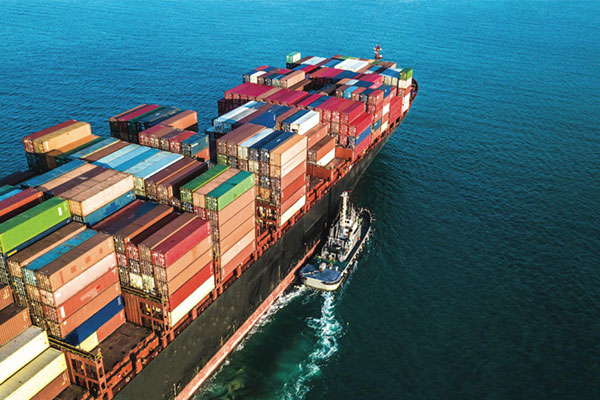
Many purchasing managers encounter difficulties when dealing withWhen conducting business,there is often a fatal misconception: believing that as long as you pay for the goods yourself,the goods must belong to you.However,from the perspective of customs supervision,this is not the case.“Who signs the customs declaration form” determines who is the legal import consignee.If you are currently using or planning to use the "agent import" service,but you don’t understand the underlying logic of the transfer of ownership of goods and tax deductions,then your company may be exposed to a huge risk of asset loss.This is not an exaggeration,but rather the most common "disaster" scenario I have encountered during my 15 years of supply chain consulting.
Peeling Back the Fog: The Underlying Business Logic of Agency Import
The so-called "agency import" is not simply a matter of "running errands" in practice.It is essentially a kind of "The operation of separating the document flow from the capital flow".In this mode,those who ownThe power of attorney company (the trustee) declares the import to the customs,while the actual buyer (the principal) completes the settlement by paying the agent in RMB (or foreign currency).
This model is typically used to address the situation where a company lacks the right to engage in import and export operations and is unable to open a foreign exchange account.For example,some buyers may encounter problems such as limited payment channels,difficulties in obtaining financing,or the need to utilize the credit lines provided by the agency companies.However,the core risk lies in the fact that before the goods are cleared through customs and the agency company issues a VAT invoice to the actual buyer,there may be various uncertainties and risks in the transaction process.The legal ownership of this batch of goods belongs to the agency company..
| Comparison dimension | Self-operated import (general trade) | Agency Import (Dual-header/Agency Declaration) |
|---|---|---|
| Customs declaration form header | The actual user/recipient (i.e.the buyer themselves) | Dual-header: Operating Unit (Agent) + Using Unit (Buyer) Or simply write the name of the business unit (agent) as the heading |
| Customs supervision responsibilities | The buyer shall directly bear all legal responsibilities. | The agency company shall bear the primary legal responsibility,and the buyer shall bear joint and several liability |
| Fund flow direction | Buyer -> Foreign supplier (T/T or L/C) | Buyer -> Agency -> Foreign supplier |
| VAT invoice | There’s no need for domestic input invoices (you can directly deduct the tax based on the customs payment receipt). | A special VAT invoice must be issued by the agency companyFor buyers to use for deduction |
| Exchange rate risk exposure | The buyer shall bear all the responsibilities himself/herself | It depends on the contractual agreement (which is usually borne by the buyer,but there may be a delay in settlement). |
Standard Operating Procedures (SOP) for Import Agents: From Contract Signing to Accounting Clearance
In order to ensure the safety of funds and tax compliance,enterprises must establish a strict set of procedures for agent-based import operations.The following are SOP steps that have been validated through practical application:
Step 1: Sign the contract.The "Agreement" Output:
Do not use verbal promises or simple purchase orders.The agreement must clearly specify three core elements:
1.Rate structure: The party responsible for paying the agency fees (usually 1% to 1.5% of the invoice value) and bank charges.
2.Compensation Clauses: If the inspection fees and detention fees in Hong Kong are caused by the agent’s operational errors,who will bear the responsibility for them?
3.Property rights transfer node: Is it considered that the risk transfer occurs when the goods are cleared through customs and released,or is the final transfer point the "issuance of invoices and receipt of payments"?
Step 2: Payment of the deposit and foreign exchange payments Output:
Before shipping the goods abroad,buyers usually need to pay to the agent’s account.100% payment deposit(Or payment based on credit).After receiving funds,the agent performs T/T remittance or opens a Letter of Credit according to the foreign supplier’s invoice amount.Note that when the agency company makes external payments,it must ensure the information on the contract,invoice,and bill of lading is strictly consistent with the "trade background" to avoid regulatory risks from the State Administration of Foreign Exchange.
Step 3: Declaration and customs clearance,and document circulation Output:
After the goods arrive at the port,the agent company is responsible for the declaration.At this time,as a buyer,you need to pay close attention to it.“Element Declaration”The accuracy of the declaration information,especially the declared price (CIF price) and the classification code (HS Code),is crucial,as these directly determine the amount of customs duties and value-added tax.Once the declaration is completed,the agent will receive the "Customs Import Value-Added Tax Special Payment Notice".
Step 4: Issue an invoice and settle the payment Output:
This is the most crucial step.The agency will issue an invoice to the buyer based on the tax amount stated on the customs payment receipt,plus the agreed upon agency fee.Special VAT InvoiceAfter the buyer receives this invoice,they can proceed with input tax deduction.Please note: the customs payment receipt itself cannot be directly deducted.It is necessary to wait for the "transfer invoice" issued by the agency company.
Overlooked “Double Taxation” and Cargo Rights Lien Risks
As a senior consultant,I want to particularly draw attention to an invisible risk that is often overlooked:The disruption of the tax chain and double taxation.
In some irregular operations,the agency company may only charge an "agency fee" and issue an "agency fee invoice," while attempting to directly provide the customs payment receipt to the buyer for tax deduction.However,under the current taxation system (Gold Tax IV),if the "operating unit" on the customs declaration form is an agency company,the tax bureau typically requires the agency company to issue a full VAT invoice.If the operation is not properly handled,the buyer may not be able to deduct the 13% import VAT,which directly equates to a hard cost loss of 13%.
In addition,Retention of title to the goodsThis is a right granted by law to the agency company.If your company fails to pay the full amount of the goods or the agency fee to the agency company on time,even if the goods have already arrived at your warehouse,the agency company still has the legal right to claim ownership of the goods.Therefore,when settling with the agency company,it is essential to keep all payment slips and ensure that the creditor’s and debtor’s rights and obligations are clear.
A compliance self-audit checklist that can be completed in the afternoon
Don’t wait until the tax bureau conducts an inspection or the goods are detained before taking action.Please immediately check your ongoing import agency business against the following checklist:
- Checktheheadingofthecustomsdeclarationform:Takeoutthemostrecentimportcustomsdeclarationformandconfirmifthe“DomesticConsignor/Consignee”matchesyouragencycompanyname.Ifso,checkforacorrespondingagencycontract.
- Checktheinvoicechain:VerifywhetheraVATspecialinvoicehasbeenissuedbytheagencycompanyforeachimporttransactionhandledbytheagent,andwhethertheinvoiceamountequalsthetotalofthegoodsvalue,customsduties,importVAT,andagencyfees.
- Reviewtheflowoffunds:Checkwhetherthereisasituationwhere"buyersdirectlytransfermoneytoforeignsuppliers",butthecustomsdeclarationformliststhe"agentcompany"(thisconstitutesaseriouscaseof"three-flowinconsistency",andmayinvolvesmugglingorillegalforeignexchangesettlement).
- Evaluatethereasonablenessoftheagencyfee:Iftheagencyfeeismuchlowerthanthemarketrate(e.g.lessthan0.5%),youneedtobevigilantaboutwhethertheotherpartyisprofitingthroughotherunregulatedchannels(suchasfalselyreportingprices),whichcouldleadtolegalrisksforyou.
Was this helpful? Give us a like!
Contact our experts for compliance audits, precise quotes, and one-stop customs support.
Recent Comments (0) 0
Leave a Reply