
Importing Refrigeration Equipment: 6 Key Customs Clearance Stages
or complex compliance issues.
clearance and fund security.
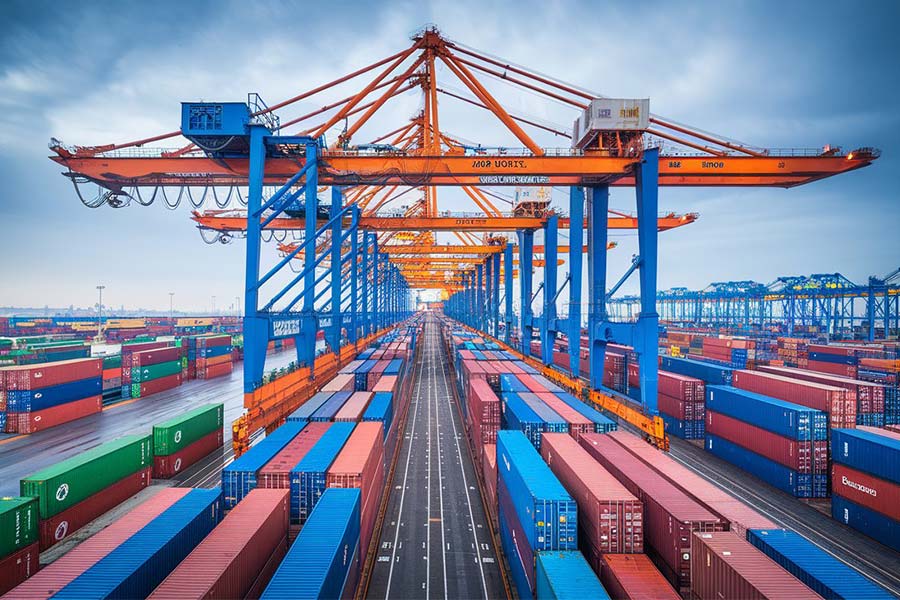
Refrigeration equipmentThe six key stages
According to the requirements of the latest Announcement No.78 of the General Administration of Customs in 2025,industrial refrigerationRequired to CompleteFull - process Compliance ManagementThe case of a mechanical and electrical import enterprise suffering a 40-day customs clearance delay due to incorrect commodity classification serves as a warning: mastering the following process nodes can save 20-30% of time costs.
Phase 1: Triple Verification of Qualification Documents
The "Access Catalogue for Imported Electrical and Mechanical Products",which will be implemented starting from 2025,adds new environmental protection requirements for refrigerants.Enterprises need to prepare the following:
- Agencyexportagreement(original)
- Originalfactory-issuedrefrigerantGWPvaluetestreport
- ASMECertificationforPressureVessels(ApplicabletoRefrigerationUnits)
- Special documents:
- ProofofStorageCapacityforFrozenEquipmentattheImportPort
- ColdChainTransportationTemperatureMonitoringSystemFilingNumber
Phase Two: The Technical Game of Commodity Classification
A case where an enterprise declared "refrigeration units" classified under 8418.69 resulted in overpayment of 7% tariffs,but after re-submitting evidence,it was successfully reclassified under 8418.59 shows:
- Corejudgmentcriteria:
- Conversionrelationshipbetweencompressorpowerandcoolingcapacity
- Doesitincludeatemperaturecontrolsystemmodule?
- Degreeofunitintegration(completeunit/knock-downparts)
Phase 3: Data Support for Customs Valuation
For common royalty issues related to refrigeration equipment,it is recommended to prepare:
- PriceCompositionExplanationDocument:
- TechnicalPatentFeeAllocationCalculationTable
- Paymentvoucherforoverseasinstallationanddebuggingfees
- Comparable Price Database:
- Transactionrecordsofsimilarequipmentfromthesamebrandinthepastthreeyears
- ListofPurchasePricesforMajorComponents
Phase 4: Technical Barriers in Inspection and Quarantine
The new energy efficiency regulations for refrigeration equipment implemented in 2025 require that:
- Mandatorytestingitems:
- ThemeasuredCOPvalueshallnotbelessthan95%ofthenominalvalue.
- Annualrefrigerantleakagerate0.5%
- Key points for document verification:
- Evaporator/CondenserMaterialCertificate
- RefrigerantChargingQuantityDeclarationDocument
Phase 5: Strategies for Handling Local Inspections
For common inspection issues,it is recommended to prepare:
- On-siteInspectionToolkit:
- MultilingualOperationManual(includingChinesetranslation)
- Real-timeEquipmentParameterVerificationSystem
- Emergency Response Plan:
- Standbypowerconnectiondevice
- EmergencyLiquidDrainageRecoveryEquipment
Ongoing regulatory requirements after customs clearance
According to the amendment of the "Special Equipment Safety Law" in 2025:
- Keypointsforfollow-upmanagement:
- Monthlyenergyefficiencydatareportingforthefirstyearofoperation
- Pressurevesselsmustundergomandatoryre-inspectioneverythreeyears.
- Risk early-warning mechanism:
- Establishatraceabilitysystemforcorecomponentreplacement.
- Configuretheremotemonitoringdatainterface
The practical case of a cold chain logistics enterprise adopting the pre-classification + segmented transportation solution,which reduced customs clearance time to 12 working days,demonstrates that professional agency services can lower compliance costs by 40%.It is recommended that companies initiate customs clearance plan discussions during the equipment procurement phase to avoid fundamental conflicts between technical parameters and customs requirements.
Was this helpful? Give us a like!
Contact our experts for compliance audits, precise quotes, and one-stop customs support.
Recent Comments (0) 0
Leave a Reply