
EV Tax Credits: China Graphite Rules Eased
or complex compliance issues.
clearance and fund security.
In the development of the U.S.electric vehicle industry,tax credit policies have been a key tool to drive consumer purchases and manufacturer innovation.Recently,the U.S.Treasury announced a significant adjustment,easing restrictions on EV tax credits,a change expected to have far-reaching impacts on the industry.
Specifically,until the end of 2026,U.S.consumers purchasing EVs containing Chinese graphite and other critical minerals will still qualify for up to $7,500 in tax credits.This move is seen as the Biden administrations adaptation to practical challenges while promoting the localization of mineral and battery supply chains.
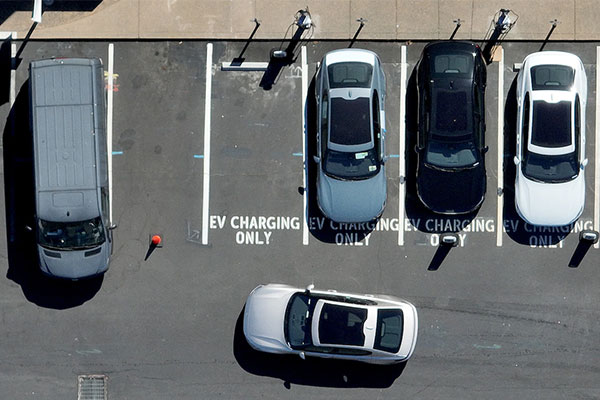
Previously,the US government had stricter regulations on tax credits for electric vehicles,particularly regarding the sourcing of minerals.To reduce reliance on foreign critical minerals,especially those from countries defined as "Foreign Entities of Concern" (FEOC),such as North Korea,China,Russia,and Iran,the US established stringent supply chain requirements.According to these requirements,starting from 2025,electric vehicles containing critical minerals from these countries will no longer be eligible for tax credits.
However,the recent adjustment by the U.S.Treasury reflects a practical issue: tracing the origin of specific minerals like graphite is extremely difficult.This mineral is widely used in EV battery anode materials,while other critical minerals are used in electrolyte salts,binders,and additives.Manufacturers argue that strict restrictions on these low-value materials could hinder EV industry growth,especially given the complexity of global supply chains.
In announcing this policy adjustment,the U.S.Treasury clarified that automakers will be required to phase out hard-to-trace critical minerals by 2027.This means the government is offering short-term flexibility while maintaining the long-term goal of ensuring transparency and security in the EV supply chain.
This decision is seen by the industry as a reasonable response to operational challenges.It provides automakers with a buffer period to transition to more sustainable and traceable resources while keeping the governments broader goal of promoting EVs.For consumers,this means more EV models may qualify for tax credits in the coming years,potentially boosting purchase intent and further increasing market penetration.
Nevertheless,this policy adjustment may draw criticism,particularly from environmental and supply chain security perspectives.Critics may worry that easing restrictions on critical mineral sourcing could deepen U.S.reliance on certain countries that may be geopolitical competitors or adversaries.
Was this helpful? Give us a like!
Contact our experts for compliance audits, precise quotes, and one-stop customs support.
Recent Comments (0) 0
Leave a Reply