
Automotive Parts Import: 20-Year Experience Guide
or complex compliance issues.
clearance and fund security.
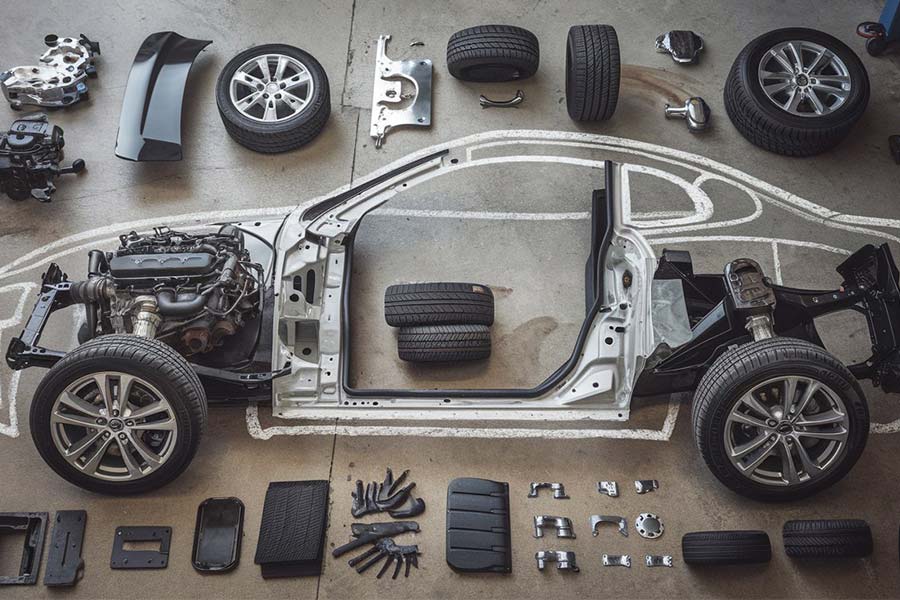
As a senior consultant with 20 years of experience in theWith 20 years of experience as a professional service provider in the industry,we deeply understandThe Complexity and Professionalism of Import.This article will systematically analyze the entire process of importing automotive parts from a practical operational perspective,and propose risk prevention and control recommendations targeting industry pain points,to assist enterprises in achieving efficient and compliant imports.
I.Preliminary Preparation Phase: Compliance Access and Cost Calculation Output:
1.Triple Verification of Product Qualifications
- AccurateclassificationofHScodes:Distinguishbetweenkeycomponents(suchasthe8708seriesengines)andgeneralaccessories(e.g.wipers8512.40)byconsideringtheirintendeduse(OEMproduction/after-salesmaintenance)todetermineclassification,therebyavoidingtariffdiscrepanciesduetoincorrectHScodes(e.g.transmissionoilclassifiedunder3403.19incursa6%tariff,whilemisclassificationunder8708wouldresultina10%tariff).
- Accessibilitycertificationverification:
- EUmarket:e-markcertification(ECER90brakepadcertification),REACHregulation(heavymetalcontentinrubbercomponents);
- USMarket:DOTcertification(FMVSS108standardforvehiclelights),CARBcertification(emission-relatedcomponents);
- ChinaMarket:CCCcertification(47categoriesofproductssuchasseatbeltsandtires),specialscenariosrequiringpriorapplicationforthe"ExemptionCertificateforCCC"(e.g.limitedimportsformaintenancepurposes).
- Application of rules of origin: To fully leverage free trade agreements (such as RCEP,which offers 0% tariffs on Japanese pistons),verification is required.Format (Back-to-back Certificate of Origin is applicable to transit trade).
2.Dynamic Calculation Model of Tariff Costs
- Basictaxesandfees:Tariff+13%VAT(Vehiclepartsareeligiblefortaxreductionpolicies)+consumptiontax(fordisplacement-relatedcomponents);
- Costoptimizationstrategy:
- Advanceclassificationruling(AnnouncementNo.14oftheGeneralAdministrationofCustomsin2018)requiresapplicationthreemonthsinadvancetolockintariffcoderisks;
- Summarytaxation(the"oneguaranteeformultipleuses"modelreducescapitaloccupation);
- FreeTradeZoneWarehousingandDistribution(DeferredTaxation+OrderSplittingandConsolidationOptimization).
II.Customs Clearance Practices: Full-Process Node Control Output:
1.Key actions in the declaration process
- CompletenessofDeclarationElements:Brand/Model/ApplicableVehicleModels(mustbeprecisetothefirst8digitsoftheVINcode),Material(percentageofmetalcomponents),FunctionalPrinciple(forElectronicControlUnitECU,specifytheprogrammingmethod);
- KeyPointsofDocumentManagement:
- Thecommercialinvoicemustindicatethetermsoftrade(CIF/FOBadjusteddutiablevalue);
- OriginalManufacturerAuthorizationLetter(topreventtrademarkinfringement,especiallyforhighlysensitivebrandssuchasMercedes-BenzandBMW);
- Technicalparameterbooklet(pressureratioandflowratedatamustbeprovidedforturbochargers).
2.Handling Common Issues During On-Site Inspections
- LabelComplianceRectification:
- MissingChinesewarninglabels(e.g.airbagsshouldbelabeled"Storebelow40°Cbeforeinstallation").
- Thetiremustdisplaytheproductionweeknumber(inDOTXXYYformat,whereYYrepresentstheyear);
- Sampling and submission for inspection and disposal:
- Whenthefrictioncoefficienttestofbrakepads(GB5763-2018standard)fails,are-inspectionorreturnshipmentcanberequested;
- Thedeviationinlubricatingoilflashpointtestingcanbeappealedbyprovidingtheoriginalmanufacturer’sMSDS.
3.Back-end Supply Chain Management: Delivery Timeliness and Risk Closure Output:
1.Specialized Storage Solutions
- Precisioncomponents(ECUmodule):Constanttemperatureandhumiditychamber(temperature22±2°C,humidity45%-60%);
- Hazardousgoodscategory(airbagsclassifiedasUN0503):StoreindependentlyinClassAhazardouschemicalwarehouse;
- JITDelivery:Leveragingbondedwarehousestoachieve"HongKongwarehouseinventory+Shenzhenfactoryhourly-leveldelivery."
2.Quality Dispute Resolution Mechanism
- On-sitearrivalinspection:AccordingtotheAQLsamplingstandard(GB/T2828.1),atestreportwillbeissuedwithin72hoursupondiscoveryofbatchqualityissues;
- ReturnforRepairOperation:Applyforthe"DeclarationFormforOutboundRepairGoods,"andensuretherepairperiodiscontrolledwithin6monthstoavoidtaxation;
- WarrantyClaimCoordination:CoordinatewithoverseassupplierstoinitiatetheRMAprocesswhilesimultaneouslypreparingforcemajeuredocumentation(e.g.Dampnesscausesoxidationofthewiringharness).
IV.Industry-Specific Risk Alerts Output:
1.Intellectual property red line
- OEMmanufacturingscenario:Itisnecessarytoverifythevalidityofthe"ParallelImportAuthorizationLetter"(withspecialattentiontotheBMWv.NingboFreeTradeZonecase);
- Designpatentconflicts:Beforeimportingcomponentssuchaswheelsandgrilles,searchChina’sdesignpatentdatabase(asof2023,Teslahasregistered21wheeldesignpatents).
2.Upgrading Environmental Regulations in Response
- EUNewBatteryRegulation(effectivein2027):Requirestheprovisionofbatterycarbonfootprintdeclarations,involvingtheimportofstart-stopbatterypacks.
- China’sNationalVIEmissionStandard:Catalyticconvertersmustobtainthetypetestreportinadvance.
5.Review of Classic Cases Output:
Case 1: A company’s imported Mercedes-Benz drive shaft was detained by customs.
- Issue:NotauthorizedasasecondarydistributorbyDaimlerGroup.
- Solution:Initiatethecustomsprotectionprocedureforintellectualpropertyrights(generalguaranteefiling),andreleasethegoodsaftersupplementingthesubmissionofthetrademarkuseconsentletter.
Case 2: Dispute over the Return of Imported New Energy Vehicle Motors from South Korea
- Issue:Therareearthcompositionofthemagnetdoesnotcomplywiththe"RegulationsontheManagementofOzone-DepletingSubstances."
- Disposal:Applyforpre-shipmentinspection(compliancecertificateissuedbytheKoreanKTCagency),andproceedwithcustomsclearanceafterre-declaration.
Conclusion Output:
The import of automotive parts involves complex technical regulations and stringent quality control requirements.Choosing an agency service provider with qualifications for importing electromechanical products (Customs AEO Advanced Certification),an overseas inspection team (such as a TüV cooperation agency in Germany),and self-operated bonded warehousing can significantly reduce supply chain risks.It is recommended that enterprises establish an import compliance management system (referring to the ISO 37301 standard) to achieve full-cycle control from order to delivery.
Was this helpful? Give us a like!
Contact our experts for compliance audits, precise quotes, and one-stop customs support.
Recent Comments (0) 0
Leave a Reply