
China-Vietnam Trade: RCEP vs. FORM E Certificates
or complex compliance issues.
clearance and fund security.
In recent years,with the deepening of regional economic cooperation,the trade relationship between China and Vietnam has been continuously upgraded.For enterprises exporting from China to Vietnam,choosing the rightdocuments can not only help with smooth customs clearance but also enable them to enjoy the tariff reduction and exemption preferential policies given by Vietnam.At present,the main certificates of origin available for export to Vietnam are the RCEP Certificate (Regional Comprehensive Economic Partnership Agreement) and the Form E Certificate of Origin (Certificate of Origin for the China - ASEAN Free Trade Area).
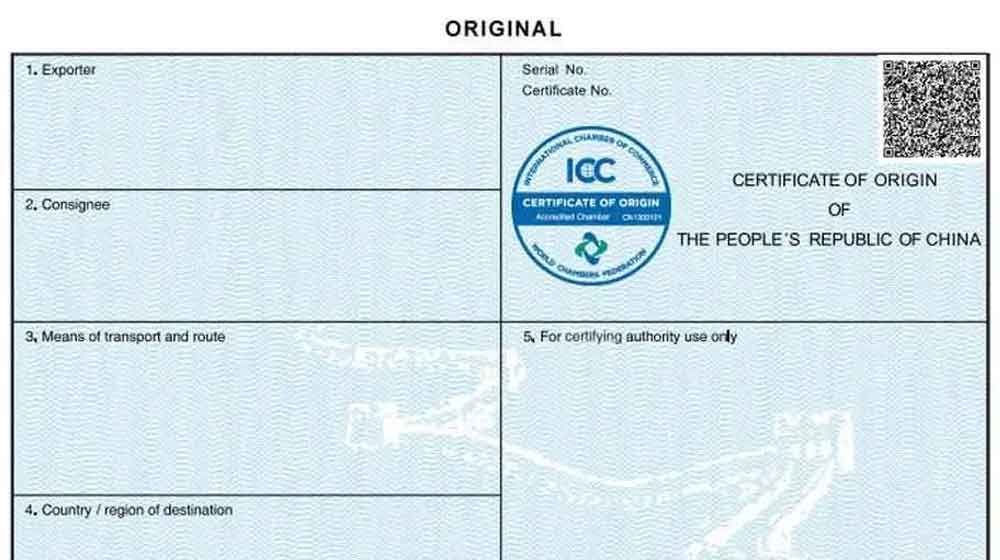
I.RCEP Certificate of Origin
The Regional Comprehensive Economic Partnership Agreement (RCEP) is a free trade agreement covering 15 member states,including China,Japan,South Korea,Australia,New Zealand,and the 10 ASEAN countries.RCEP officially came into effect on January 1,2022,providing more conveniences and preferential measures for trade among member states.The RCEP Certificate of Origin is an important document to prove that the exported goods meet the RCEP rules of origin.Goods holding this certificate can enjoy tariff reduction and other trade preferences among member states.
Scope of Application
The RCEP Certificate of Origin is applicable to goods exported from China to Vietnam and meeting the RCEP rules of origin.These goods can enjoy tariff reduction and other trade facilitation measures given by Vietnam.
Rules of Origin
- FullyObtainedorProduced:GoodsmustbefullyproducedwithinChinaoranRCEPmemberstatewithoutusingrawmaterialsfromnon-memberstates.
- PartiallyProduced:Ifrawmaterialsfromnon-memberstatesareused,theprocessingofthegoodsmustmeetspecificvalue-addedratiosorprocessingstandards.
- AccumulationRule:AllowstheaccumulationofrawmaterialsandprocessingvalueamongRCEPmemberstatestomeettheorigincriteria.
Issuance and Application Process
The application process for the RCEP Certificate of Origin mainly includes preparing application materials,filling out the application form,submitting for review,paying relevant fees,and collecting the certificate.When applying,it is necessary to ensure that the goods meet the RCEP origin standards to avoid affecting the enjoyment of tariff preferences due to non - compliance with the origin.
II.FORM E Certificate of Origin
The Form E Certificate of Origin is a specific - format certificate of origin issued based on the Agreement on the China - ASEAN Free Trade Area (ACFTA).This certificate is used to prove that goods exported to ASEAN member states (including Vietnam,Malaysia,Indonesia,Thailand,the Philippines,etc.) are produced in China or other member states,so as to enjoy the tariff reduction and exemption preferential policies given by these countries.
Scope of Application
The Form E Certificate of Origin is applicable to eligible goods in the trade between China and the ten ASEAN countries.Goods applying for the Form E must meet the corresponding rules of origin to enjoy preferential treatment.
Rules of Origin
- GoodsmustbecompletelyproducedandmanufacturedinChinaoranASEANmemberstate,orprocessedandmanufacturedusingrawmaterialsfromthesecountries.
- Forgoodsthatarenotfullyproduced,theirprocessingmustreachacertainvalue-addedratioormeetspecificprocessingstandards.
Application Process
- PrepareMaterials:Includingcopiesofcommercialinvoices,packinglists,(ifany),productioncertificationdocuments,etc.
- FillouttheApplicationForm:TheFormEapplicationformneedstobefilledoutindetail,includinginformationsuchasproductdescription,HScode,quantity,value,etc.
- SubmitforReview:SubmitalldocumentstothelocalCouncilforthePromotionofInternationalTradeorBureauofCommerceforreview.
- PayFees:Paythecorrespondingfeesaccordingtolocalregulations.
- CollecttheCertificate:Afterpassingthereview,theapplicantcancollecttheofficialFormECertificateofOrigin.
Precautions
The validity period of the Form E is one year from the date of issuance.Exporters need to ensure that the goods are exported within the validity period.In addition,exporters should keep all relevant document records for at least three years for inspection.If the goods need to pass through a third country during transportation,a transit certificate also needs to be provided to ensure the validity of the Form E Certificate.
III.How to Choose a Suitable Certificate of Origin
- DeterminetheCommodityCodeofImportandExportGoods
First of all,enterprises should determine the commodity code (HS code) of import and export goods according to factors such as the attributes,components,content,structure,specifications,and models of the declared goods.They can accurately determine the HS code of the goods by referring to the Customs Import and Export Tariff of the Peoples Republic of China and other commodity classification decisions issued by the customs,or consult a professional customs broker to ensure the accuracy of the code.
- CompareandChoosefromMultipleAspects
Enterprises need to confirm the types of preferential certificates of origin that have come into effect in the country of import of the goods (such as Vietnam),and conduct a comparative analysis from the following aspects:
- TariffConcessionRange:Understandtheproductscopeofthetariffreductionlistandthetariffconcessionrangeofdifferentcertificatesinthetargetcountry.
- StringencyofRulesofOrigin:Comparetherequirementsofdifferentagreementsforrulesoforiginandchoosethepreferentialcertificatethatbestsuitstheenterprisesproducts.
- OperationalProcedureConvenience:Considertheoperationprocessofthecertificate,includingwhetherself-declarationissupported,whetherself-printingispossible,etc.tomaximizetheenjoymentoftariffreductiondividends.
It’s worth noting that,starting from September 1,2024,certificates of origin for exports to Vietnam under the RCEP and FORM E certificates under the Framework Agreement on Comprehensive Economic Cooperation between the People’s Republic of China and the Association of Southeast Asian Nations can be printed independently,which will save enterprises more time and costs in the process of export preparation.
Summary
In the process of exporting to Vietnam,choosing the right certificate of origin can help enterprises maximize the enjoyment of tariff preferences and reduce trade costs.RCEP and Form E are the two most common types of certificates at present.Enterprises should choose the most favorable certificate according to the specific situation of the goods,combined with factors such as the tariff concession range and rules of origin.In addition,enterprises should also ensure the accuracy of the declared information and handle relevant procedures in a timely manner to ensure the smooth export and customs clearance of the goods.
Was this helpful? Give us a like!
Contact our experts for compliance audits, precise quotes, and one-stop customs support.
Recent Comments (0) 0
Leave a Reply