
A Comprehensive List of Cooperation Processes for Chinese Import Cargo Agencies: 5 Steps to Avoid Pitfalls from Selection to Use
or complex compliance issues.
clearance and fund security.
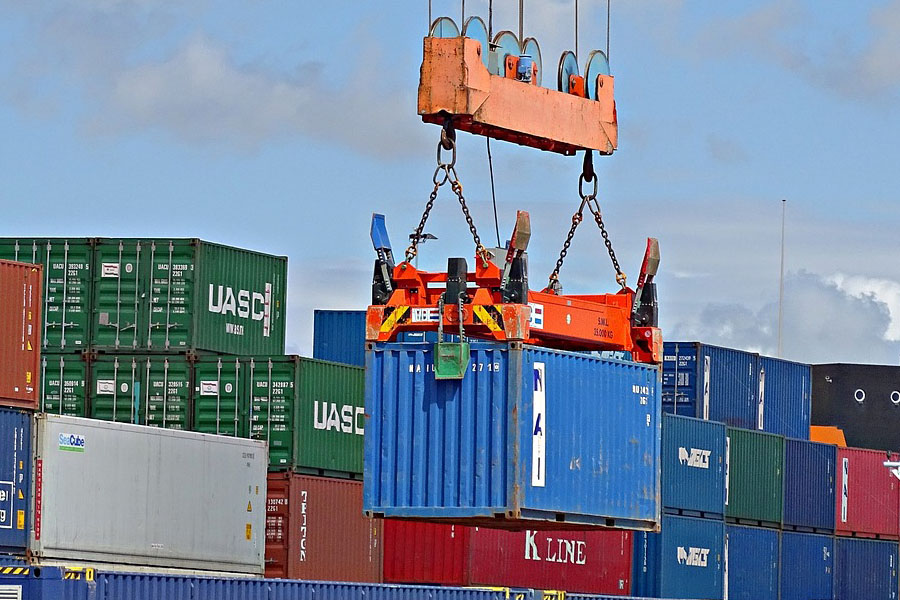
Is choosing a qualified Chinese import cargo agent the solution to everything?Ninety percent of senior procurement professionals fail at the "process loop closure" stage.Last month,a client importing precision instruments encountered a setback because the agent failed to prepare a "post-clearance inspection plan," resulting in the goods being held at the port for 15 days,incurring additional storage fees and late declaration penalties totaling 80,000 yuan.To make matters worse,the agent refused to take responsibility by citing "customs inspections as force majeure," leaving the client with no recourse but to accept the loss.
Why are qualifications just the basics?ChinaRisk is hidden in "Process Integration"
Many purchasers’ first criterion for selecting an agent is "whether they have NVOCC qualifications".However,according to the statistics of the General Administration of Customs of China in 2023,85% ofThe dispute is not due to the "agent lacking qualifications",but rather that the "agent failed to implement process pre-control measures".—— Qualifications are just an entry ticket to "being able to do it",but "knowing how to do it" is the key to avoiding losses.For example,an agent with NVOCC qualifications may overlook the "additional conditions of the HS code" (such as the need for a measurement certificate for precision instruments),or fail to establish a communication channel with the customs inspection department,resulting in the inability to provide information in time during inspections and delays in customs clearance.
| Common cognitive biases | The actual risk | Possible losses (calculated based on a value of 1 million yuan) |
|---|---|---|
| Having the NVOCC qualification means it’s safe | Qualifications only represent "having the qualification to operate a business",but do not cover "operational capabilities". | 7-day customs clearance delay → warehouse rental + demurrage charges of approximately 50,000 yuan |
| The agent is responsible for customs clearance,so you don’t need to worry about it | The agent’s responsibilities are limited to "normal procedures".In case of abnormal situations,the consignor needs to cooperate with the agent | Seizure of goods → Communication costs + fines of about 100,000 yuan |
| The lower the price,the higher the cost-performance ratio | Low-price agents often omit "risk prevention and control" (such as checking the documents in advance). | HS code error → Customs penalty of about 200,000 yuan |
5-step Control Checklist for cooperating with Chinese import goods agency companies
Step 1: Before selecting an agent: Check "Dual Qualifications + 3 Past Cases" Output:
Don’t just look at the NVOCC qualifications.You must additionally verify two points: 1.Import Cargo Agent Registration Certificate1.(Issued by the Ministry of Commerce,certifying the right to act as an import agent); 2.Customs credit rating(AA-level is optimal,avoid below C-level; can be checked on "China Customs Enterprise Credit Management Official Website").
Moreover,the agent is required to provide threeImport cases of goods in the same category(For example,if you import precision instruments,you need to check the cases of instrument imports they have handled before.) Pay special attention to "customs clearance efficiency" (whether it can be completed within 3-5 days) and "exception handling records" (such as whether they have solved problems with HS codes).
Step 2: Signing the contract: Defining "4 Responsibility Boundaries" Output:
The contract is the core of avoiding disputes—it must clearly stipulate four key points:
1.Clearance timeliness: e.g."Complete clearance within 3 working days after arrival; for each day of delay,the agent bears 1% of the storage fee";
2.Exception handling: For example,"If the delay is caused by errors in the agency’s documents,the agency shall bear 50% of the demurrage fee";
3.Document retention: For example,"The agent shall keep documents such as the customs declaration form,bill of lading,and invoice for three years to facilitate customs verification".
4.After-sales service: For example,"Provide the Inspection Record Form (if there is an inspection) within 15 days after customs clearance".
Step 3: Before pre-declaration: Require the agent to submit a "customs clearance plan". Output:
Pre-declaration (review before customs accepts the declaration) is the key to avoiding inspections—ask the agent to issue aA customs clearance plan for your goodsThe content includes:
1.Supplementary explanation for the HS code (e.g.precision instruments require a "Measuring Instrument License");
2.Inspection response plan (e.g.technical materials needed,contact person at the customs inspection department);
3.Unusual contacts: For example,the phone number of the agent’s "Customs Affairs Supervisor",to avoid not being able to reach them when needed.
Step 4: During customs clearance: Follow up on the "3 key points" in real time Output:
During the customs clearance process,we will follow up at least three times a day:
1.Pre-declaration feedback: Verify whether the customs accepts your declaration (if it is returned,you need to modify it immediately);
2.Inspection Notice: If you are subject to inspection by the authorities,make sure to confirm the inspection time (try to arrange it on weekdays to avoid delays on weekends);
3.Release instruction: Check whether the goods have truly been released (some agents may say "they have been released",but in reality,they are still in the customs supervision area.You need to verify the "Electronic Certificate of Customs Release").
Step 5: After customs clearance: Request the "2 key documents". Output:
After clearance is completed,you must ask the agent for 2 documents:
1.Customs clearance certificate(A customs declaration form stamped with the customs "release stamp",which proves that the goods can be picked up);
2.Declaration Form and Foreign Exchange Payment Certificate(Used for foreign exchange payment to the bank,and also proof for subsequent tax rebates).
These documents must be kept for three years—if the customs authority conducts a subsequent inspection,failure to provide these documents will result in a fine.
The hidden experience of senior procurement: the "declaration agent’s stability" of an agent is more important than their qualifications
I’ve been working in import for 15 years,and the most outrageous case I’ve ever encountered was this: A customs declaration agent at an agency had just started working for one week when he mistakenly classified the HS code of "precision instruments" as "ordinary machinery" (with a 10% difference in tax rates),which led to customs inspection and detention of the goods for 20 days,resulting in warehouse rental fees and late declaration penalties totaling 120,000 yuan.
Later,I checked and found that the turnover rate of customs declarants at this agency is as high as 40%.Newcomers are not familiar with the "sub-heading notes" of the HS code and are prone to making basic mistakes.
My suggestion is:Before cooperation,we require the agent to provide a "proof of the customs declaration agent’s years of practice".(at least 3 years or more),and designate a "dedicated person in charge of your goods" in the contract—if the declarant in charge leaves,
There are three things you can do this afternoon to help you avoid losing 100,000 yuan next month
- Takeoutyourcurrentagencycontractandchecktheclauseon"liabilityforexceptionalcircumstances"—ifit’snotincluded,asktheagenttosignasupplementaryagreementtomorrow.
- Asktheagentforthe"CustomsClearancePerformanceReport"forthepastthreemonths.Iftherearedelaysexceedingsevendays,clarifywhetherthedelaysaredueto"customsreasons"or"agent’soperationalreasons".
- Checkthe"HScode"ofthelastimportedgoods—arethereanyadditionalexplanations?Ifnot,besuretohavetheagentconfirmitbeforethenextimport(youcancheckonthe"CustomsTariffQueryPlatform").
Was this helpful? Give us a like!
Contact our experts for compliance audits, precise quotes, and one-stop customs support.
Recent Comments (0) 0
Leave a Reply