
A Guide to Importing Agricultural Machinery into China: HS Codes, Licenses & CCC Certification
or complex compliance issues.
clearance and fund security.
With the deepening of China’s agricultural modernization,the demand for efficient and advanced imported agricultural machinery is increasing.However,successfully introducing a foreign combine harvester or plant protection drone into the domestic market is far more than just a simple international purchase.Behind this lies a complex regulatory system involving multiple departments such as customs,commerce,and market supervision.
Every step—from the initial product classification to the application for import licenses and mandatory certification—constitutes a critical juncture that determines the success or failure of the import process.This article aims to provide a professional and rigorous practical guide,systematically explaining the core requirements and precautions for importing agricultural machinery,helping relevant enterprises avoid risks and achieve compliant and efficient importation.
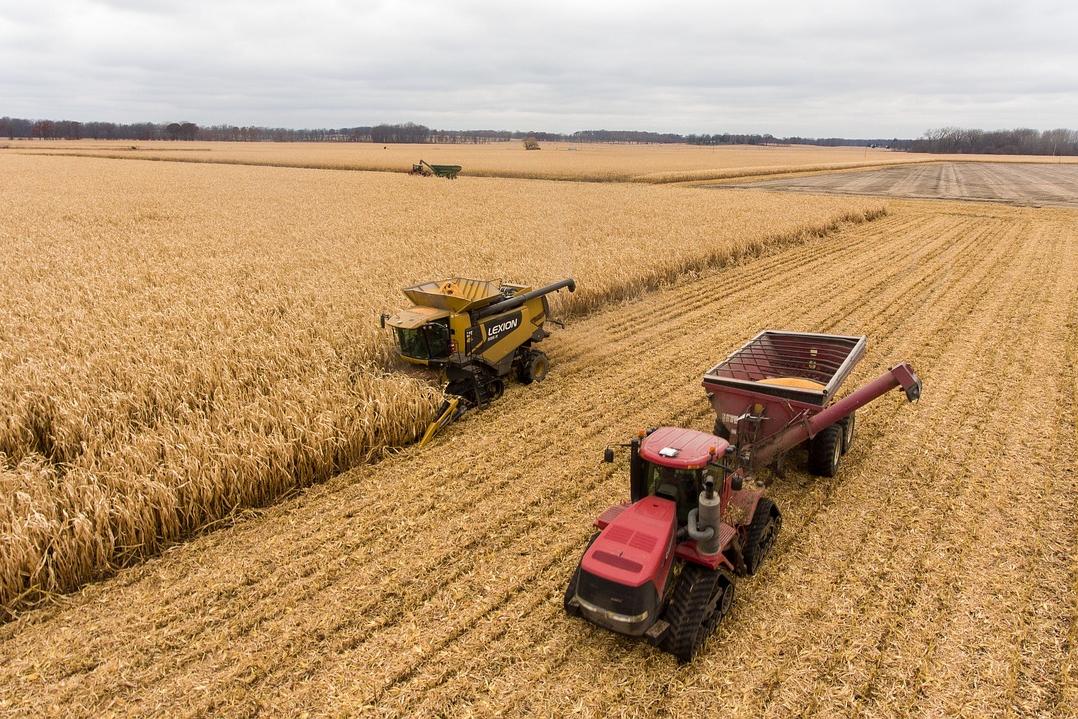
First,the foundation: the commodity classification (HS Code) of agricultural machinery
The classification of agricultural machinery is the foundation of all subsequent work.The core principle is to "classify according to function and use",rather than simply based on the product name.Incorrect classification not only leads to errors in the application of tariffs and regulatory conditions,but may also trigger compliance investigations by customs authorities.
Reference for customs classification of common agricultural machinery:
| Machine name | Proposed Customs Code (HS Code) | Categorization Reasons and Explanations |
| Soil tillage machinery | ||
| A moldboard plow | 8432.1000 | It is a soil cultivation machine specifically listed in Item 84.32 of the Tax Code. |
| Rotary tiller | 8432.2900 | As farming machinery,they are usually used in conjunction with tractors for agricultural operations. |
| Planting and fertilizing machinery | ||
| Seeder | 8432.31/8432.39 | Classify them under the corresponding sub-items of Item 84.32 based on whether they are no-till farming or not,and their specific structures. |
| Rice transplanting machine | 8432.31/8432.39 | A specialized planting machine used for transplanting seedlings. |
| Harvesting machinery | ||
| Combine harvester | 8433.5100 | A multi-functional machine that can complete multiple harvesting tasks in one go. |
| Other machinery | ||
| Agricultural sprayer | 8424.4100 / 8424.4900 | The liquid spraying device is classified under heading 84.24. |
| Plant protection drone | 8806.XXXX | Classify it under Chapter 88 according to the attributes of the unmanned aerial vehicle. |
Special attention: Tractors (item 87.01) and the agricultural implements they tow (such as plows and rakes) need to be classified separately.Even if they are imported together,they should be declared separately to their respective corresponding items.
II.Entry Barriers: Restrictive and Prohibitive Management and License Application
Agricultural machinery,as mechanical and electrical products,are subject to the regulations of the Ministry of Commerce’s "Measures for the Import Management of Mechanical and Electrical Products",and are divided into three categories: prohibited,restricted,and freely imported.
(I) Prohibited Import
According to the current "Catalog of Used Mechanical and Electrical Products Prohibited from Importation",Old tractorImport of waiting-room-related products is strictly prohibited.
(II) Restrictions on imports (requiring an Import License)
Part of itOld agricultural machineryFor example,the outdated rice transplanters,harvesters,cotton pickers,and threshers are all products listed in the "Catalogue of Goods Subject to Import License Administration".Enterprises must apply for an "Import License of the People’s Republic of China" from the institutions authorized by the Ministry of Commerce before signing contracts,and declare the goods based on the license.
- ProfessionalTip:Theapplicationprocessforthelicenseisrigorous,withextremelyhighrequirementsfortheaccuracyandcompletenessoftheapplicationmaterials.Thisstageinvolvescoordinationamongmultipledepartments,andadvanceplanningandseekingprofessionalguidancearekeytoensuringthesmoothprogressoftheproject.
(III) Free import (some items require the issuance of an Automatic Import License)
In order to monitor imports,some freely imported mechanical and electrical products also need to obtain permits.For example,some products used for spraying pesticidesPlant protection drone(Items under heading 88.06) fall within the “Automatic Import License Administration Catalog.” Enterprises must apply to the local commerce authority for an Automatic Import License before importation.

III.Special Procedures: Inspection and Quarantine and Mandatory Certification
(I) Pre-shipment Inspection of Used Mechanical & Electrical Products
For high-risk imported used mechanical and electrical products,the state implements a mandatory pre-shipment inspection system.According to the "List of Inspection and Supervision Measures for Imported Used Mechanical and Electrical Products",Old tractors and old combine harvestersAll of the above are listed here.Importers must commission an inspection agency approved by the customs to inspect the safety,hygiene,and environmental protection of the equipment before the goods are shipped from overseas,and obtain the Pre-Shipment Inspection Certificate before they can ship and declare the goods to customs.
- ProfessionalTip:Coordinatingwithoverseasinspectionagencies,preparingtechnicaldocuments,andcommunicatingwiththeconsignorarethecoretasksofpre-shipmentinspections.Wecanassistclientsinmanagingthisprocesstoensurethattheinspectiongoessmoothlyandtoavoidthesituationwherethegoodscannotbeclearedthroughcustomsuponarrivalattheportduetothelackofkeycertificates.
(II) Mandatory Product Certification (CCC Certification)
According to the "Regulations on the Supervision and Management of Agricultural Machinery Safety",some agricultural machinery products need to pass mandatory product certification.For example,some products under item 84.24Plant protection machineryAnd some items under heading 87.01Wheeled tractorAll these products must obtain approval from the relevant authorities before they can be imported into China.CCC Certification CertificateAnd affix the CCC mark on the product.When declaring customs,the customs will conduct online verification of the certificate.
IV.Cost Optimization: Application of Tax Preferential Policies
Import tariffs are an important component of costs.According to the "Tariff Law of the People’s Republic of China",if the imported agricultural machinery originates from countries or regions that have signed free trade agreements (FTAs) with China (such as ASEAN and RCEP member states),enterprises can apply for tariff exemptions upon providing valid documents.Apply for the book to enjoy the benefitsAgreement tariff rateThus,the tariff costs can be greatly reduced.
To successfully apply the preferential tariff rate,it is necessary to ensure that the format,signature,and data of the certificate of origin fully comply with the requirements of the agreement,and that they are consistent with the information in commercial documents such as the customs declaration and invoice.
Conclusion
Importing an agricultural machine successfully is a systematic project integrating trade,legal affairs,and logistics.It requires enterprises not only to understand the equipment itself,but also to deeply grasp the customs classification logic,license management system,inspection and quarantine standards,and certification requirements behind it.
Every step is interconnected,and any oversight could lead to significant losses of time and money.Therefore,it is wise to conduct thorough planning at the beginning of the project and,when necessary,collaborate with experienced professional trade service partners to ensure the efficient and compliant completion of the import project.
Was this helpful? Give us a like!
Contact our experts for compliance audits, precise quotes, and one-stop customs support.
Recent Comments (0) 0
Leave a Reply