
Importing Food Processing Machinery from Germany, a Complete Analysis of Know-how and Strategies
or complex compliance issues.
clearance and fund security.
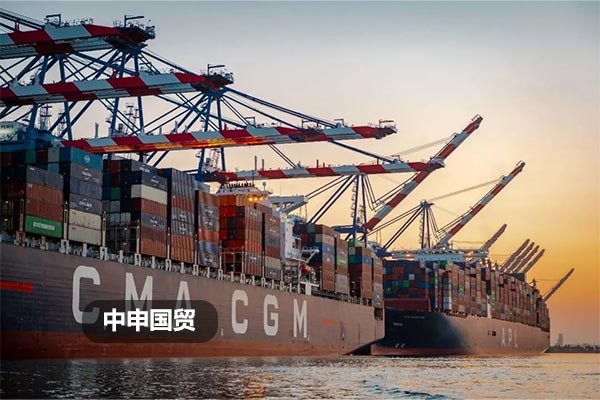
Importing German Food Processing Machinery: Opening the Door to Efficient Production
In today’s globalized market environment,importing advanced food processing machinery from Germany is of great significance for many food enterprises to improve production efficiency and optimize product quality.However,the import process involves many complex steps,which we will now analyze for you in full.
Professional document processing and logistics arrangement
- DocumentationProcessing
Importing German food processing machinery,the first challenge is the tedious documentation work.Basic documents such as commercial invoices,bills of lading,and packing lists are a given,but special documents like certificates and quality inspection certificates may also be involved.We at have extensive experience in document handling and can ensure the accuracy and completeness of the documents.Taking the commercial invoice as an example,it should detail key information such as the model,specifications,quantity,and price of the machinery.Any error could lead to customs clearance being blocked.Our professional team will strictly review every document to avoid delays or extra costs due to documentation issues.
The logistics link is directly related to whether the machinery and equipment can arrive on time and safely.Common modes of transport from Germany to China areand .Sea freight is lower in cost and suitable for larger,heavier food processing machinery with less urgent time requirements; air freight is fast but relatively expensive.We will tailor a logistics plan for the client based on the actual situation of the goods.During sea transport,attention must be paid to the packaging and reinforcement of the goods to prevent damage during long-distance transport.At the same time,we plan the transport route reasonably and choose a reliable shipping company to ensure the stability of the cargo transport.For air freight,it is necessary to understand the transport requirements and restrictions of the airline in advance to ensure the goods are loaded smoothly.
The unique advantages of the Russian market – VTBConvenience
Although the main topic is importing German food processing machinery,our company’s unique advantages in trade with Russia are also worth mentioning.If your import process involves cooperation with Russian enterprises,or if the goods need to be transshipped through Russia,we have the convenience of VTB settlement for the Russian market.
Settlement of exchange is an important link in international trade,simply put,it is the process of converting foreign currency into the national currency.In trade with Russia,settling through VTB Bank has many advantages.Firstly,VTB Bank occupies an important position in the Russian financial system,and its settlement system is mature and stable,ensuring that funds arrive quickly and safely.Secondly,we have established a long-term good cooperative relationship with VTB Bank and are familiar with its business processes and rules,which can help clients efficiently complete settlement procedures.The specific process is as follows: when you reach a transaction with a Russian client and receive foreign exchange,we will assist you in preparing the relevant settlement materials,including contracts,invoices,customs declarations,etc.and submit them to VTB Bank for review.After approval,the bank will convert the foreign exchange into RMB at the current exchange rate and pay it to you.The whole process is fast and safe.
Southeast Asian marketProcess and Solution
- ImportProcess
If your food processing machinery import involves the Southeast Asian market,whether for transit or as the final destination,a specific process must be followed.Taking transit through a Southeast Asian port from Germany as an example,before loading in Germany,the shipper must declare the export to the local German customs and provide relevant documents.After the goods arrive at the transit port in Southeast Asia,a transit declaration must be made to the local customs within the specified time,submitting documents such as the bill of lading and transit application.After the customs review is passed,the goods are arranged for transit operations in the port and shipped to China on another vessel.After the goods arrive at a Chinese port,we will declare the import to Chinese customs on your behalf,submitting a full set of import documents,including the commercial invoice,bill of lading,packing list,certificate of origin,quality inspection certificate,etc.After customs inspects the goods and levies the corresponding customs duties and value-added tax,the goods can be released and picked up from the port.
Various problems may be encountered throughout the Southeast Asian market import and export process.For example,the customs policies of some Southeast Asian countries are volatile,with strict requirements for documents.We will pay close attention to the dynamics of customs policies in various countries and prepare compliant documents for clients in advance.Port congestion may also cause delays.We will maintain close communication with local freight forwarders and shipping companies to obtain port information in a timely manner and adjust logistics plans in advance to ensure on-time transport.
Challenges and Opportunities in the Current International Trade Landscape
- Challenges
The current international trade situation is complex and ever-changing,and importing food processing machinery from Germany faces many challenges.The rise of trade protectionism and frequent adjustments to tariff policies by various countries can lead to increased import costs.For example,some countries impose high tariffs on imported food processing machinery to protect their domestic machinery manufacturing industry.At the same time,the ongoing impact of the global pandemic has disrupted logistics supply chains,causing drastic fluctuations in sea freight prices and tight space,increasing logistics costs and transport risks.In addition,the trade regulations and standards of different countries vary greatly.For example,the EU has strict standards for the safety and environmental protection of food processing machinery,requiring companies to spend more effort to meet these requirements.
Despite the many challenges,there are also many opportunities.With the gradual recovery of the global economy,the demand for food processing machinery is also picking up.Germany,as a strong machinery manufacturing country,has advanced technology and reliable quality in its food processing machinery,making it highly competitive in the international market.At the same time,the development of digital technology has brought new convenience to international trade.For example,the use of electronic documents has improved the efficiency of document handling,and online trading platforms have made trade negotiations more convenient.In addition,countries are also actively promoting trade facilitation measures and improving the business environment,which provides more favorable conditions for importing enterprises.
Product Certification Service Related Content
For imported German food processing machinery,certification is an essential step.In China,food processing machinery usually needs to obtain relevant quality certification,such as the China Compulsory Certification (CCC certification),to ensure it complies with domestic safety and hygiene standards.In the EU,machinery needs to comply with CE certification requirements,proving that it meets relevant EU directives and harmonized standards.Although we at ZhongShen do not directly provide certification services,we will assist clients in understanding the required certification types and application procedures.We will inform clients about the materials required for certification,such as product manuals,technical parameters,test reports,etc.and provide information on common certification bodies to help clients communicate effectively with them and ensure the smooth progress of certification work.
In conclusion,importing food processing machinery from Germany requires comprehensive consideration of multiple factors,including document handling,logistics arrangements,the trade situation,and product certification.We at ZhongShen,with our professional capabilities and extensive experience,will provide you with comprehensive import services,helping you successfully complete your import business and open a new chapter of efficient production.
Was this helpful? Give us a like!
Contact our experts for compliance audits, precise quotes, and one-stop customs support.
Recent Comments (0) 0
Leave a Reply