
Agency Procedures for Imported Pre-packaged Food | Avoiding Failure in the Document Chain | Operational Process & Risk Checklist
or complex compliance issues.
clearance and fund security.
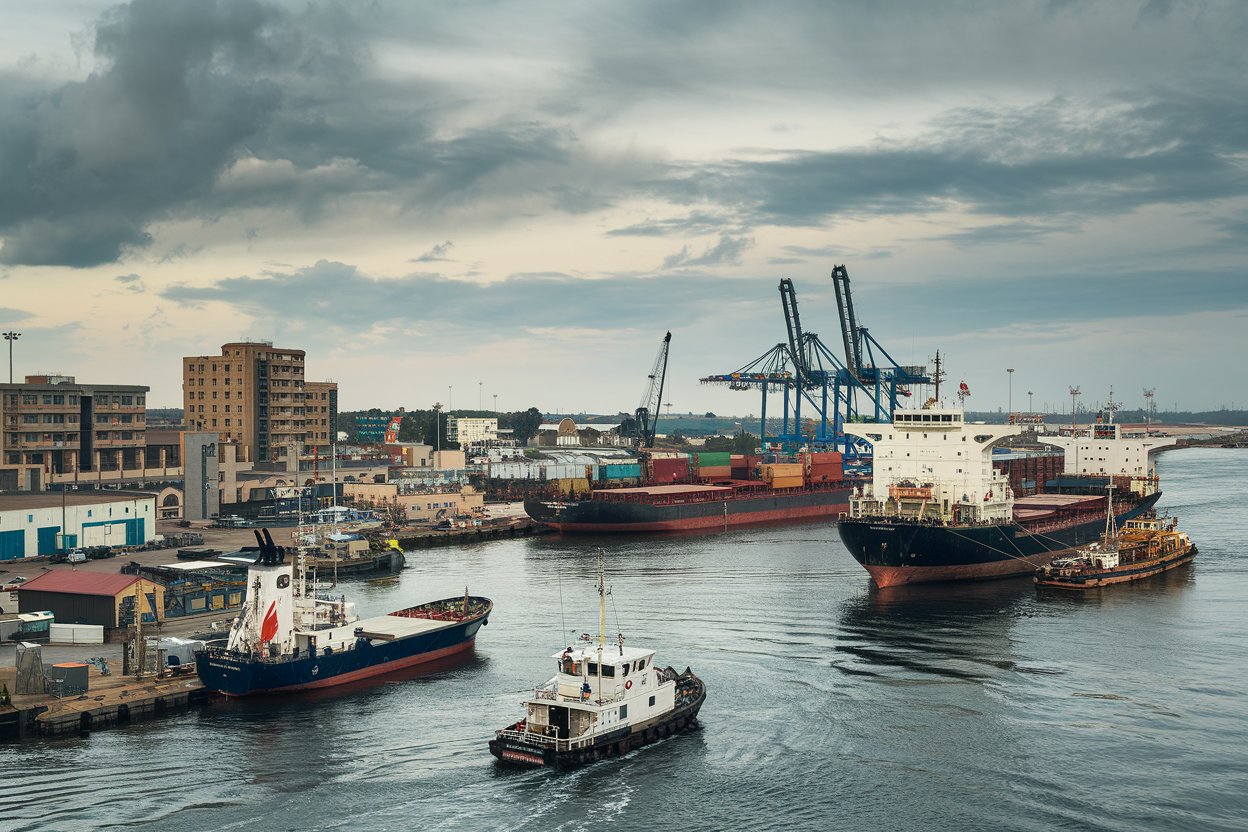
Is it enough to prepare Chinese labels and then everything will be fine?Ninety percent of experienced agents importing pre-packaged food fail at the ’consistency of the single-document chain’ stage.Last month,one of my clients had already completed the CIQ label review,but still failed due to **.The manufacturer’s name on the production label did not match the one on the customs declaration form,which led to the goods being detained and subjected to a thorough review by the customs authorities.This caused a 21-day delay,resulting in the baking powder,which had a shelf life of six months,missing the peak sales season during the Mid-Autumn Festival,leading to a direct loss of 120,000 yuan.
Why is the "documentation chain" an invisible lifeline for the import of pre-packaged foods?
The core logic of prepackaged food imports is "traceability" — every verification by customs and the Market Supervision Bureau essentially validates the consistency of information across the entire supply chain from overseas factories to domestic shelves.The "documentation chain" serves as the "digital backbone" of this traceability system: the certificate of origin verifies "where the goods come from," the health certificate confirms "the goods are safe," the customs declaration form certifies "who imported the goods," and the Chinese label demonstrates "who the goods are sold to." Any information discrepancy at any stage would disrupt the entire traceability chain,resulting in either the detention of goods for re-inspection or their immediate destruction.
| Common Misunderstandings | correct operation |
|---|---|
| The certificate of origin only looks at the "country of origin" and ignores the manufacturer’s information. | The manufacturer’s name/address in the certificate of origin,customs declaration,and ingredient list must be 100% consistent. |
| As long as you have a health certificate,it’s fine.We don’t check the batch number | The batch number of the health certificate must completely match that of the customs declaration form and the packing list |
| Chinese labels only review the content and do not associate it with any documents | The "Importer’s Name" on the Chinese label must be consistent with the "Operating Unit" on the customs declaration form. |
Importing pre-packaged food as an agent: Three steps to ensure the consistency of the "documentary chain"
Step 1: First,draw a "Document Mapping Table". Output:
There are four core documents involved in the import of prepackaged food.You need to list in advance the "key fields" that need to be matched in each type of document and form a "mapping table" — this is the basis for avoiding disruptions in the supply chain:
- OriginCertificate:Exporter/ProducerName,CountryofOrigin,andLotNo.
- SanitaryCertificate:BatchNo.ProductName,andFoodAdditives
- Customsdeclarationform:OperatingEntity,Producer/Seller,ProductName(thenamecorrespondingtotheHSCode)
- Chineselabel:Importedgoods:-Importer’sname-Manufacturer’sname-Productname(mustmatchtheoneonthecustomsdeclarationform)ThistranslationpreservesthestructureoftheoriginaltextwhileensuringclarityandaccuracyinEnglish.
Step 2: Check the "Dynamic Documents" before shipping the goods. Output:
The certificate of origin and health certificate are usually "dynamic documents" issued by overseas suppliers within one week before shipment – this is also the stage where errors are most likely to occur.You need to:
- Threedaysbeforetheshipment,werequiretheoverseassuppliertoprovideScannedcopyofthecertificateoforiginandScannedcopyofthehealthcertificate.
- Checkthe"Manufacturer’sName"inthescanneddocumentagainstthe"SupplierName"inthepreviouslysignedProformaInvoice(PI)toensureconsistency.(Iftheoverseassupplierisatrader,itisnecessarytorequirethemtoprovidea"Manufacturer’sAuthorizationLetter"confirmingthatthebatchofgoodswasproducedbyaspecificfactory.)
- Checkthe"BatchNo."inthehealthcertificateandthe"LotNo."inthePackingListtoensuretheyarecompletelyconsistent(Note:Thebatchnumbermustnotcontainanyspellingerrors,forexample,"LOT001"shouldnotbewrittenas"L0T001").
Step 3: Conduct a "link self-check" before customs declaration. Output:
24 hours before customs declaration,conduct a final self-inspection using the following checklist to avoid any last-minute mishaps:
- ProducerNameonCertificateofOrigin="Production&SalesUnit"onDeclarationForm;
- BatchNumberonHealthCertificate="LotNo."onPackingList;
- ImporteronChineseLabel="OperatingUnit"onDeclarationForm;
- Thenamesof"foodadditives"intheingredientlist=thelistof"Additives"inthehealthcertificate(forexample,"citricacid"mustbewrittenas"CitricAcid",notusingabbreviations).
More Important Than "Document Consistency": Proactive Layout of the "Traceability Chain"
Many people assume "Document Consistency" is only for customs declaration,ignoring "Post-clearance Supervision"—according to the "According to the "Measures for Food Safety Management",the customs can conduct spot checks on the "traceability chain" within six months after the goods are cleared.At this time,if the overseas supplier has gone bankrupt or the manufacturer has changed its name,you need to keep the following three types of materials in advance:
- Manufacturer’sbusinessregistrationcertificate:Beforeshipping,werequireoverseassupplierstoprovidescannedcopiesofthemanufacturer’slatestbusinessregistrationcertificates(withlocalchamberofcommercecertification);
- Producer’sConfirmationLetterinPI:Adda"ProducerConfirmation"sectiontotheproformainvoice,specifyingthat"thebatchofgoodswasproducedbyXXFactory(name/address)",andrequiretheoverseassuppliertostampit.
- Emailcommunicationrecords:Keeptheemailcorrespondencewithoverseassuppliersregarding"producerinformation".Incaseofdisputes,thiscanserveasevidence.
There are three things you can do this afternoon to avoid making mistakes in the future
There’s no need to wait for the next import—you can take action now!
- 1.Identifythedocumentsofyourrecentthreeimports(certificateoforigin,healthcertificate,customsdeclarationform,andChineselabel)andcheckwhetherthe"manufacturer’sname"iscompletelyconsistentinallofthem.
- 2.Sendanemailtotheoverseassupplier,requestingthatthey"provideascannedcopyofthemanufacturer’sbusinessregistrationcertificatebeforethenextshipment".
- 3.Createa"DocumentChecklist"(usingExcelorGoogleSheets)andincludethepreviouslymentioned"MappingTable"and"Self-CheckList".Checktheseitemsoffeachtimebeforefilingacustomsdeclaration.
Was this helpful? Give us a like!
Contact our experts for compliance audits, precise quotes, and one-stop customs support.
Recent Comments (0) 0
Leave a Reply