
Turbocharger Impeller Import: A Risk & Cost-Cutting Guide
or complex compliance issues.
clearance and fund security.
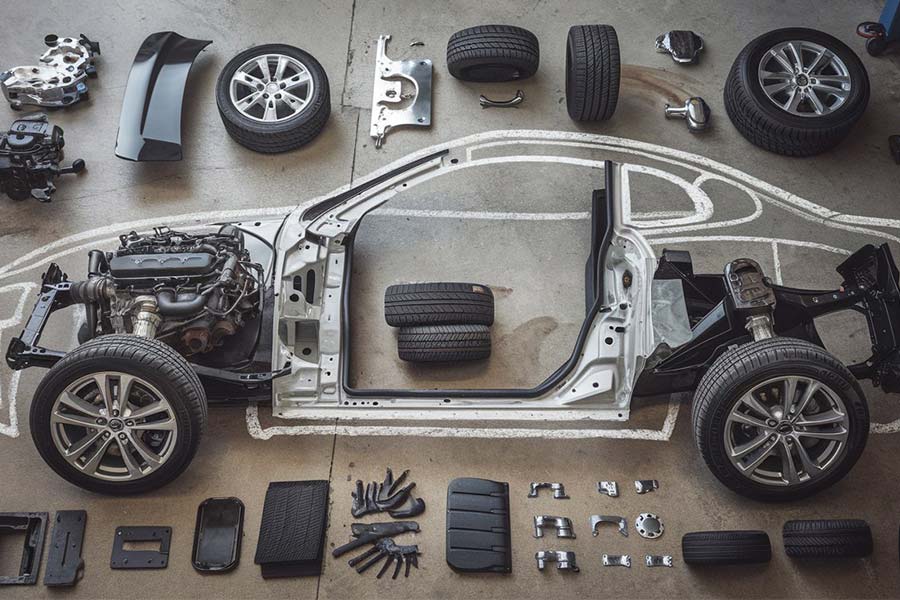
Turbocharger impellerComplete process analysis and industry insights
(Author: Chief Trade Advisor of aCompany NameSenior Account Manager,Business Division (20 years of industry experience)
I.Industry Background and Market Dynamics
The turbocharger impeller,as a core component of internal combustion engines,is expected to have a global market size exceeding $12 billion by 2025.China,as the world’s largest automotive aftermarket,andautomotive transformation country,shows two major characteristics in import demand:
1.High-end manufacturing relies on imports: 80% of high-performance impellers (such as nickel-based alloy materials,products resistant to temperatures above 950°C) in domestic enterprises rely on technologies from Europe,America,and Japan
2.Supply chain restructuring challenges: After the Russia-Ukraine conflict,European energy costs rose by 15%,and American companies accelerated the relocation of production capacity to Southeast Asia
II.Import technical parameters and key regulatory points
Key declaration elements: Output:
| Project | Technical requirements |
|---|---|
| HS code | 8414909000 (special attention should be paid to whether the turbine diameter triggers regulation under item 8411) |
| Material Certificate | Please provide the alloy composition test report for Inconel 718/713C. |
| Dynamic balance standard | ISO 1940 G2.5 grade (mandatory requirement for EU market access) |
| — | — |
Regulatory red line:
- Impellerdiameter≥200mmandrotationspeed>150,000rpmrequiresDual-UseItemsandTechnologiesImport/ExportLicense,
- Germanexportsrequireverificationofend-userstatement(toavoidmilitaryenginerisks)
III.Full-process risk management matrix
| Stage | Risk points | Solution |
|---|---|---|
| Supplier screening | Package damage | Commission TüV to conduct FMEA (Failure Mode and Effects Analysis) |
| Trade terms | Hidden costs under DDP terms | Require suppliers to issue INCOTERMS 2020 compliance confirmation letter |
| Conduct pre - shipment inspection (China Certification & Inspection Group) | Vibration-induced microcracks | Designated MAERSK special container (shockproof rating ASTM D4169 DC13) |
| customs inspection | Material identification disputes | Pre-shipment inspection by CCIC (focus on testing Cr and Mo element content) |
| VAT Deduction | Incorrect HS code classification | Apply for customs pre-classification (recommend allowing 60-day buffer period) |
IV.Cost optimization strategies
We Serve: Cost reduction plan for a new energy vehicle manufacturer importing Japanese titanium-aluminum alloy impellers
1.Tariff planning: Utilizing RCEP rules of origin to reduce Japanese material content to 48% (meeting regional value content criteria)
2.Logistics innovation:+ Qingdao Port sea-rail intermodal transport,saving 18% transportation costs (10 days faster than pure ocean shipping)
3.Foreign Exchange Management: Using NDF (Non-Deliverable Forward) to lock in 6-month EUR exchange rate,hedging against ECB rate hike risks
V.Technical barrier breakthrough approaches
1.Alternative solution development: It is recommended that the customer establish a "dual-supplier" mechanism (e.g.parallel procurement from Germany’s KKK and Korea’s HS Turbos).
2.Localization transition: Recommend initially importing semi-finished products (HS Code 84831000) and completing dynamic balance debugging domestically
3.Technical cooperation filing: Assist with filing for the Catalog of Major Technical Equipment Import Tax Incentives (up to 50% tariff reduction)
VI.2023 industry regulation alerts
1.EU Carbon Border Adjustment Mechanism (CBAM): Trial operation period begins October 2023,requiring carbon emission data traceability to tier-3 suppliers for impeller production
2.U.S.EAR amendment: New export controls added for ultra-precision five-axis machine tools manufacturing impellers (ECCN 2B001)
3.China Customs AEO certification upgrade: Importing impeller enterprises with AEO Advanced Certification can enjoy inspection rates reduced to below 0.5%
Conclusion
The turbine impeller inlet has entered a dual-test period of "technical regulation + supply chain resilience." It is recommended that enterprises establish a three-dimensional risk control system:
- Technicaldimension:Establishmaterialdatabase(coveringparametersof20mainstreamimpelleralloysworldwide)
- ComplianceDimension:Configuredual-coreteamofprofessionalclassificationspecialists+tradecomplianceofficers
- Logisticsdimension:Establishoverseassparepartsbondedwarehouses(recommendedlocations:HainanFreeTradePortorSuzhouComprehensiveBondedZone)
(Data sources for this article: WTO Trade Statistics Database,General Administration of Customs of China 2023 Classification Guidance,S&P Global Mobility Research Report)
Currently serving as General Manager of the Automotive Components Division at a multinational supply chain group,leading the Asia-Pacific supply chain layout for global top 5 turbocharger manufacturers including BorgWarner and Honeywell,with cumulative import/export value of precision mechanical components exceeding $2 billion.
Was this helpful? Give us a like!
Contact our experts for compliance audits, precise quotes, and one-stop customs support.
Recent Comments (0) 0
Leave a Reply