
Imported Red Wine: A Complete Guide to Foreign Trade Processes and Market Opportunity Insights
or complex compliance issues.
clearance and fund security.
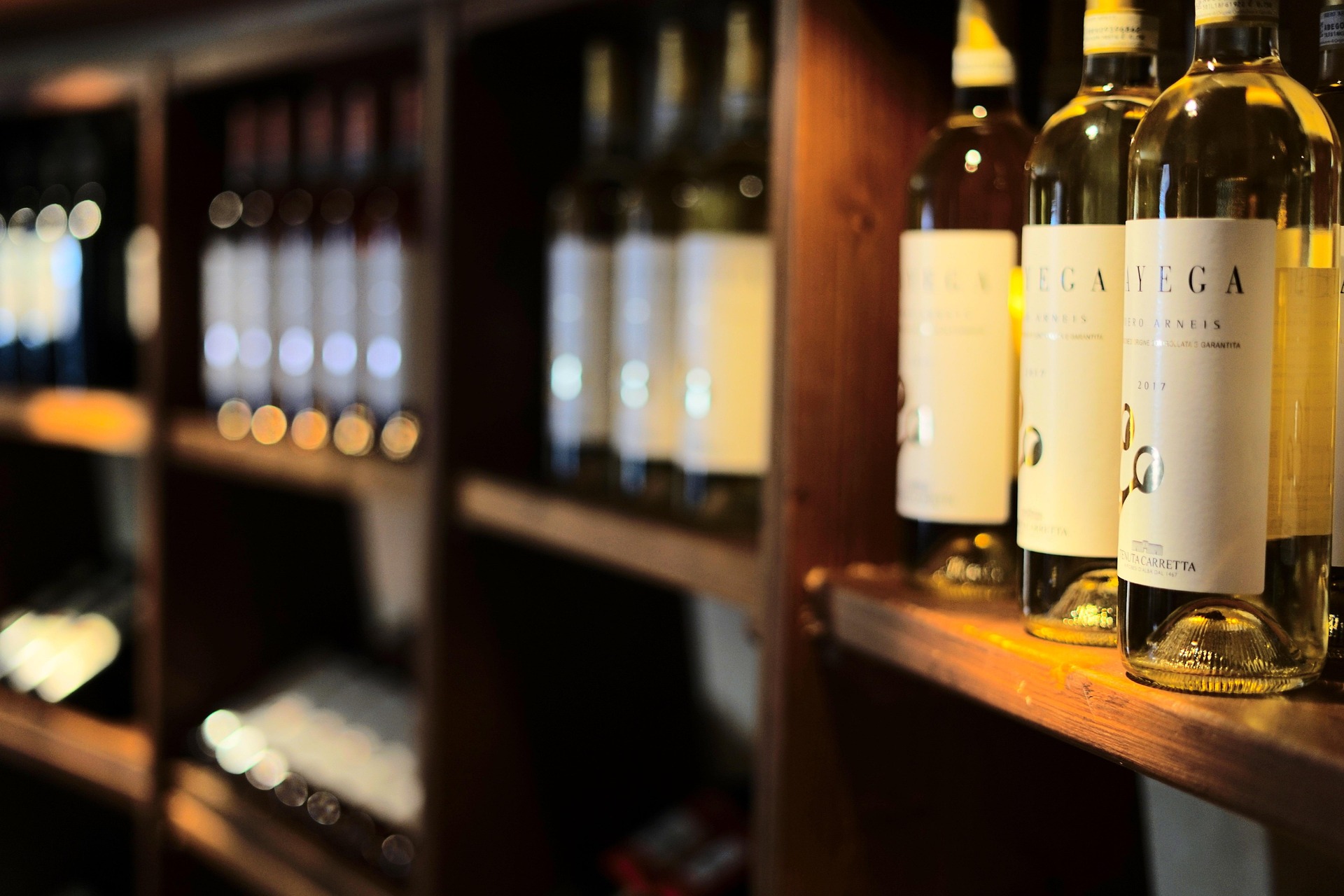
Introduction: Imported Red WineThe Charm and Challenges
In the global alcoholic-beverage market,red wine has long held a prominent place thanks to its distinctive flavor and deep cultural heritage.As consumers pursue higher-quality lifestyles,demand for imported red wine is rising in China and elsewhere.Yet the foreign-trade side of importing red wine is anything but smooth: complicated documentation,cumbersome logistics,and a volatile international trade environment all pose major challenges for industry players.As a company dedicated to import.With its expertise in documentation handling and logistics services,the company is dedicated to solving the challenges clients face when importing red wine.
Professional Document Processing: The First Hurdle for Imported Wine
In the imported wine business,document handling is crucial.The Commercial Invoice is an indispensable document that records in detail the description,quantity,and value of the goods,serving as an important basis for customs valuation and taxation.The Packing List specifies the exact contents of each carton,facilitating customs inspection.The Bill of Lading,as proof of ownership of the goods,plays a key role during transportation.
Sunrise International Trade has a seasoned documentation team that is well-versed in the paperwork requirements for imported wine imposed by customs authorities worldwide.For instance,EU countries may request the provision ofThe certificate of origin is used to determine the country where the red wine originates,which is crucial for enjoying specific tariff preferences.For countries with strict food-labeling regulations—such as the United States—the documentation team ensures that the labels meet FDA (U.S.Food and Drug Administration) requirements,including clearly printing on the wine label the wine’s name,alcohol content,net volume,and other mandatory information.
When handling documentation,accuracy and timeliness are critical.Even the smallest error can cause goods to be held up at customs,generating extra costs.The documentation team at Zhongshen International Trade carefully reviews every document,ensuring all information is accurate before submission,which greatly improves customs-clearance efficiency.
Meticulous logistics planning: ensuring the quality of the wine remains uncompromised
Red wine is a product with stringent storage and transport requirements.Fluctuations in temperature and humidity can alter its taste and quality.Therefore,professional cold-chain logistics are essential.Zhongshen International Trade has established long-term partnerships with several specialized cold-chain carriers,offering door-to-door transport with continuous temperature monitoring.
Before the goods are shipped,a suitable mode of transport is selected based on the quantity of the goods and their destination.For shipments in large quantities,It may be a more economical option,but the long sea transit time must be factored in,and temperature control during shipment has to be ensured.For some urgent small-batch cargo,It is more appropriate,though the cost is higher,as it can deliver the goods to the destination quickly.
After the goods arrive at the destination port,Zhongshen International Trade will arrange a professional customs-clearance team to handle the procedures.Well-versed in local customs processes and regulations,they can clear shipments swiftly,cutting down on port dwell time.For inland transport,vehicles are likewise equipped with reliable insulation and shock-absorbing measures to keep the wine from being damaged en route.
Russian Market: VTBUnique advantages
Russia is one of the key import markets for red wine.When trading with Russia,foreign-exchange settlement is a critical link.Zhongshen International Trade enjoys VTB settlement convenience for the Russian market.VTB Bank is a major Russian financial institution; through cooperation with VTB,Zhongshen International Trade can provide clients with efficient and secure settlement services.
The foreign-exchange settlement process generally works as follows: after the exporter (i.e.the domestic wine importer) completes the delivery of the goods and obtains the relevant documents,it submits the documents to Zhongshen International Trade.Zhongshen International Trade reviews the authenticity and completeness of the documents and then forwards them to VTB Bank.Once VTB Bank has verified that the documents are in order,it pays the exporter at the agreed exchange rate.Compared with other banks or settlement channels,this VTB-based settlement method offers the advantages of simpler procedures and faster settlement.Under the current international trade climate,the Russian market experiences frequent exchange-rate fluctuations,and rapid settlement through VTB can effectively mitigate currency risk.
Southeast Asian market: detailedProcess and Solution
Countries in Southeast Asia are experiencing rapid economic growth,and demand for imported red wine keeps rising.Take Vietnam: the first step in importing red wine is to identify a supplier and sign a purchase contract.The contract must specify the goods’ specifications,quantity,price,delivery date,and other terms.
Subsequently,Zhongshen International Trade will assist the client in obtaining the relevant import permits.Vietnam exercises strict oversight over imported food,requiring an application for a food-import license from the competent authority.During the application,detailed product information—including the wine’s ingredients and production process—must be submitted.
Before the cargo arrives at a Vietnamese port,the preparation of documents must be completed.In addition to the commercial invoice,packing list,and bill of lading mentioned earlier,a certificate of origin,sanitary certificate,etc.are also required.These documents must be filled out and authenticated in accordance with the requirements of Vietnam Customs.
During customs clearance,Zhongshen International Trade’s clearance team works closely with local Vietnamese brokers.They are well-versed in Vietnam’s inspection criteria and taxation policies.Import duties,VAT,and other levies on red wine vary according to its category and alcohol content.Once clearance is completed,the goods can be scheduled for delivery to the destination warehouse.
When exporting to the Southeast Asian market,it is equally essential to understand local market demand and trade regulations.For example,Malaysia imposes specific labeling requirements on imported red wine: in addition to English,a Malay-language label is mandatory.Zhongshen International Trade provides clients with tailored solutions based on the requirements of each country to ensure smooth exports.
Challenges and Opportunities in the Current International Trade Landscape
The current international trade landscape is complex and volatile,presenting numerous challenges for the imported wine business.Rising protectionism has seen some countries continually raise tariff barriers,pushing up import costs.The United States,for instance,has recently slapped steep tariffs on certain imported wines,squeezing importers’ profit margins.Exchange-rate swings add further uncertainty: sharp moves in major currencies such as the euro and the dollar can translate into losses when settling payments.
Yet within the challenges lie opportunities.As the “Belt and Road” initiative advances,trade cooperation with countries along the route keeps strengthening,creating a timely opening for imported wines to tap new markets.Southeast Asia,a key node of the Belt and Road,holds enormous potential.At the same time,consumers’ rising demand for healthy,high-quality wines is driving importers to seek out more premium suppliers and diversify their portfolios.
Zhongshen International Trade will closely monitor shifts in the global trade landscape and promptly adjust its business strategies.Through close communication with clients,we will jointly tackle challenges and seize market opportunities.
Product Certification Services: Facilitating Compliance Operations
In the imported wine business,product certification is an indispensable step.Different countries have different certification requirements for imported wine.For example,China requires that imported wine must comply with national standards and undergo Chinese label review.Although Zhongshen International Trade does not handle certification directly,it assists clients in preparing the necessary documents and guides them through the certification process.
For red wine exported to the EU,an Organic Certification or similar may be required.Zhongshen International Trade will inform clients of the necessary certification types,provide information on relevant certification bodies,and help them understand the certification process and requirements.This ensures that clients’ products comply with local regulations during import and export,avoiding shipment delays due to certification issues.
Conclusion: Joining hands to usher in a new chapter for imported wine foreign trade
The import-red-wine trade is full of opportunities and challenges.With its expertise in documentation and logistics,Zhongshen International Trade delivers first-class import & export agency services in Russia,Southeast Asia and beyond.By leveraging VTB’s settlement advantages,adapting to shifting global-trade conditions,and helping clients navigate product certification,we walk side by side with our partners to create greater value and open a new chapter in the imported-wine business.Whether you are a newcomer taking your first steps or a veteran looking to streamline operations,Zhongshen International Trade is the reliable partner you can count on.
Was this helpful? Give us a like!
Contact our experts for compliance audits, precise quotes, and one-stop customs support.
Recent Comments (0) 0
Leave a Reply