
Equipment Import Agency Fees | Practical Checklist to Avoid Hidden Costs
or complex compliance issues.
clearance and fund security.
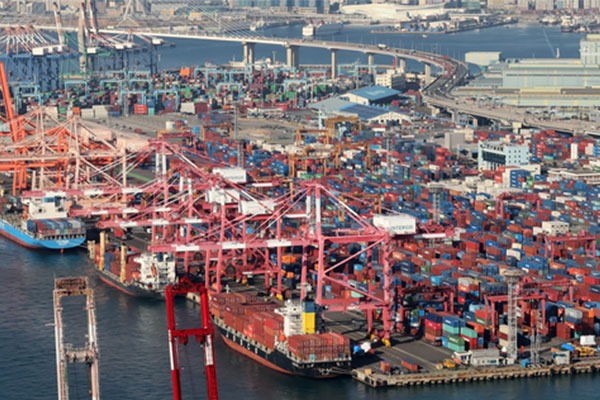
You think signing a "fully inclusive price" means everything’s settled?Ninety percent of purchasing managers encounter "price rebounds" during the final settlement process.The agency commission fee has never been a simple percentage—it’s a black box riddled with variables.If you only focus on the "1%" commission rate without analyzing the underlying fee structures,the final implementation cost could exceed your budget by over 20%.As a consultant with 15 years of experience in this industry,I’ve witnessed countless companies lose control of their budgets worth tens of thousands or even hundreds of thousands of dollars due to overlooking the nuanced definitions behind "commission fees."
Insight into the Quotation List: The "Three-layer" Peeling Method of Agency Fees
To understand the handling fees for importing equipment through an agent,we can’t just look at the total price.Professional procurement managers must require the freight forwarder orThe agency provides a "detailed quotation".Generally,a compliant and transparent quotation structure should include the following three levels.Any quotation that attempts to merge these three levels together harbors a huge risk of overcharging.
| Cost Hierarchy | Typical Projects | Common "pitfalls" in the industry | Transparency Rating |
|---|---|---|---|
| Core agency fee | Agent service fees and customs brokerage fees | They quote extremely low fees (such as 0.5%),but make up for it with various surcharges | High |
| Port miscellaneous fees | The charges include amendment fees,terminal handling charges (THC),storage fees,and short-distance freight charges. | They claimed to follow the "actual reporting and actual payment" principle,but refused to provide the original invoices and falsely inflated the quantities reported. | Medium |
| Derivative financial fees | Intermediary tax payment interest,bankTransaction fees and exchange rate losses | They default to using high interest rates for bridging loans and fail to inform customers in advance | Low |
Accounting and Negotiation: Standardized Operating Procedures (SOP)
When faced with a complex quote,you need a standardized process to accurately determine the true cost.Here’s the "Four-Step Quote Verification Method" we use internally,which we recommend applying directly to your next negotiation.
Step 1: Lock Down the “Billing Base” Output:
Many agents verbally promise "1%",but the contract stipulates that it will be calculated based on the customs-approved taxable value.For used equipment or equipment with significant discounts,Customs price reviewIt’s often higher than your actual transaction price (FOB/CIF).correct operation: It is clearly stated in the contract that the base amount of the agency fee shall be based on the "actual amount of foreign exchange paid",rather than the customs clearance price.
Step 2: Separate the interest calculation of the "deferred payment". Output:
Imported equipment is subject to tariffs and value-added tax,which are usually prepaid by the agent company.The interest on this sum of money is a significant hidden cost.correct operation: Ask the agent about the calculation method for the financing period (is it until the release date or until your payment date?),and request that the specific annualized interest rate be stipulated in the contract (which should generally be between 4% and 6%,rather than the penalty interest rate standard of more than 10%).
Step 3: Clarify the boundaries between "lump-sum payment" and "actual reimbursement" Output:
During the customs clearance process,the demurrage fees and the delay in declaration fees are the biggest uncontrollable factors.correct operation: It is required that the agent list the specific time limits included in the "lump-sum fee" (for example: including a 3-day free container period,and charging actual costs for any exceeding period).Never accept a vague "lump-sum customs clearance fee",as this often means that you will have to pay for all delays.
Step 4: Request the original receipts Output:
For third-party expenses such as dock fees and transportation fees,correct operation: Before making a payment,require the agent to provide copies of the original invoices issued by the port,shipping company,or fleet.If the agent is unable to provide these,it indicates that there is a price difference involved,and this portion of the difference should be deducted from the payment.
The unspoken "funds occupation" hidden danger in the industry
In addition to the visible transaction fees,there is another hidden cost that 99% of business owners overlook:Exchange rate gains and losses and capital accumulationMany agency companies take the initiative in handling payment when acting as a payment agent.If the importer encounters a tax supplement caused by the customs valuation or the exchange rate fluctuates sharply during the customs clearance process,the agent may take advantage of the time difference in settlement to shift the exchange rate losses to the importer.
The advanced approach is to stipulate a "foreign exchange locking mechanism" in the contract,or to require the agent to immediately provide the bank’s foreign exchange purchase receipt on the day of overseas payment,in order to prove the actual exchange rate at that time.Don’t wait until the final settlement to review a general total bill,because by then,you’ll have no way of distinguishing between costs and the agent’s profits.
3 things you can do this afternoon
- Findtheagencycontractthatiscurrentlybeingexecuted:Checkwhetherthereisaclausestatingthat"thebaseamountforhandlingfeesiscalculatedbasedonthetax-paidprice".Ifthereissuchaclause,thismightbeahintforthenextpriceincrease.
- Establisha"whitelistofmiscellaneousfees".:Listthemarketpricesofnecessaryexpensessuchasdocumentexchange,customsdeclaration,andportoperations.Nexttimeyoureceiveaquotation,simplyusethewhitelisttofilterouttheoverpriceditems.
- Askthefinancedepartment:Verifywhetherthefinalpaymentforthelastequipmentimportincludesanadditionalexpensecalled"financefee"or"interest",andcalculatewhethertheannualizedinterestrateisreasonable.
Was this helpful? Give us a like!
Contact our experts for compliance audits, precise quotes, and one-stop customs support.
Recent Comments (0) 0
Leave a Reply