
Guidelines to Avoid Traps When Hiring an Import Customs Clearance Agent: Don’t Let "Delegation" Turn into "Chaos"
or complex compliance issues.
clearance and fund security.
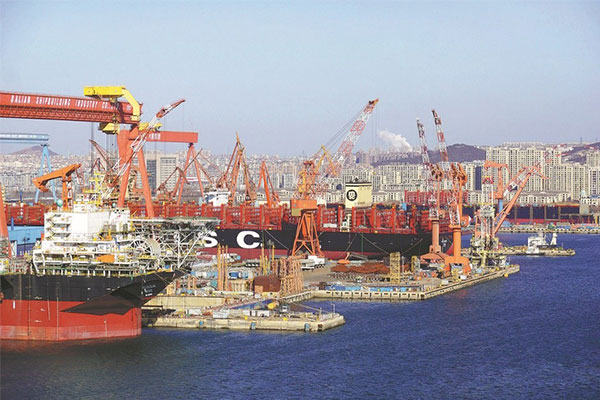
Just finding a customs clearance agent and leaving everything to them?Over 90% of import companies have stumbled in this process.Many purchasing managers believe that as long as they pay the overseas supplier and the freight forwarder’s handling fees,they can just sit back and wait for the goods to arrive.The harsh reality,however,is that customs inspections,document discrepancies,and incorrect HS code classifications—the "pitfalls" that cause goods to be stranded at the port—are often sown at the moment you hand over the documents to the agent.Agents are just executors; the real risk control must come from you yourself.
Why do 90% of enterprises fail in the process of "delegation of agency"?
In B2B import business,the core value of customs clearance agents is not about "smoothing over relationships",but rather "compliant declaration".Once you choose the wrong agency model or place excessive trust in the agent,the consequences are often tens of thousands of yuan in port detention fees and customs fines.We need to first clarify the underlying logical differences among the three mainstream agency models currently on the market.
| Agent Type | Core advantages | Invisible risks (high alert warning) | Applicable scenarios |
|---|---|---|---|
| International Freight Forwarding (Level 1) | End-to-end services,with seamless integration between logistics and customs clearance and clear responsibilities for all parties involved. | They usually do not have the qualifications of professional customs declaration agencies,and the work is often subcontracted multiple times.The customs declarants may just be "data entry staff" who do not understand the characteristics of the goods. | Large - quantity importsLarge-scale goods subject to full-authority logistics and standardized documentation requirements. |
| Professional Customs Broker | We have extensive expertise in customs regulations and are highly sensitive to HS code classification and valuation.This enables us to clear customs quickly and efficiently. | We only handle the customs declaration,not the delivery.You need to arrange it by yourselfThe communication cost is high in the process of warehousing and logistics. | The documents are complex,involving high-risk categories such as mechanical and electrical instruments and chemical products; or they may need to be urgently handled upon inspection by the customs authorities. |
| Free delivery and tax-inclusive agent service | A fixed price,eliminating the need for complicated customs duties and value-added tax payment procedures. | High riskThis often involves underreporting prices or using borrowed invoices.If caught,the shipper will face the risks of having the goods returned,destroyed,and having their credit rating downgraded. | Samples,emergency express deliveries (not for sale),Small packages (use with caution). |
Full-process SOP: from document preparation to release
Don’t wait until the goods arrive at the port before starting to look for an agent.To ensure that the "agents" don’t "act arbitrarily",please strictly follow the following standard operating procedures (SOPs).
Step 1: Pre-review of the "consistency" between the contract and the invoice (7 days before delivery) Output:
Before making payments to foreign suppliers,it is necessary to review the documents.This is the most error-prone step.
- Amountverification:Theamountonthecommercialinvoicemustmatchthepaymentamount(orcomplywiththecustoms’logicfordeclaringfreightandinsurancefees).
- Currencyverification:Thedeclaredcurrencymustbeconsistentwiththeactualsettlementcurrencytoavoidpriceevaluationdisputescausedbyexchangerateconversionerrors.
- BrandAuthorization:Ifthegoodsarebranded,besuretopreparethebrandauthorizationletter.Customsisincreasinglyintensifyingitsinspectionsofintellectualproperty(IP)everyyear.
Step 2: Confirm the "preliminary classification" of the HS code (3 days before shipment) Output:
The HS code determines the tariff rate and regulatory requirements.Don’t rely entirely on the agent’s automatic classification system.
- Providetheelements:Providetheagentwithdetailedinformation.Declarationelements(e.g.Principle,Use,Material,Model,Brand).Forexample,checkvalvesandballvalveshavecompletelydifferentHScodes.
- Confirmtheregulatoryrequirements:ConfirmwhetherthiscodeisneededAutomaticImportLicense(7Certificates)orIfnecessary,itmustbehandledbeforetheshipment,otherwise,thegoodswillnotbeabletogothroughcustomsclearancewhentheyarriveattheport.
Step 3: Self-check the "logicality" of the declared data (on the day of declaration) Output:
After the agent enters the system,they are required to provide the "Customs Declaration Pre-entry Form" for review.
- Quantitativelogic:Quantity×UnitPrice=TotalPrice.Thegrossweightmustbegreaterthanthenetweight.
- Originlogic:IftheoriginisfromdevelopedcountriesinEuropeorAmerica,butthedeclaredpriceisridiculouslylow,thesystemwillautomaticallytriggerriskcontrol(withthepriceverificationcenterintervening).
- Freightdeclaration:Ifit’saCIFclause,thefreightandinsurancechargesneedtobedeclaredaccurately;ifit’saFOBclause,thefreightandinsurancechargesneedtobeaddedlater.
Senior Consultant’s “Survival” Advice: The Logic of Customs Audits
Having worked in the supply chain for 15 years,I’ve seen too many companies get inspected by customs due to their lack of industry knowledge.Here’s a hidden rule that outsiders might not know about:The current valuation logic of the customs is based on "big data risk profiling".
If your import prices are significantly lower than the average level of the same industry and the same products,or if you are a trading company but frequently import complete sets of equipment,the system will automatically lock you out.At this point,the role of the agent is limited.The real solution is:Prepare the "Price Explanation Declaration Form".
Don’t try to evade taxes by altering the invoice amount—this is a red line.Once identified as "fraudulent reporting," not only will you face fines,but your company’s customs credit rating (AEO certification) will be downgraded to a "untrustworthy enterprise," and customs clearance will slow down like a snail.The correct approach is: If the price is genuinely low (e.g.used equipment,clearance items,promotional products),please prepare the necessary documentation in advance.The original contract,payment vouchers,insurance policies,and even proof of factory costs from abroadWhen filing a tax return,if a taxpayer voluntarily submits the relevant information,this is called "voluntary disclosure",which can reduce or even exempt them from punishment.
There are three self-check actions that you can do this afternoon
The theory has been explained.To ensure that your next batch of goods passes through customs smoothly,please immediately carry out the following actions:
- Reviewtheexistingagentqualifications:LogintotheofficialwebsiteoftheChinaCustomsDeclarationAssociationorthelocalcustomswebsitetocheckwhetherthecustomsdeclarationagencyyouarecurrentlycooperatingwithhasthequalificationofan"AdvancedCertifiedEnterprise".Thisdirectlyaffectstheircustomsclearancespeedandguaranteeamount.
- Establisha"declarationelementdatabase".:EstablishdetailedfilesforthetopfiveSKUsyoufrequentlyimport,listallthedeclarationelementsrequiredbycustoms(principles,uses,etc.),andprintthemouttopostonthewallofthepurchasingdepartmenttoensurethatthisinformationisreflectedinthePI(proformainvoice)everytimeyouplaceanorderwithaforeignfactory.
- Reviewthelastabnormalsituation:Ifthereareanydelaysincustomsclearanceorinspectionfeesinthemostrecentcustomsclearance,asktheagentforadetailed"explanationofthesituation"toclarifywhetheritisaproblemwiththedocuments,apricingissue,orapurelyrandominspection.Then,developcorrespondingpreventivemeasures.
Was this helpful? Give us a like!
Contact our experts for compliance audits, precise quotes, and one-stop customs support.
Recent Comments (0) 0
Leave a Reply