
Rejecting “Lowest Price Only”: 5 Hardcore Dimensions for Screening Top Import Clearance Agents
or complex compliance issues.
clearance and fund security.
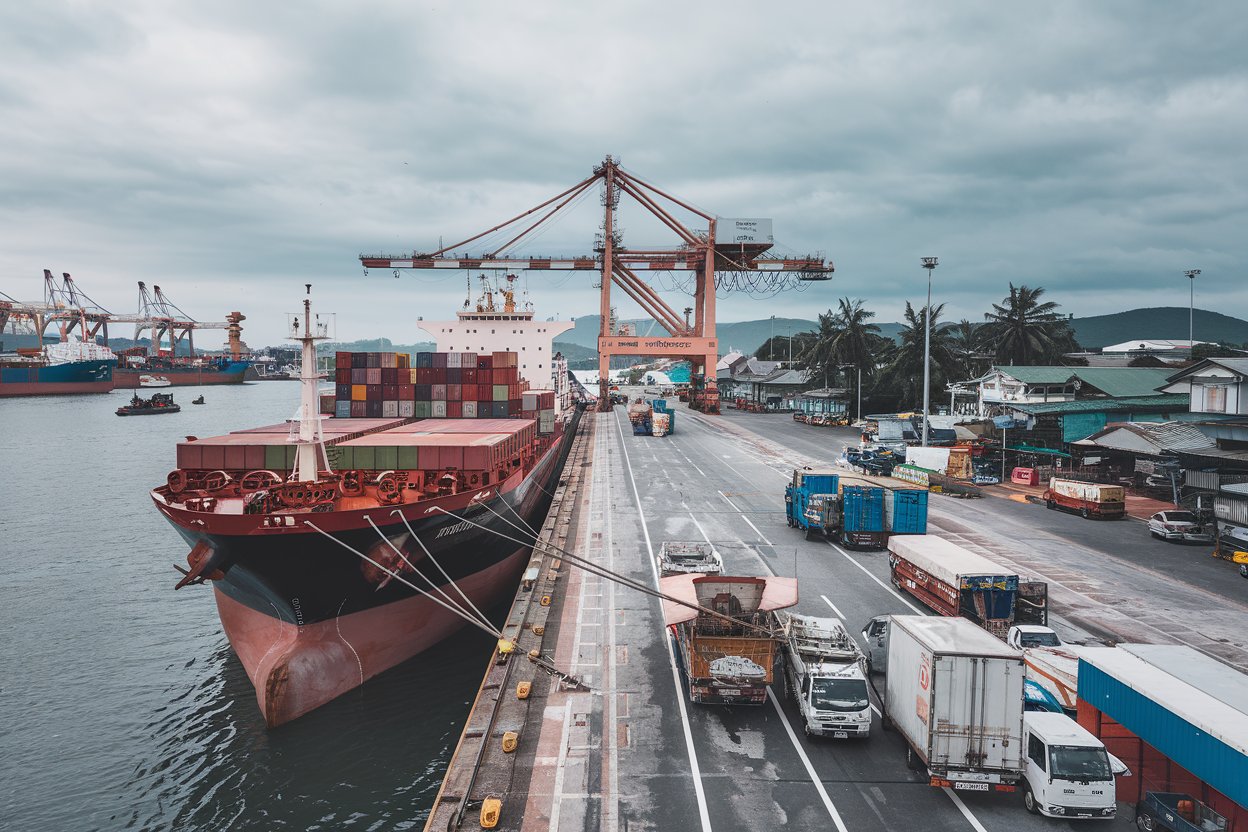
You think you can save 20% on logistics costs by finding a low-cost agent?But when the customs inspects and seizes the goods,you’ll realize that the tiny profit you gained isn’t even enough to cover the demurrage fees and terminal storage fees.In import business,A good customs clearance agent is definitely not the one with the lowest quoteBut it’s the person who can "rescue" you from the inspection room in times of crisis.When selecting an agent,90% of business owners only focus on the single-invoice quotation,ignoring the underlying risk exposure.True experts know that customs clearance is a game of compliance and efficiency,and choosing the right person is the first line of defense for supply chain security.
Why “Big and All-encompassing” is often worse than “Small and Precise”?
Many procurement managers are superstitious about "large logistics companies",believing that large companies have more resources and broader channels.However,in actual operations,large companies often have rigid processes.When encountering difficult and complex problems (such as the import of used machinery and electronics,and the inspection of dangerous chemicals),front-line operators do not have the authority to make decisions and can only report them layer by layer,resulting in goods being stranded at the port for several days.On the contrary,those companies specializing in specific categories (such as food,semiconductors,etc.) can often handle such problems more efficiently and effectively,ensuring the smooth progress of the entire supply chain.After years of dedicated effort,"high-quality agents" often possess more direct channels for customs communication and more flexible solutions for handling customs issues.
In order to demonstrate the differences more intuitively,we compared the commonly available products on the market.“Scalper-type Forwarders”with"Practice-oriented customs declaration agency"Performance at critical junctures:
| Key Indicators | The opportunistic freight forwarder (who prioritizes low prices at all costs) | Practical customs declaration agencies (expert-type) |
|---|---|---|
| Core profit model | Earn the price difference and even violate regulations by offering "tax-inclusive" services | Earn professional service fees and reasonable agency fees |
| Response to customs inspection | They shirk responsibility,require the cargo owners to handle the matter themselves,and even go missing | Assist in interpretation,provide classification basis,and accompany in inspection |
| HS Code Classification | Copying others’ code just to pass the test quickly,without considering its compliance with regulations | According to the General Rules of Classification,pre-classify the goods and issue a classification opinion letter |
| Handle Emergency Situations | The process is too rigid and cannot handle the deletion and resubmission of orders. | Be familiar with on-site regulations and quickly formulate remedial plans |
| Long-term hidden costs | Extremely high (risk of tax supplementation,fines,and credit downgrading) | Low (Compliant and controllable,credit accumulation) |
The “Devil in the Details” SOP for Screening Top Clearance Agents
Don’t just listen to the salesperson boasting about their "strong connections".As a professional client,you need to "interrogate" potential agency companies through a set of standardized SOPs.The following is a screening process that has been proven effective in practice:
Step 1: Conduct a comprehensive qualification review (not just the business license) Output:
Don’t just focus on whether they have a "customs declaration license" — that’s just the entry-level requirement.What you really need to check is their actual capabilities and track record.AEO certification levelIf it’s an AEO high-level certified enterprise,it means that their customs clearance inspection rate is extremely low,and they can enjoy priority processing rights.In addition,we need to check their operation volume data at your import ports over the past three months to confirm that they are not "middlemen".
Step 2: Stress Test: Identify three specific business pain points Output:
During the negotiation stage,directly present the situation of your most difficult-to-sell products and observe the other party’s reaction:
- SceneOne:"Ifthesegoodsaresubjecttocustomsinspectionanditisfoundthattheinstructionsdonotmatchtheactualgoods,howwillyouhandleit?"(Testingemergencyresponseplans)
- SceneTwo:"TheCustomsValuationCenterthinksthedeclaredpriceofthisHScodeistoolowandneedspriceconsultation.Doyouhaveanypastcases?"(ValuationCapacity)
- SceneThree:"ThegoodswillarriveattheportonFridayafternoon,andthecustomssystemisabouttoclose.Canyouguaranteethatwewillcompletethecustomsdeclarationonthesameday?"(Time-efficiencyandexecutionability)
Step 3: Review the professionalism of the "preliminary classification" report Output:
For non-standard products or novelty items,we require the supplier to provide an "Imported Goods Pre-Classification Proposal".If the supplier simply copies the results from a Google search and submits them,we’ll reject the proposal outright.A true expert would cite the Customs Service’s "Classification Decision Letter" or the WCO Harmonized System Notes,and even point out potential classification disputes.
Step 4: "Definition of Liability" in the Contract Terms Output:
It is essential to clarify in the contract who will bear the responsibility for any operational errors made by the agent (such as additional taxes and fines resulting from incorrect HS code declarations)?A good agent dares to sign in the contract that "we will bear the joint and several liability arising from our operational errors".Those agents who just want to make quick money will use various "force majeure" and "disclaimer clauses" in the contract to exonerate themselves completely.
The "inspection and verification" ability that industry veterans rarely show off
There’s an invisible indicator that outsiders in the industry might not be aware of:“Scripts” and “Networking” at the Inspection SiteCustoms inspection is not just about examining the goods,but also about verifying whether the declared goods match the actual ones.When customs officers raise questions about the use of a certain component,an experienced customs declarant can provide professional technical explanations and even original factory drawings for on-site interpretation.This kind of "technical communication" ability is far safer and more sustainable than the so-called "connections-based approach".In addition,top-tier agents typically have a good credit record at the customs clearance center,which means their declaration logic is trusted by customs,which indirectly reduces your inspection rate.
The troubleshooting action can be carried out this afternoon
After reading this article,don’t just stop at the "I know" stage.I suggest you take the following three actions this afternoon to optimize your supply chain security:
- Findthecustomsdeclarationpowerofattorneythatiscurrentlybeingexecuted:Checkwhetherthereareanyexemptionclausesregarding"liabilityfordeclarationerrors"inthecontract.Ifthereare,thelegaldepartmentneedstointerveneimmediatelytoamendthem.
- Asktheexistingagentfortheprocessingrecordsofthelatestinspectionofthegoods:Let’sseehowtheywritethesituationdescription.Isitjustaperfunctoryeffort,orisitlogicallysound?Thiscandirectlyreflecttheirprofessionalism.
- Establishan“AgentRed/BlackList”:Classifyandmanageagentsateachportbyproductcategory(e.g.chemicalproductsagents,foodagents),toavoidthelazypracticeof"oneagenthandlingallproducts".
Was this helpful? Give us a like!
Contact our experts for compliance audits, precise quotes, and one-stop customs support.
Recent Comments (0) 0
Leave a Reply