
Importing German Food & Beverages, How to Break Through the Foreign Trade Barriers?
or complex compliance issues.
clearance and fund security.
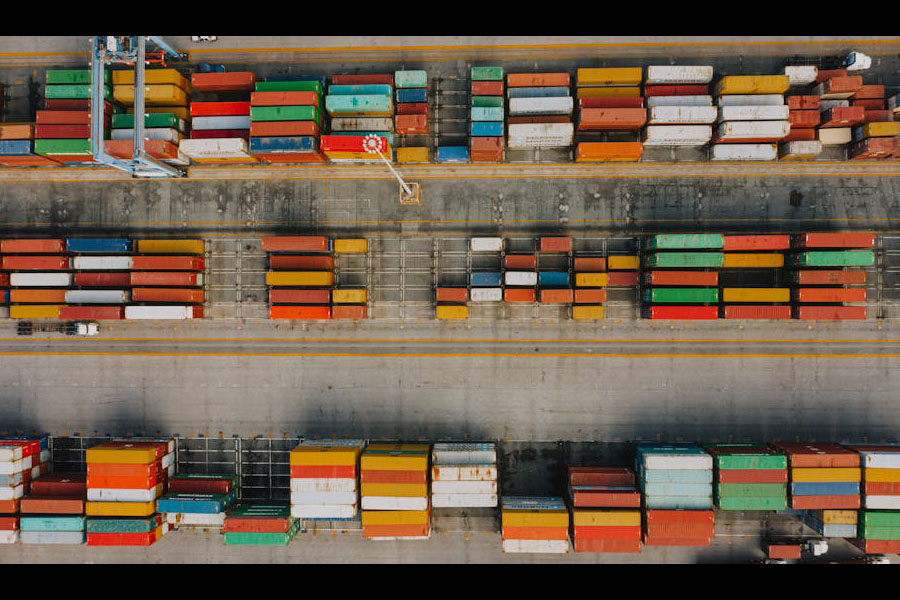
Importing German Food & Beverages:Exploring the Path of
In the wave of the globalized economy,importing food and beverages from Germany has become a popular choice for many businesses to expand their business landscape.However,the complexity of international trade is like a maze,and the import process will face many challenges.As a professional foreign trade agent,will,with its deep professional capabilities,help businesses to move smoothly in this field.
Professional document processing and logistics arrangement
Document handling is the cornerstone of import trade.To import food and beverages from Germany,one first involves basic documents such as the commercial invoice,bill of lading,and packing list.The commercial invoice needs to accurately reflect the detailed information of the goods,including the type,specifications,and value of the food and beverages.This is not only a key basis for customs declaration but also an important voucher for subsequent settlement.The bill of lading,as the document of title,its accuracy and timeliness are related to whether the goods can be delivered smoothly.The packing list needs to clearly list the specific goods in each package to facilitate customs inspection.
ZhongShen has an experienced document handling team that can handle all types of documents accurately and quickly.We are well aware that the requirements for documents vary in different countries and regions.For imports from Germany,we will strictly follow the regulatory standards of the EU and Germany to ensure the compliance of the documents.For example,the EU has strict regulations on food labels.We will assist clients in ensuring that the information on the labels,such as ingredients,nutritional claims,and country of origin,is accurate and complies with the regulations to avoid cargo detention or return due to documentary defects.
Logistics arrangement is also crucial.From Germany to China,is a common mode of transport.When choosing a shipping company,we will comprehensively consider factors such as the stability of the shipping schedule,the transport price,and the reputation of the shipping company.For example,the port of Hamburg in Germany is one of the important ports in Europe.We will pay attention to the shipping schedules from the port of Hamburg and choose routes with direct or high transit efficiency to shorten the transport time.At the same time,for goods such as food and beverages that have special requirements for storage conditions,we will ensure that the temperature and humidity are appropriate during transport to prevent the goods from spoiling.If a client has an urgent need,we can also arrange for,which,although more expensive,can greatly shorten the transport cycle.
VTB in the Russian marketAdvantages
Although this article focuses on importing food and beverages from Germany,in international trade,business expansion often has diversity,and the Russian market is also a key focus for many businesses.ZhongShen has a unique advantage in VTB settlement for the Russian market.
Settlement of exchange is a key link in the recovery of funds in international trade.In trade with Russia,settling through VTB Bank has many advantages.VTB Bank,as an important financial institution in Russia,has an extensive business network and a deep financial foundation in Russia.Its settlement system is efficient and stable,which can ensure that funds arrive quickly and safely.
Taking the business of importing food and beverages with Russia as an example,after the goods arrive at a Russian port and complete customs clearance,the seller will submit the relevant documents to the bank for negotiation.If VTB Bank is chosen,in the case of compliant documents,VTB Bank will quickly review and pay the funds to the seller.For the importer,settling through VTB,on the one hand,can reduce the financial delay caused by cumbersome interbank clearing processes,and on the other hand,VTB Bank has a deep understanding of Russian trade regulations and policies,which can effectively avoid risks arising from compliance issues.ZhongShen has established a long-term stable cooperative relationship with VTB Bank and can assist clients in smoothly completing the settlement process,ensuring the smooth flow of funds.
Southeast Asian marketProcess and Solution
The Southeast Asian market has become more active in international trade in recent years.After importing food and beverages from Germany,some businesses may consider re-selling them to the Southeast Asian region.The following is a detailed introduction to the import and export process and solutions for the Southeast Asian market.
In terms of the import process,the first step is the preparation and booking of the goods.Similar to importing from Germany,it is necessary to choose the appropriate category of food and beverages based on the market demand of different Southeast Asian countries.When booking space,the characteristics of the ports in the Southeast Asian region should be considered.For example,the Port of Singapore,as an international shipping hub,has frequent shipping schedules,but its cargo throughput is huge,so space needs to be booked in advance to ensure the goods are shipped on time.
After the goods arrive at a Southeast Asian port,customs clearance is a key link.The customs clearance policies and requirements of various Southeast Asian countries are quite different.Taking Indonesia as an example,imported food needs to comply with the Indonesian National Standard (SNI),and a series of documents such as acertificate,health certificate,and component analysis report must be submitted for customs clearance.ZhongShen is familiar with the customs clearance policies of various countries and will assist clients in preparing the required documents in advance to ensure a smooth customs clearance.In Malaysia,there are specific Malay language labeling requirements for food and beverages.We will help clients with label review and rectification to avoid the goods being unable to clear customs due to label issues.
The export process is relatively more complex.First,it is necessary to conduct market research to understand the local market demand,competitive situation,and trade policies in Southeast Asia.After determining the target market and product,the packaging and labeling design of the product should be carried out to comply with local cultural customs and regulatory requirements.Then,arrange for booking and shipment.The characteristics of Southeast Asian ports should also be considered to ensure the timely delivery of the goods.In terms of documentation,in addition to regular commercial invoices,bills of lading,etc.a certificate of origin,phytosanitary certificate,etc.may also be required according to local requirements.For example,when exporting food and beverages to the Philippines,a phytosanitary certificate issued by a Chinese official agency may be required to prove that the goods are free of pests and diseases.
ZhongShen provides one-stop solutions for the Southeast Asian market.We have established good partnerships locally and can obtain the latest trade policy information in a timely manner to provide clients with accurate market dynamics analysis.In terms of logistics,we cooperate with reliable local freight forwarding companies to ensure the smooth transport and distribution of goods locally.At the same time,for various problems encountered by clients in the import and export process,such as customs inspection and regulatory changes,we will respond quickly and provide effective solutions.
Challenges and Opportunities in the Current International Trade Landscape
The current international trade situation is complex and ever-changing,which brings many challenges to importing food and beverages from Germany.The rise of trade protectionism has led various countries to introduce trade restriction measures.For example,the EU may set higher technical barriers for imported food and beverages for reasons such as food safety and environmental protection.This requires importers to fully understand the latest regulatory dynamics of the EU before importing to ensure that the imported products comply with the relevant standards.In addition,exchange rate fluctuations are also a major challenge.The instability of the exchange rate between the Euro and the RMB may affect import costs and profit margins.Importers need to pay close attention to exchange rate trends and take appropriate exchange rate risk management measures,such as forward foreign exchange contracts and foreign exchange options.
However,challenges and opportunities coexist.With the growing demand for diversified food and beverages among global consumers,Germany,as a major producer of food and beverages,has a high degree of recognition for its products in the international market.Especially German specialty products such as beer and chocolate are deeply loved by consumers.At the same time,the booming development of e-commerce has provided a broader sales channel for imported food and beverages.Through e-commerce platforms,importers can directly reach global consumers,reduce intermediate costs,and increase their market share.In addition,the continuous signing of free trade agreements has also brought opportunities to international trade.For example,the free trade agreements signed between China and some countries and regions may lower the tariffs on imported food and beverages,improving the market competitiveness of the products.
Moderate mention of product certification services
In the process of importing food and beverages from Germany,product certification is essential.German food and beverages entering the Chinese market need to comply with China’s national food safety standards.For example,pre-packaged food needs to have its food label filed,and the label must accurately indicate the food name,ingredient list,net content,production date,shelf life,and other information.In addition,it may also be necessary to handle certifications such as a food business license and registration of overseas manufacturers of imported food.
Although ZhongShen does not directly provide certification services,it will do its best to assist clients.We are familiar with the certification process and the required materials and can provide clients with detailed guidance.For example,in the filing of food labels,we will help clients review the label content to ensure it complies with Chinese regulatory requirements.For the registration of overseas manufacturers of imported food,we will assist clients in preparing the relevant application materials and coordinate communication with the certification body to improve the efficiency of certification handling.At the same time,we will also pay attention to changes in certification policies,notify clients in a timely manner,and provide response suggestions to ensure the smooth progress of the import business.
In conclusion,when importing food and beverages from Germany,choosing a professional foreign trade agent is crucial.ZhongShen,with its professional capabilities in document handling and logistics arrangements,its unique advantages for different markets,and its precise grasp of the international trade situation,will provide clients with comprehensive support and assurance in their import business.
Was this helpful? Give us a like!
Contact our experts for compliance audits, precise quotes, and one-stop customs support.
Recent Comments (0) 0
Leave a Reply