
Guidelines for Avoiding Pitfalls When Acting as an Agent for Imported Cosmetics: How to Identify Legitimate Operators with "Real Paid Qualifications"
or complex compliance issues.
clearance and fund security.
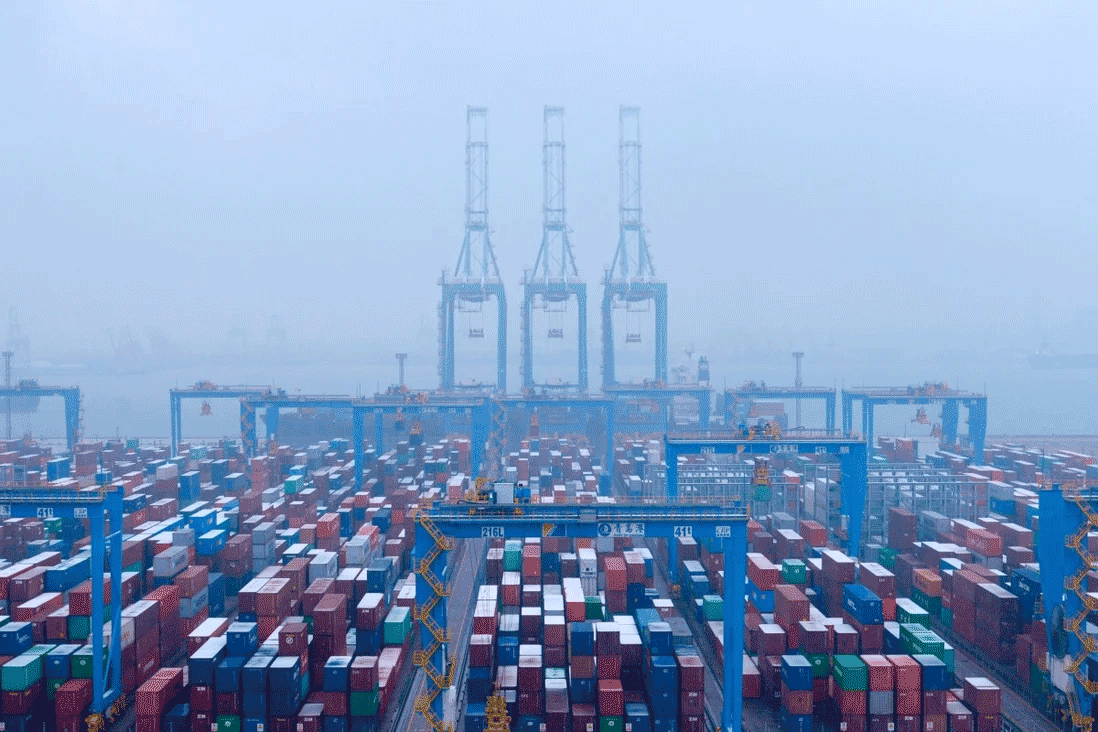
Many purchasing managers are screening imported products.When selecting an agent,people often fall into a major cognitive misconception: they believe that as long as the other party has a business license and can quote a low price,they are a "legitimate" agent.This is a big mistake.Today,with the full implementation of the "Regulations on the Supervision and Administration of Cosmetics",if the agent you choose is just a "customs declaration company" without the qualification of an "inland responsible person",or a "shell company" that uses others’ names for filing,the probability of your goods being detained at the port will increase dramatically.A truly "legitimate" agent should not be judged by their office decoration,but by their qualifications recognized by the customs and the National Medical Products Administration.Hard entry requirementswithRisk-bearing capacity.
The underlying logic of "formality": the transition from "customs declaration" to "compliance responsible person"
In the past,the core pain point of importing cosmetics was "fast customs clearance"; now,the core pain point is "strict compliance".With the NMPA (National Medical Products Administration) increasingly scrutinizing the details of cosmetic filing materials,the role of agents has undergone a fundamental transformation.A truly reliable and professional agent must possess both logistics capabilities and compliance declaration capabilities.Below is a detailed comparison of the two common agent models in the market.Please make sure to understand the associated risks.
| Key Indicators | Subcontracting/Pure freight forwarding agent (high risk) | Full-chain compliance agency (official) |
|---|---|---|
| Customs consignee qualifications | Borrowing or piggybacking on others’ qualifications,with the operating unit on the customs declaration form not matching the actual contracting entity | OwnThe power of attorney is valid,and the customs’ receipt for the consignor’s registration is clear.The operating unit and the contracting party are consistent with each other. |
| Qualifications of Responsible Persons within the Territory | Without independent authorization,it is necessary to borrow the qualifications of the brand owner or a third party,and it is impossible to assume subsequent regulatory responsibilities | The domestic responsible person,who has independent legal person status,owns a quality management system and is capable of assuming responsibility for quality and safety |
| Document processing capabilities | They can only handle basic documents such as packing lists and invoices,but are powerless when it comes to regulatory documents like formulas and ingredient safety sheets | We have professional regulatory engineers who can review,translate,and revise core documents such as formulation tables and safety assessment reports |
| risk-sharing mechanisms | There are usually exemption clauses in contracts.Once there are violations related to certificates and taxes,the responsibility will be shifted to the client | Provide a compliance commitment letter,assume legal responsibility for the accuracy of the declared data,and have the ability to make compensation payments |
Agent Qualification Verification SOP: Three Steps to Identify Real Operators
Don’t listen to the verbal promises of sales staff—everything must be based on data verifiable through the official system.As a purchaser,you must establish a standard verification process and complete a "background check" before signing a contract.
Step 1: Conduct a penetrative inspection of the "consignee’s" registration qualifications Output:
Require the agent to provide the latest "Customs Import and Export Goods Consignor and Consignee Registration Receipt".After obtaining the receipt,pay close attention to the following fields:
- HSCode:Verifywhetherthetypeis"Importer/ExporterofImportedandExportedGoods"ratherthan"CustomsBroker".
- asaregisteredbusinessscope:Confirmitincludes“Cosmetics”relatedcategories.
- Natureoftheenterprise:AftercheckingwithtoolssuchasQichacha,weconfirmedthatthecompanyPaid-incapitalIfthepaid-incapitalis0orextremelylow,itindicatesthatthecompany’srisk-resistanceabilityisextremelypoor.Oncethecompanyincurshugeoverduepaymentpenaltiesorfines,itmaybedirectlyderegisteredandgobankrupt.
Step 2: Request samples of past "Customs Clearance Documents" and "Registration Certificates". Output:
Legitimate agents dare to showcase their past success cases.Please ask the other party to provide the "Inspection and Quarantine Certificate for Imported Goods" and the "Import Cosmetics Registration Certificate" for similar products within the past three months.When inspecting the samples,the following points should be noted:
- Consistency:Isthenameofthe"consignee"onthecertificatefullyconsistentwiththenameoftheagency?Ifit’snotconsistent,itindicatesthattheagencyisborrowingqualificationsandengaginginhigh-riskoperations.
- ProductDetails:Istheproductnameandingredientsonthefilingcertificateconsistentwiththosedeclaredinreality?Thisreflectstherigorousnessofthedocumentreviewprocess.
Step 3: Confirm the authorization chain of the "domestic responsible person". Output:
According to the new regulations,imported cosmetics must have a domestic responsible person.You need to confirm the following:
- Dotheagencycompaniesdirectlyappearasdomesticresponsiblepersonsinthefilingsystem?
- Ifthebrandregistersadomesticresponsiblepersonthemselves,doestheagencycompanyhavetheperson’sOfficialauthorizationletterToconductportdeclaration?
- Itmustbeclearlystatedinthecontractthatifthecompliancepenaltiesresultfromtheagent’sdeclarationerrors,theagentshallbearalltheresponsibilitiesforthem.
Industry unspoken rules: Beware of the deadly traps of "contracting out" and "borrowing a company name"
In this industry,there is a very covert form of "pseudo-formality".Some small freight forwarding companies,in order to undertake cosmetics business,will privately rely on large qualified companies for support.Under the company’s name.On the surface,the customs declarations and qualification documents they show you are from legitimate large companies,which seem very "safe".However,from a legal perspective,The contract was signed between you and this small company,but the entity making the declaration is the large companyOnce the goods are detained by customs due to quality issues,or subsequently inspected by market supervision authorities,large companies will immediately deny any connection to the batch of goods,while the small company simply lacks the capability to resolve the problem.As a procurement officer,it is essential to insist on the following:The contract signing entity,the entity registered with the customs as the consignee,and the actual receiving account must all be completely consistent with each other.This is the golden rule for identifying legitimate agents.
The compliance check actions can be carried out this afternoon
Don’t leave the risks until the day the goods arrive at the port.Start taking action now!
- Reviewtheexistingcontracts:Output:Takeouttheagencycontractwearecurrentlyworkingonandcheckifthereisa"liabilityexemptionforcompliancedeclaration"clause.Ifthereis,immediatelystartnegotiationsorreplacetheagent.
- Customsdatapenetration:Logintothe"ChinaInternationalTradeSingleWindow"orcheckthroughanagenttoverifytheaccuracyofthedeclarationofyourcompany’shistoricalimportrecordsandseeifthereareanyerrorsinproductclassification.
- Requesttheauthorizationdocument:Requestthecurrentagenttoprovideascreenshotoftheirofficialsystemasan"onshoreresponsibleperson"orascannedcopyofthebrand’sauthorizationletter,andestablishacompliancefile.
Was this helpful? Give us a like!
Contact our experts for compliance audits, precise quotes, and one-stop customs support.
Recent Comments (0) 0
Leave a Reply