
2025 Imported Food Production Line Equipment Agency Customs Clearance Guide & Cost Optimization Strategy
or complex compliance issues.
clearance and fund security.
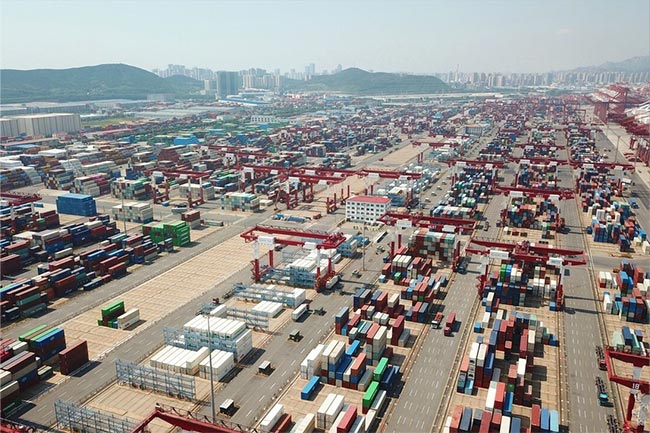
2025 Imported Food Production Line Equipment Agency Customs Clearance Full Strategy
In the wave of food industry upgrading,China’s import of food machinery is expected to exceed 8.7 billion U.S.dollars in 2025.As a professionalAgency service providers,we have identifiedThe three core challenges: compliance verification of technical parameters,adaptation to tariff preferential policies,and integration of special regulatory processes—these aspects directly impact project costs and production timelines.
Analysis of Global Equipment Procurement Trends
EU equipment manufacturers dominate the baking production line market.Their new tunnel-type baking equipment features a modular design,reducing the transportation and disassembly rate by 42%.Japanese aseptic filling equipment maintains its technological advantage,but it is important to note that the 2025 revised JIS certification standards have added requirements for AI self-inspection systems.Southeast Asian equipment offers excellent cost-performance ratios - Thai cold chain packaging lines are 35% cheaper than similar products in Europe - but there is a need to strengthen hygiene grade verification.
Key Control Points in Customs Clearance Practice
- Pre-classificationaccuracy:BeveragefillingmachinesetsmustbedistinguishedbetweenHS84223010(fullyautomatic)and84223090(semi-automatic),withatariffdifferenceofupto9%.
- Pre-approvalofhygienepermits:Theneweditionofthe"HygienicStandardsforImportedFoodMachinery"requiresthatthesurfaceroughnessofequipmentbe≤0.8μm.
- Fast-trackCustomsClearanceChannel:AEO-certifiedenterprisescanapplyforthe"inspectionuponarrival"mode,reducingcustomsclearancetimeto72hours.
Five Key Evaluation Dimensions for Service Provider Selection
- IndustryExperience:Completionofatleast3similarprojectcases.
- Technicalalignment:Capableofconductingpre-reviewforequipmentparametercompliance.
- CustomsClearanceNetwork:Localizedserviceteamsestablishedatmajorports
- RiskManagement:OfferingaCombinationofExchangeRateLock+QualityInsuranceSolutions
- EmergencyMechanism:48-HourResponseStandardforSuddenReturnShipmentIncidents
Practical cost optimization strategies
In a case where we represented a dairy company in the introduction of a German production line,we saved costs by adopting the "disassembly and transportation of equipment + domestic assembly" model.Cost: 28%.Utilizing the "Off-Site Debugging of Equipment in the Free Trade Zone" policy,the import VAT payment was deferred for up to 6 months.For precision temperature control equipment,the Longkou Port cold chain customs clearance line was selected,keeping the transportation loss rate below 0.3%.
Risk warning and response plan
- TechnicalBarriers:ThelatestEUdirectiverequiresthatcontactsurfacematerialsmustprovidetraceabilitydocumentation.
- Exchangeratefluctuations:Itisrecommendedtoadoptamixedpaymentmethodof30%ineurosand70%inRMB.
- Qualitydisputes:Retaintheno-loadtestvideooftheequipmentasevidenceforclaims.
When a baking company introduced an Italian production line,we pre-installed IoT modules on the equipment,enabling the collection of EU CE certification data to be completed at the destination port.This reduced the technical acceptance cycle to just 11 working days.The project ultimately saved 19% in overall costs and commenced production 47 days ahead of the original schedule.
Was this helpful? Give us a like!
Contact our experts for compliance audits, precise quotes, and one-stop customs support.
Recent Comments (0) 0
Leave a Reply