
Medical Device Import Guide: Regulations and Procedures
or complex compliance issues.
clearance and fund security.
With the continuous development of medical technology,have become an indispensable part of modern healthcare.Many medical devices need to be imported from abroad,making it particularly important to understand the procedures and formalities for importing medical devices.In this article,we will introduce the definition,classification,and required import procedures for medical devices.
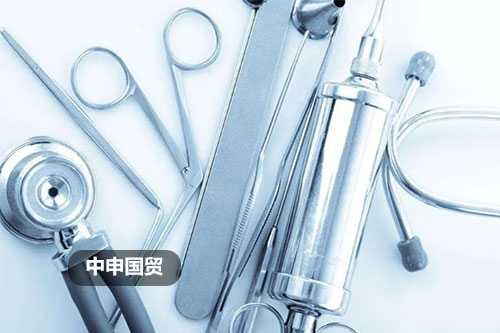
What are medical devices?
Medical devices refer to various instruments,equipment,appliances,materials,and other related products used for the prevention,diagnosis,treatment,alleviation of diseases,or improvement of human structure and function.Medical devices are widely used in various fields,including hospitals,clinics,pharmacies,and home healthcare.
II.Classification of Medical Devices
According to the regulations of the China National Medical Products Administration (NMPA),medical devices are classified into three categories: Class I,Class II,and Class III.
Class I medical devices are those with low risk to the human body,easy to use,and requiring no special technical or management requirements,such as ordinary masks and oral cleaning tools.
Class II medical devices are those with higher risk to the human body,widely used,and requiring strict technical and management requirements,such as electrocardiographs and ultrasound diagnostic equipment.
Class III medical devices are those with the highest risk to the human body,narrowly used,and requiring even stricter technical and management requirements,such as implants and artificial organs.
Which medical devices can be imported?
According to the regulations of the China National Medical Products Administration,all imported medical devices must undergo approval and registration to ensure they meet Chinas medical device standards and quality requirements.
Registered medical devices
According to the Regulations on the Supervision and Administration of Medical Devices of the Peoples Republic of China,all medical devices must be registered and approved by the National Medical Products Administration.Only registered and approved medical devices can be imported and sold.
Exempted Medical Devices
The Medical Device Classification Catalog specifies certain medical devices that are exempt from registration.These include low-risk medical devices such as some in vitro diagnostic reagents and disposable syringes.These devices can be imported through commercial channels without registration but must comply with national standards and regulations.Special Medical Devices
Certain special medical devices,such as implantable medical devices and high-risk medical devices,require special review and approval.The import of these devices must undergo strict review by the National Medical Products Administration and comply with national standards and regulations.
The import of medical devices must not only comply with international trade rules and policies but also adhere to Chinas relevant laws,regulations,and standards to ensure product quality and safety.Below are the requirements for importing medical devices.
Requirements for importing medical devices
Product Safety RequirementsImported medical devices must comply with Chinas safety standards.For electromechanical medical devices,their electrical and mechanical safety items and safety warning labels must meet the mandatory requirements of standards such as GB9706 Classification of Medical Electrical Equipment series and GB2894-2008 Safety Signs and Guidelines for Use.Additionally,medical devices must pass quality testing,with results conforming to national and industry standards to ensure product safety and reliability.
Product Manual and Labeling Requirements
Imported medical devices must include a Chinese manual and Chinese labels.The manual should include the devices country of origin,importer information,product performance,intended use,contraindications,precautions,installation and usage instructions,maintenance methods,and other necessary details.The manual must also display the medical devices registration certificate number and the importers designated legal entity name,address,and contact information in China.
The label should include the product name,model,specifications,batch number,production date,and expiration date.Additionally,warning statements and precautions must be indicated to remind users of proper usage.
Registration Certificate and Filing Requirements
For Class II and Class III medical devices,importers must apply for a registration certificate from the National Medical Products Administration to prove compliance with national standards and requirements.Importers must also file product information,including the product name,model,specifications,manufacturer,agent,country/region of production,registration certificate number,and intended use.
Requirements for Special Products
For certain special types of medical devices,such as implantable medical devices and in vitro diagnostic reagents,importers must submit corresponding registration applications and technical documentation.These products must also obtain approval from the National Medical Products Administration before they can be imported and sold.
The complete import process for medical devices must follow specific procedures to ensure compliance with national laws,regulations,and standards while safeguarding consumer rights and safety.Below is the detailed import process for medical devices:
Signing the Import Contract: The importer negotiates and signs an import contract with the foreign supplier,specifying product model,quantity,price,delivery timeline,payment method,and other terms,along with clauses on product quality,technical standards,and after-sales service.
Process for importing medical devices
Shipment of Goods: The foreign supplier ships the goods according to the contract terms,choosing the appropriate shipping method.Upon arrival at the destination port,the shipping or airline company sends a delivery notice to the importer.
Processing the Arrival Notice and Bill of Lading Exchange: The importer presents the bill of lading,power of attorney,and other documents to the shipping or airline agent to process the arrival notice and collect the bill of lading and related documents.
Inspection and Quarantine Procedures: Depending on the regulatory conditions for medical devices,the importer must complete the required inspection and quarantine procedures,such as obtaining an import medical device registration certificate.Non-compliant products may be denied entry or returned.orCustoms Clearance: The importer prepares the necessary customs clearance documents,including the bill of lading,import goods clearance form,customs declaration application,or other required documents,and submits them electronically or in person at the customs office.
Customs Valuation: Customs will assess the declared value of the imported products to verify its reasonableness.If approved,the goods can be released; otherwise,customs may assign a value or negotiate based on market prices.
Tax Payment: The importer must pay tariffs,VAT,and other taxes and obtain tax receipts and VAT invoices.
Container Pickup and Outbound: After completing customs clearance and tax payment,the importer can pick up the container at the port or delegate the task to a logistics company.
Transportation to Designated Location: After pickup,the importer can arrange land,sea,or air transport to the designated location.
What are the procedures and formalities for importing medical devices?
January 16,2024,14: 24
Transportation to designated location: After the goods are picked up from the warehouse,the importer can choose land,water,or air transportation to the designated location.
The above content is sourced from the customs.
As a one-stop importService providers can provide customized import and export solutions for various industries.If you needimport-export agency services,please contact us for business consultation.Hotline: 139-1787-2118.
Was this helpful? Give us a like!
Contact our experts for compliance audits, precise quotes, and one-stop customs support.
Recent Comments (0) 0
Leave a Reply