
EU to Slap 25% Tariffs on Chinese EVs
or complex compliance issues.
clearance and fund security.
According to the UKs Financial Times,the European Commission is preparing to impose tariffs of up to 25% on electric vehicles imported from China.Currently,the tariff level for these vehicles is about 10%.This news has immediately sparked widespread attention and discussion on China-EU trade relations.
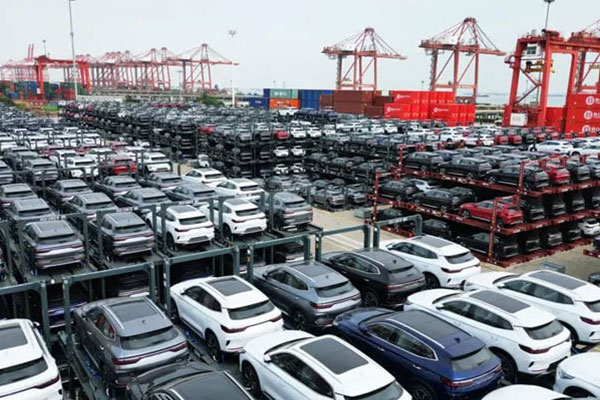
The European Union has been conducting investigations for several months to determine whether Chinese producers have received unfair public subsidies,thereby distorting market competition.In recent years,China has rapidly emerged as a global leader in electric vehicle and battery production,with its automobile exports even surpassing traditional powerhouses like Japan.Chinese automakers represented by BYD have already overtaken Tesla in the international market,becoming the new industry leaders.
The number of Chinese automakers has surged,potentially reaching hundreds.Although Beijing denies issues of overproduction and competitiveness,it is undeniable that domestic prices in China are very low,forcing many manufacturers to seek exports to maintain profitability.
The European Commission is concerned that the Chinese governments substantial subsidies to its domestic electric vehicle industry may create unfair competition in the EU market.To protect local industries,the EU is preparing to increase tariffs on Chinese electric vehicles,a move aimed at weakening their competitiveness in the EU market and safeguarding European automakers.
However,this decision has also caused divisions within the EU.Germany opposes the tariff increase,as its luxury brands hold significant positions in the Chinese market.Many German companies,especially Volkswagen,have factories in China and rely heavily on the Chinese market.
China strongly opposes the planned tariff increase and is attempting to dissuade the EU through diplomatic channels.The Chinese government has threatened that if the EU insists on imposing tariffs on Chinese electric vehicles,China will retaliate against various European exports,including agricultural products,dairy,and alcoholic beverages.Such trade retaliation would further escalate tensions between China and the EU.
The EUs move to impose tariffs on Chinese electric vehicles could have profound impacts on both sides.
Market access difficulties: Higher tariffs will reduce the price competitiveness of Chinese electric vehicles in the EU market,weakening their market share.
Increased export pressure: Chinese electric vehicle manufacturers will face greater export pressure and may need to explore other markets or enhance technological capabilities to maintain competitiveness.
Protection of local industries: Tariff increases will temporarily protect EU automakers,especially those not yet fully dominant in the electric vehicle sector.
Rising consumer costs: Higher tariffs will lead to increased prices for electric vehicles in the EU market,ultimately passing higher costs to consumers.
Germanys opposition to the tariff increase,as an economic powerhouse within the EU,highlights internal conflicts of interest.The significant presence of German luxury brands in the Chinese market and the investments of German automakers in China make Germany particularly cautious on this issue.
German companies like Volkswagen have large-scale production facilities in China and depend heavily on the Chinese market.Therefore,Germany fears that tariff increases could trigger retaliatory measures from China,adversely affecting the German economy.
As the European Commission prepares to impose tariffs on Chinese electric vehicles,China-EU trade relations face a new test.In the coming months,both sides may seek solutions through diplomatic negotiations to avoid a full-scale trade war.The EU also needs to find a balance between protecting local industries and maintaining economic cooperation with China.
Regardless of the outcome,this tariff dispute will have far-reaching effects on the global electric vehicle market.Governments and businesses worldwide need to closely monitor these developments and adjust strategies to address potential market changes.
Was this helpful? Give us a like!
Contact our experts for compliance audits, precise quotes, and one-stop customs support.
Recent Comments (0) 0
Leave a Reply