
Panama Canal Drought Impacts Global Trade Costs
or complex compliance issues.
clearance and fund security.
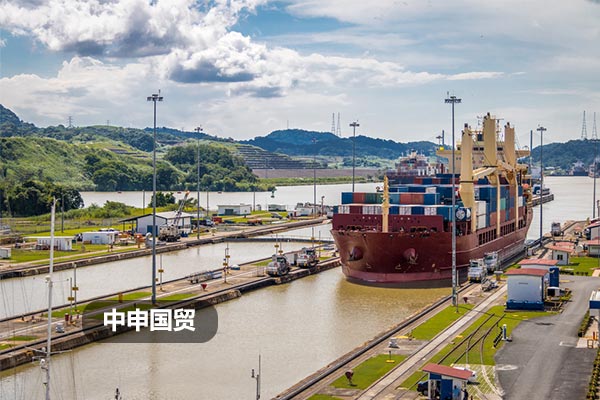
The worst drought in 70 years is affecting the Panama Canal.To cope with the continuous decline in water levels,the management has had to impose stricter restrictions on vessel draft and reduce the number of ships passing through.This situation has raised concerns among industry professionals,Costs may rise as a result.
CNN reported on the 13th,citing the Panama Canal Authority as a source,that most of Central America,including Panama,has experienced rare drought conditions over the past few months,with lake and river water levels plummeting and water shortages becoming increasingly severe.This drought is linked to the El Ni?o phenomenon that emerged earlier this year,and precipitation is expected to continue decreasing in the coming months,potentially making drought conditions even more severe.
The Panama Canal,an 80-kilometer-long lock-type canal that sits 26 meters above sea level,connects the Pacific and Atlantic Oceans.It serves as a vital global trade route,handling approximately 6% of the worlds,primarily from the United States,China,and Japan.
Due to the drought,the water level of Gatun Lake—the canals primary water source—has been continuously declining,severely affecting lock operations that raise or lower water levels for ships transiting the Panama Canal.In response,the Panama Canal Authority has been adjusting the maximum draft for large vessels for several months,reducing it from the original 15.24 meters to 13.41 meters,with a potential further reduction to 13.26 meters expected by the 25th of this month.
This change means that large vessels must reduce their cargo loads to pass through the canal,which will inevitably require distributing the same weight of goods across more ships.This will significantly increase logistics costs and may extend waiting times for vessels queuing to pass.
Consequently,several shipping companies reliant on the Panama Canal route have adjusted their transportation strategies,raising the freight rate per container by $300–500.Some shippers are also exploring alternative routes,such as the Suez Canal or utilizing ports in Southern California to load containers onto trucks or trains bound for the Midwest and East Coast.
Luz de Calzadilla,head of Panamas Meteorological and Hydrological Institute,stated that the entire country is currently experiencing insufficient rainfall.While this situation remains within the normal dry season range,if the anticipated El Ni?o phenomenon occurs as expected,it could lead to reduced rainfall in the second half of the year.
Jon Davis,chief meteorologist at Everstream Analytics,noted that Panamas rainfall will continue to be below normal levels in the current and coming period.This means water levels in the lakes supplying the Panama Canal will keep declining.If canal water levels drop further,shipping operations could be disrupted,posing even greater challenges for the canals navigation.
Was this helpful? Give us a like!
Contact our experts for compliance audits, precise quotes, and one-stop customs support.
Recent Comments (0) 0
Leave a Reply