
Europe Solar Policy: PV Market Certification & Standards
or complex compliance issues.
clearance and fund security.
Batteries have been widely used globally due to their advantage of directly converting solar energy into electricity.With the continuous promotion of renewable energy in Europe,photovoltaic batteries have great development potential in the European market.However,entering the European market is not easy.Photovoltaic batteries need to meet a series of strict standards and certifications.This article aims to deeply explore European photovoltaic policies,market certifications,and technical standards,providing direction for the European journey of the photovoltaic industry.
I.Classification of Photovoltaic Batteries and Customs Statistical Caliber
Photovoltaic cells can be classified into crystalline silicon,thin - film,and unconventional photovoltaic cells according to their working principles.Among them,crystalline silicon photovoltaic cells dominate due to their mature technology and high conversion efficiency.While thin - film and unconventional photovoltaic cells perform well in some application fields due to their unique advantages.
In international trade,the customs statistical caliber of photovoltaic cells is mainly determined by their HS codes.The HS code for photovoltaic cell modules is 85414020,and for other types of photovoltaic cells,including photocells whether or not assembled in modules or panels,the HS code is 85414090.
Note: December 1,2024productsPhotovoltaic Productsreduced to 9%.For details,see: Export of Photovoltaic Equipment
II.European Photovoltaic Policy
In 2008,the European Union proposed the "20-20-20" strategy,which aims to reduce greenhouse gas emissions by 20% compared to 1990 levels,increase the share of renewable energy to 20% of total energy consumption,and improve energy efficiency by 20% by the year 2020.The implementation of this strategy has positioned the EU as a global leader in promoting the development of renewable energy.
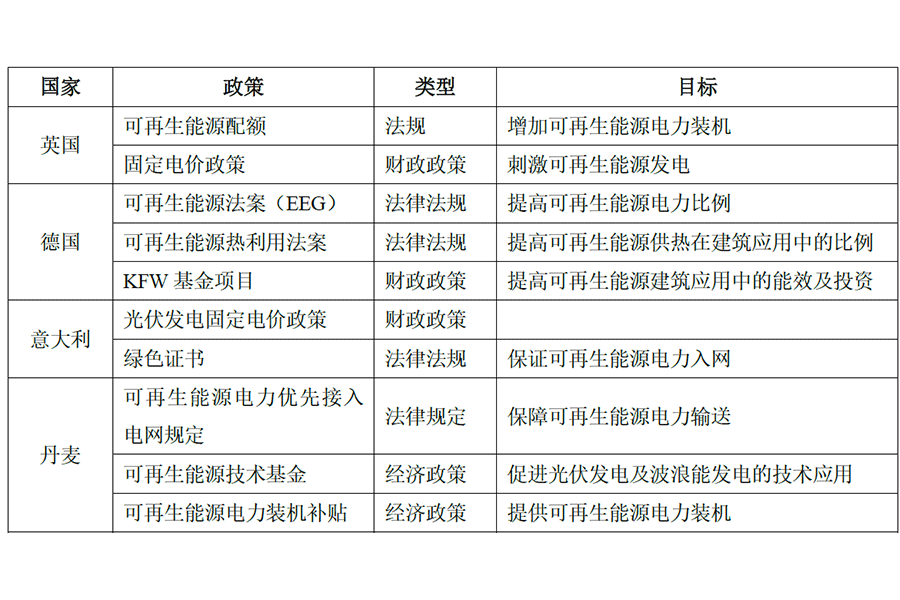
To achieve the "20-20-20" strategic objectives,EU member states have formulated a series of supportive policies and regulations,creating a favorable policy environment for the development of renewable energy.Germany’s "Subsidies from EU Member States

III.European Market Certification
The certification application processes are basically similar:
First,enterprises need to submit a certification application to a certification body in the European market.During the application stage,enterprises need to prepare and submit complete product technical information,including the structural diagram of the photovoltaic module,installation instructions,electrical parameters,etc.This information will help the certification body understand the basic situation and technical characteristics of the product.In addition,enterprises need to ensure that all submitted information is true,accurate,and up - to - date to avoid certification delays due to information problems.
Customer application Output:
After completing the customer application,enterprises need to submit samples of photovoltaic modules to the certification body for performance and safety compliance testing.These tests will be carried out in accordance with relevant standards and specifications of the European market to ensure the safety and reliability of the product in actual use.When submitting samples,enterprises need to ensure that the quality of the samples is consistent with that of mass - produced products to prevent certification failure due to sample problems.
Submit Samples Output:
After submitting samples and passing the preliminary tests,the certification body will conduct an on - site inspection of the enterprises production factory.The purpose of this step is to verify whether the enterprises production process meets the quality assurance standards and whether it has the ability to stably produce products that meet the standards.Factory inspections are carried out once a year in principle,but if there are product quality problems or customer complaints,an additional inspection will be carried out in that year.
Factory Inspection Output:
When an enterprise successfully passes the sample tests and factory inspections,the certification body will issue a test report and officially issue a certification.This certification is an important pass for photovoltaic modules to enter the European market,indicating that the product has met the relevant standards and requirements of the European market.After obtaining the certification,enterprises can sell their photovoltaic module products in the European market,but they still need to be regularly reviewed by the certification body to ensure the continuous compliance of the products.
Issue Certification Output:
The International Electrotechnical Commission has developed a series of IEC standards for photovoltaic modules.These standards have been widely adopted by national standardization organizations and have become the basis for photovoltaic module technical standards.
IV.Technical Standards for Photovoltaic Modules
IEC standard Output:
In the EU market,photovoltaic modules need to comply with standards such as EN 61215: 2005,EN 61646: 2008,EN 61730 - 1: 2007/A2,and EN 61730 - 2: 2007/A1.These standards mainly cover the design qualification,structural requirements,and test requirements of photovoltaic modules.

Standards Applicable to the EU Market Output:
This standard is mainly applicable to ground - based crystalline silicon photovoltaic modules.It specifies the requirements for the design,performance qualification,and type - approval testing of the modules.These requirements aim to ensure that the modules can operate stably and reliably within their expected service life and perform well under various environmental conditions.
(a) EN 61215: 2005 Crystalline silicon terrestrial photovoltaic (PV) modules - Design qualification and type approval
This standard is specifically for ground - based thin - film photovoltaic modules.It covers the design requirements,performance qualification,and type - approval testing of the modules.Through this series of tests and verifications,it can ensure that thin - film photovoltaic modules can maintain good performance and stability under different environments and working conditions.
(b) EN 61646: 2008 Thin-film terrestrial photovoltaic (PV) modules - Design qualification and type approval
This standard is the first part of the safety qualification of photovoltaic modules.It mainly specifies the structural requirements of photovoltaic modules,including the properties of component materials,the design of the component frame,the configuration of the junction box,etc.to ensure the safety and reliability of the modules in practical applications.
(c) EN 61730-1: 2007/A2 Safety qualification of photovoltaic modules - Part 1: Structural requirements,
This standard is the second part of the safety qualification of photovoltaic modules.It clarifies the test requirements of photovoltaic modules,including electrical performance tests,mechanical load tests,environmental tests,etc.aiming to verify whether the modules meet the standard requirements for safety and reliability.
(d) EN 61730-2: 2007/A1 Safety qualification of photovoltaic modules - Part 2: Test requirements,
Both the EUs EN standards and Chinas GB standards are based on or equivalent to the IEC standards,but there are some differences in the versions of the IEC standards adopted.This has led to differences in the performance tests and safety test items of photovoltaic modules in practical applications.
Comparison of Technical Standard Versions Output:
Due to the different versions of the IEC standards adopted,there are certain differences in the performance test items of photovoltaic modules between the EUs EN standards and Chinas GB standards.

Differences in Performance Test Items for Photovoltaic Modules Output:
For example,for crystalline silicon photovoltaic modules,the EN standard deletes the torsion test and adds two tests: wet leakage current and bypass diode heat resistance.
Differences in Test Items between EN Standard and GB Standard for Crystalline Silicon Photovoltaic Modules

Differences in Test Items between EN Standard and GB Standard for Thin - Film Photovoltaic Modules

Differences in Safety Test Items for Photovoltaic Modules Output:
The above content is sourced from the Ministry of Commerce.
Policies,Standards and Certification Processes for Photovoltaic Cells Exported to Europe | Shanghai Import/Export AgentAs a one-stop importservice provider,we can offer customizedsolutions for various industries.If you requireimport-export agency services,please contact us for business consultation.Hotline: 139-1787-2118.
Was this helpful? Give us a like!
Contact our experts for compliance audits, precise quotes, and one-stop customs support.
Recent Comments (0) 0
Leave a Reply