
Clothing import customs clearance agent: It's not just about running errands, but also about ensuring compliance and acting as a firewall against regulatory risks.
or complex compliance issues.
clearance and fund security.
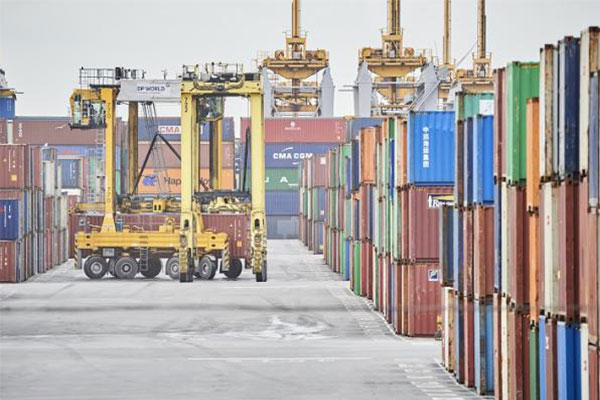
Many purchasing managers believe that importing clothing simply involves finding a freight forwarder to handle customs clearance,with the lowest possible price being the most desirable.However,this mindset is extremely dangerous in the 2025 customs clearance environment.As a category with a high inspection rate,if clothing is inspected by customs and no professional customs clearance agent is involved,the detention fees,rectification fees,and fines may directly devour the entire profit of the batch of goods.A true customs clearance agent is not just a "form filler," but a compliance firewall in your supply chain.
Why is clothing import considered a "high-risk" operation?
The complexity of clothing imports far exceeds that of ordinary goods.It not only involves tariffs,but is also subject toLegal and Judicial Directory,Tag identificationThe standard GB 5296.4 andSafety StandardsThe strict supervision of GB 18401.An unprofessional agent often only focuses on "release",ignoring "compliance",which leaves enterprises with huge legal traceability risks.
| Core Dimensions | General freight forwarding | Professional clothing customs clearance agent |
|---|---|---|
| Classification Ability | Simply categorizing products into broad groups based on the names provided by clients can easily lead to tax rate inaccuracies. | Master Chapters 61 and 62 (Knitting/Crochet vs.Non-Knitting),and be able to accurately classify garments based on their composition and weaving methods to reduce tax burdens. |
| Label review | No review,direct declaration,and the goods will be returned during the inspection. | Before shipping,pre-audit the Chinese labels to ensure that the durability labels comply with national standards and avoid the risk of rectification. |
| Legal and judicial response | Passively waiting for the "two certificates" (customs clearance documents/back-end records) and being unfamiliar with the process. | Initiate the processing of the "Inspection Application Form for Imported Goods" and coordinate the inspection at the destination to shorten the customs clearance period. |
| Exception handling | It’s then handed over to the "customs declaration agency",which results in high communication costs and uncontrollable delivery times. | Having a customs on-site operation team,we can directly explain and provide supplementary materials at the customs site. |
Practical SOP: How to efficiently utilize clearance agents
Don’t wait until the goods arrive at the port before looking for an agent.A professional operation process should be implemented before the contract is signed.The following is a verified standard operating procedure:
Step 1: Pre-review of documents and confirmation of ingredients Output:
Before shipping the goods,it is necessary to.Packing list,invoice,and contract and Ingredient ListSend it to the agent for pre-review.
- Keyactions:ItisrequiredthattheagentconfirmtheHScodeandissuea"ClassificationOpinionLetter".
- PitfallAvoidancePoints:Besuretoconfirmwhetherthesumoftheingredientproportionsis100%,andthedescriptionof"Fibercontent"mustbeaccurate(forexample,itcannotjustsay"Cotton",butshouldbewrittenas"100%Cotton").
Step 2: Compliance rectification of Chinese labels Output:
This is the most frequently encountered bottleneck in garment imports.According to the GB 5296.4 standard,imported garments must be labeled with a compliant Chinese label.
- Keyactions:Sendtheforeignhangtagsandwashinglabelstotheagentforreview,orattachChineselabelsdirectlyattheforeignproductionsite(themostcost-effectiveoption).
- MandatoryInformation:Manufacturer’sname,address,productname,modelnumber,ingredients,washingmethod,executionstandardnumber,productgrade,andsafetytechnologycategory.
Step 3: Coordinate declaration and inspection Output:
After the goods arrive at the port,the agent is required to declare them within the specified timeframe.
- Keyactions:Ifthereisacustomsinspection,theagentmustimmediatelyreporttheinspectioninstructions(whetherit’saninspectionofthecontrollabeloralabelinspection).
- Coordination:Ifsamplingandinspectionarerequired,theagentshallberesponsibleforfollowingupontheinspectionprogressandcoordinatingwiththecustomstoissuethe"InspectionandQuarantineCertificateforImportedGoods"assoonaspossible.
Expert Insight: "Tariff Planning" opportunities in the ingredient list
This is an invisible operational point that "non-industry insiders don’t know about".In the customs classification rules,the HS code of clothing determines the tariff rate (the most-favored-nation tariff rate is usually between 6% and 14%,or even higher).
Many companies don’t realize that,The classification of clothing is not just based on their names,but also on their "weight" and "weaving methods".For example,certain synthetic fiber garments may change their classification if their weight per square meter exceeds a certain threshold,or if they are made from a blend of two or more materials.A professional customs clearance agent will,based on your specific fabric parameters and within the framework of compliance,seek the most favorable tax classification path.This is not just about saving money,but also about a deep understanding of the product’s attributes.If your agent has never asked you what the "grams per square meter (GSM)" is,then you might be paying too much tax.
Take action immediately: optimize your supply chain
After reading this article,don’t just bookmark it.Please immediately check the import process for your next batch of goods:
- AuditingExistingAgents:Askyourfreightforwarder,"HowdoyouusuallydefinethesafetycategoryofGB18401forimportedclothing?"Ifthey’reevasive,considerswitchingtoanothercompany.
- Self-checkingLabels:CheckwhethereverypieceofimportedclothinginthewarehousethatiswaitingtobeputontheshelvesislabeledwithaChineselabelindicatingthe"safetytechnicalcategory(suchasGB18401CategoryB)".
- Establishacommunicationprotocol:Accordingtotheagreementwiththeagent,itisnecessarytoconducta"HScodepre-classification"confirmationbeforeshippingthegoods,andtoprepareawrittenrecordasthebasisforsubsequentdeclarations.
Was this helpful? Give us a like!
Contact our experts for compliance audits, precise quotes, and one-stop customs support.
Recent Comments (0) 0
Leave a Reply