
Australia Import Customs Clearance | BIO Declaration & Biosafety Compliance SOP
or complex compliance issues.
clearance and fund security.
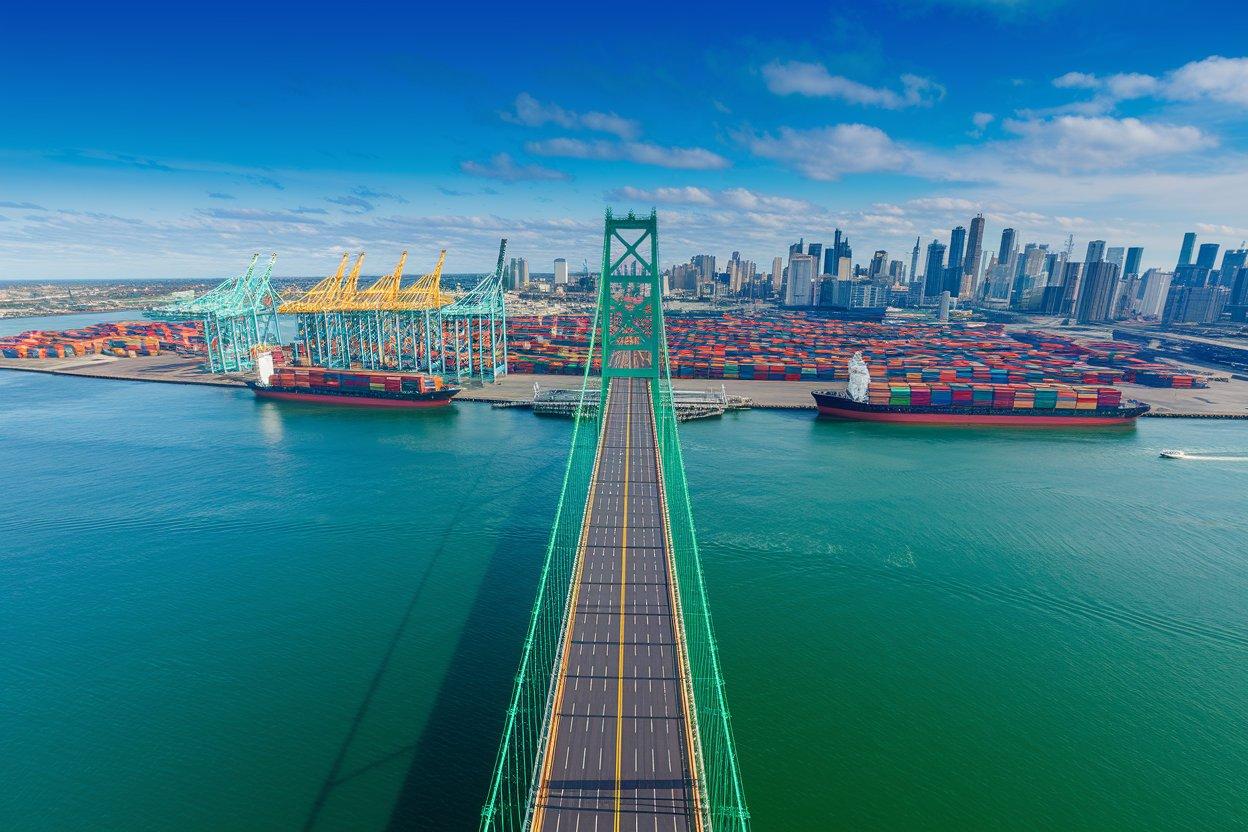
Many exporters believe that as long as the goods are loaded onto the ship,they can simply hire a local freight forwarder to handle customs clearance in Australia.However,this mindset will be extremely dangerous in 2025.The Australian Border Force (ABF) adopts a "self-assessment" mechanism,which means that customs clearance agents are not only declarants but also your "legal shields".Choosing the wrong agent or ignoring Australia’s unique biosafety regulations could result in,at worst,the goods being destroyed or facing huge fines,and at best,incurring high demurrage fees due to being held up at the port.The real risks often lie not in the tariffs themselves,but in the lack of control over compliance details.
Why is customs clearance in Australia more "picky" than in Europe and America?Breaking down the underlying logic
Australia has the world’s most stringent biosecurity border protection measures.Unlike Europe and the United States,which mainly focus on intellectual property or anti-dumping,the Australian Customs Service (ABF) and the Department of Agriculture,Fisheries and Forestry (DAFF) have nearly stringent requirements for timber,soil,seeds,and plant residues.Once your customs clearance agent misjudges BICON (the Biosecurity Import Conditions System),the goods will be forcibly fumigated,processed,or even returned to the sender.
In addition,Australia implements the "Import Declaration Scheme",under which importers must hold an Importer ID issued by the Australian Taxation Office (ATO).If your agent is unable to guide clients in properly obtaining and using this ID,they won’t even be able to proceed to the first step of the customs clearance process.
| Agent Model Comparison | Applicable scenarios | Risk Level | Hidden Cost Analysis |
|---|---|---|---|
| Freight forwarding subcontracting model (Freight Forwarder Resell) | Small batch,low value,non-sensitive goods | High | The information is transmitted layer by layer,and the documents flow slowly.When it comes to inspection,the response is lagging,which is very likely to result in high demurrage charges. |
| Direct agency with a valid license (Licensed Customs Broker) | Standard B2B trade,including wooden packaging and food machinery | Medium | The service fee is transparent and directly connected to the ABF system.You need to confirm its DAFF processing capacity by yourself. |
| Full self-operated expert agents (Specialist Broker with DAFF Accreditation) | High-risk goods (agricultural products,large-scale equipment,animal and plant products) | Low | The preliminary consultation fee is relatively high,but it can accurately predict the BICON requirements,significantly reducing the inspection rate and processing fees. |
Zero-Error Customs Clearance SOP | From Documentation to Release
Don’t pin your hopes on the agent’s "consciousness".As a supply chain manager,you must conduct reverse management of the agent in accordance with the following SOPs.
Step 1: Pre-customs clearance and BICON condition verification (7 days before shipment) Output:
Before the goods depart from the port,it is necessary to require the agent to check the "unofficial risk" in the BICON system according to the HS Code and product name.This is particularly important for goods involvingWood packaging (ISPM 15 standard),TrayorOld mechanical equipmentIt is necessary to confirm whether an import license from the Department of Agriculture and Forestry (DAFF) is required.
Step 2: Check the consistency of the three documents (48 hours before arrival) Output:
Australian customs is extremely sensitive to data matching.It is necessary to ensure that the following document information is completely consistent:
- PackingList:Thegrossweightandnetweightmustbeaccuratetotwodecimalplacesandtheremustbenophysicaldiscrepancieswiththebilloflading.
- CommercialInvoice:Thecurrencymustbespecifiedclearly,andthetradeterms(Incoterms)determinethebasisforcalculatingcustomsduties.
- BillofLading:Theconsignee’sinformationmustbeconsistentwiththatoftheImporterIDholder.
Step 3: Trigger ACVS and pay customs duties (upon arrival at the port) Output:
After the goods arrive at the port,the agent will submit a report through ACVS (Automated Customs Valuation System).If the system channel is "Green",the goods will be released directly; if it is "Red" or "Yellow",X-ray inspection or physical inspection will be triggered.At this point,the agent must be present at the port to handle the inspection procedures.Within 4 hoursPlease check the feedback results.Otherwise,the demurrage fee will start to be calculated.
Expert Insights: The Overlooked "Landed Cost" Trap | Cost Analysis
There is an invisible risk that non-insiders rarely pay attention to:The interest earned from prepaying tariffs belongs to whom?In Australia,if importers use the Deferral Account to defer the payment of customs duties,they can greatly improve their cash flow.However,many small-scale agents lack the ability to operate the Deferral Scheme,forcing customers to pay in cash upon the arrival of the goods,which results in extremely high capital occupation costs.
Moreover,regardingIntellectual Property (IP)The notice of objection.If your brand is not registered in Australia but you use a similar trademark,the ABF may seize the goods.Senior agents will conduct a preliminary screening by IP Australia before declaration,while ordinary agents will just mechanically submit the data and notify you only after the goods have been seized.
Act now: 3 things you can do this afternoon
In order to ensure that the next batch of goods can clear customs smoothly,please immediately carry out the following inspections:
- Verifytheagent’squalifications:SendanemailtothecurrentAustralianagent,requestingtheirCustomsBrokerLicenseNumberandwhethertheyhaveDAFFAccreditedStatus.
- AuditconditionsforBICON:Ifyouhaveequipmentorwoodproductsthatareabouttobeshipped,logintotheBICONofficialwebsite,entertheHSCode,printoutalltherequirementsunderthe"Treatment"column,andenforcetheirimplementationbythefactory.
- Updatetheinvoicetemplate:CheckwhetheryourCommercialInvoiceincludesaclearAustralianImporterIDandwhetheritdeclarestheCountryofOrigin(thelackofadeclarationoforiginisthemostcommonreasonforcustomsclearancerejectionsinAustralia).
Was this helpful? Give us a like!
Contact our experts for compliance audits, precise quotes, and one-stop customs support.
Recent Comments (0) 0
Leave a Reply