
Russia Import Customs: Your Essential Clearance Guide
or complex compliance issues.
clearance and fund security.
In relation to RussiaIn trade,understanding and mastering the customs clearance process is of utmost importance.Due to Russias unique laws and regulations,importers must carefully follow detailed procedures to avoid potential delays or additional costs.This article aims to provide a comprehensive guide to help businesses understand the various regulations and steps required for importing into Russia.
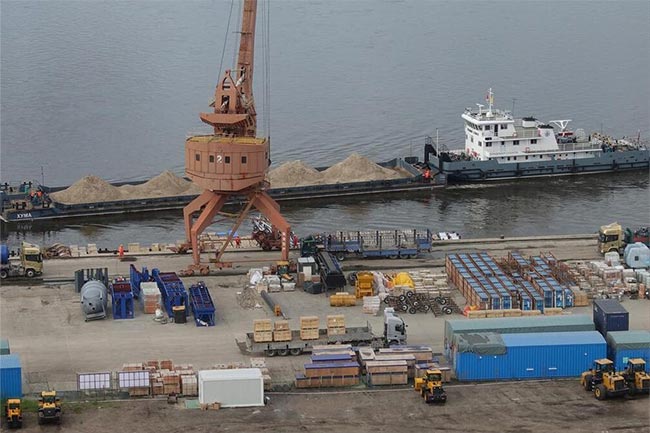
### I.Modes of Transport
Russias geographical location makes it a junction for maritime and land transportation.The specific modes of transport include:
Maritime Transport: Departing from major ports in China,goods can be directly transported to St.Petersburg or Novorossiysk in western Russia,or enter southern Russia via Belarus.
Railway/Land Transport: Through ports such as Manzhouli,Erenhot,Alashankou,and Suifenhe in China,goods can enter Russia,Mongolia,or the five Central Asian countries.
Sea - rail Intermodal Transport: Goods first pass through.and arrive at Vladivostok or the Port of Vostochny,and then enter the eastern regions and inland cities of Russia via railway or land transport.
### II.Customs Clearance Process
Preparation before Customs Clearance
Before the goods arrive at the port,the customs clearance agency arranges the commodity information required for customs declaration.This information includes:
(1) Technical parameters (especially for building materials and engineering equipment products)
(2) Material
(3) Packing situation,such as net weight,gross weight,packing form and quantity
(4) For products like boards and tiles,the total square meters also need to be provided
Operations after Arrival at the Port
(1) Bill of Lading Exchange: Determine where to exchange the bill of lading according to the bill of lading,which is divided into house bill of lading (H B/L) and master bill of lading (M B/L).
(2) Electronic Declaration: Carry out computer pre - entry,document review,send to the customs and communicate with the customs for release.
(3) Inspection Application: After the electronic declaration is released,use one of the four copies of the customs declaration form to handle the inspection application procedures at the commodity inspection bureau,and issue a clearance form or stamp an inspection seal.
(4) On - site Delivery of Documents: Complete the relevant procedures for on - site delivery of documents at the customs.
(5) Inspection: Decide whether inspection is required according to the supervision conditions of the declared commodity name and the daily inspection probability.
(6) Release: Based on the inspection results,the customs will carry out release,which may include one - time release,second - time release after issuing an inspection notice,or release with a customs seal after inspection.
### III.Documents Required for Customs Declaration
The documents that must be prepared when handling customs procedures include:
(1) Goods customs declaration form
(2) Customs value declaration form
(3) Permit (applicable to goods subject to permit and quota management)
(4) Commodity inspection certificate (applicable to goods subject to commodity inspection)
(5) Permit certificate for relevant commodities (commodities supervised by relevant state agencies)
(6)
(7) Documents evidencing payment of duties and taxes as required by law
(8) Import contract registration certificate
(9) Other supplementary documents
### IV.Customs Release
The Russian customs will complete the release of goods within three working days as required when it confirms that the customs declaration documents are complete,the duties and taxes have been fully paid,and the goods match the documents.For goods under special supervision,such as goods in bonded warehouses or temporarily imported goods,the customs may release them conditionally.
By strictly following the above processes and regulations,enterprises can ensure that their goods pass through the Russian customs smoothly,thus accelerating the arrival of goods to the market and reducing unnecessary costs and time delays.Understanding and mastering these detailed customs clearance steps is the key to success in entering the Russian market.
Was this helpful? Give us a like!
Contact our experts for compliance audits, precise quotes, and one-stop customs support.
Recent Comments (0) 0
Leave a Reply