
Import Clearance Pitfall Guide | Don't Be Fooled by "All-Capable" Agents
or complex compliance issues.
clearance and fund security.
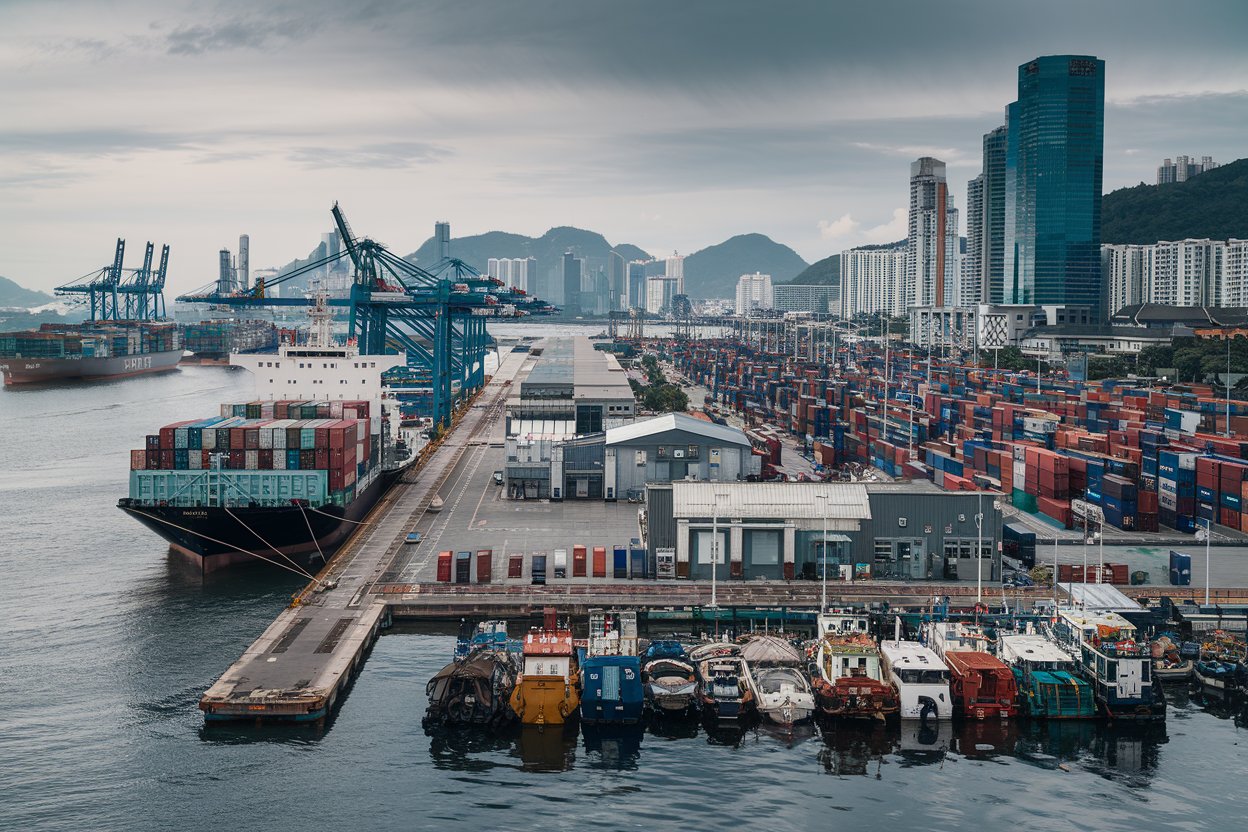
Many procurement managers,when screening suppliers,habitually ask,"Do you offer a full range of agency services?" The subtext is hoping to find a "universal freight forwarder" that can handle everything from socks to used machinery and electrical equipment,and from food to chemical products.However,in practice,this seemingly safe question often becomes the root cause of subsequent customs clearance delays.True industry veterans know that in today’s increasingly sophisticated customs supervision,"full range of services" often means "everything is mediocre," and even carries hidden risks of subcontracting.
Hidden Traps of “Generalist” Agents vs.Vertical Advantages
Why we don’t recommend believing in "All-Capable"?Because the core logic of customs supervision is based onHS codeandGoods attributeA broker that claims to be able to handle everything usually has only two possibilities: either it’s the sales arm of a large logistics company (with actual operations still outsourced),or it’s a "middleman" with only superficial knowledge of all product categories.
When your goods are general cargo (such as textiles and toys),an all-round agent can indeed provide convenience.However,once it involvesLegal and judicial goods,,Animal and plant quarantineorUsed mechanical and electrical productsAgents lacking vertical experience often fail to provide advance predictions in the two critical stages of "document review" and "on-site inspection",resulting in goods being held up at the port and incurring high demurrage and storage fees.
| Key Indicators | An all-round agent with a comprehensive range of services | A vertical-type agent specializing in "specialized,excellent,unique,and innovative" products. |
|---|---|---|
| Core competency | We have a wide range of channels,strong LCL (less-than-container-load) shipping capabilities,and are skilled at handling standard general cargo. | Have a thorough understanding of the regulatory requirements (such as A Certificates and Endangered Species Certificates) for specific HS codes,and be familiar with the customs clearance procedures at specific ports. |
| Risk Control | Relying on general processes,when faced with inspections,people can only wait passively,lacking the ability to solve problems technically. | Be able to identify logical loopholes in the documents in advance and actively avoid the risk of being inspected; and provide professional technical rectification suggestions during the inspection. |
| Cost Structure | The quoted price is low on the surface,but additional miscellaneous fees are often incurred due to inexperienced operation; complex goods usually requireSecondary subcontractingThis results in uncontrollable costs. | High transparency.Although the profit requirement for each order may be higher,it can significantly reduce hidden logistics costs through efficiency improvements. |
| Applicable scenarios | Under the FOB terms,the shipper specifies the goods to be shipped,or it may be a bulk commodity with a single product category and extremely low risk. | Food,High-value and highly regulated items such as old equipment,hazardous chemicals,and precision instruments. |
The 3-Step SOP for Precisely Matching an Agent
Don’t try to find a "universal key",but instead,establish a dedicated customs clearance resource pool for your core SKUs.The following is a standardized procedure for screening agents:
Step 1: Lock the regulatory attributes based on the HS code Output:
Before contacting an agent,please first confirm the regulatory requirements for the goods yourself.Don’t just tell the agent,"I want to import a batch of machines," but rather say,"I want to import goods with the HS code." 8479xxxx The CNC machine tools involved in this project are as follows:Registration of Used Electromechanical Products".
- Action:Checkthecustomscodebooktoconfirmthesupervisionconditioncode(A:CustomsDeclarationforImportedGoods,etc.).
- Purpose:Filteroutthose"clerk-type"agentswhoareonlygoodatfillingoutformsusingprofessionalterminology.
Step 2: Verify the practical case at the port (request the customs declaration form) Output:
Words alone are not enough.Any agent will promise "no problem".What you need is evidence.
- Action:Requiretheotherpartytoprovideinformationontheirtransactionswithinthepastthreemonths.ThesameportandthesameHScodeThesuccessfulcustomsdeclarationform(withcommercialsensitiveinformationredacted).
- Purpose:Makesurethattheydoindeedhaveoperationalrecordsinthiscategoryandarefamiliarwiththeinspectionratestandardsofthisportofentry.
Step 3: Test the emergency response mechanism Output:
The most worrying thing about customs clearance is when something goes wrong,and the most frustrating thing when something goes wrong is not being able to find the responsible person.
- Action:Askahypotheticalcomplexquestion:"Ifafterthegoodsarriveattheport,thecustomsconsidersthedeclarationelementstobemisclassifiedanddetainsthegoods,howwouldyouhandleit?"
- Purpose:Observingwhethertheotherpartywilldirectlyreply,"Wewillcommunicatewiththem,"orbeabletoprovidespecificdetails.Classificationandreviewprocess,securereleaseunderguaranteeApplyfororAdministrativereconsiderationPath.Thelatteristheexpertyouneed.
Insights into the "unspoken rules" of senior consultants
After 15 years of struggling in this industry,I’ve seen too many companies hand over their business to so-called "omni-channel" platforms just to save trouble,only to find out that these platforms are nothing more than middlemen profiting from the transaction fees.
The truth that an insider doesn’t want to admit is that.90% of all-round agents will engage in "secondary subcontracting" when encountering complex goods. They take on your orders,earn the profit margin,and then delegate the work to vertical agents who truly understand the industry.This not only increases communication costs (information is inevitably lost during transmission),but more alarmingly,if there are issues like goods being withheld or fines imposed,intermediaries often fail to make decisions promptly in order to shirk responsibility.
In addition,regarding the "inspection rate",don’t believe what the agent says about "I have connections".The real low inspection rate comes fromThe standardization of declaration elementsandLogical self-consistencyProfessional vertical agents rely on their technical expertise to convince customs that "this shipment is highly professional and there’s no need to inspect it," rather than relying on bribes or other underhanded tactics.
The troubleshooting action can be carried out this afternoon
After reading this article,we suggest that you immediately conduct a "health check" on your existing supply chain partners:
- 1.Takestockofhigh-riskproductcategories:Listthegoodsinvolvedinlegalinspections,returns,orinspectionsinthepastyear,andconfirmwhetherthecurrentagenthastheoperationalqualificationsforthesespecificproductcategories.
- 2.Inquireabout“Subcontracting”clauses:Directlyaskyourcurrentsalesmanager,"Isthisbatchofgoodshandledbyyourcompany’sownoperationsorentrustedtoothercustomsdeclarationagencies?"Andtrytoaddthisclausetothecontract.ItisprohibitedtosubcontractwithoutauthorizationThebindingprovisionsofthecontract.
- 3.Establishanalternativeresourcepool:Forthetopthreecategoriesofgoodsthataccountforthelargestportionofyourbusiness,respectivelyidentifyareputableverticalspecialistagentinthatfieldasanalternativeoption.Evenifyoudon’tneedtheirservicesnow,it’simportanttomaintaincontactwiththemincaseofemergenciesorfutureneeds.
Was this helpful? Give us a like!
Contact our experts for compliance audits, precise quotes, and one-stop customs support.
Recent Comments (0) 0
Leave a Reply